The Violation
Recusal is one of the most basic obligations in judicial ethics. When a judge has a conflict of interest, a bias, or a reason to believe she cannot be impartial, she recuses herself — she removes herself from the case. Another judge takes over. The purpose is elementary: to ensure that cases are decided by judges who can be impartial.
In a criminal probationary hearing before Spokane County District Court Judge Jennifer Fassbender, the normal process should have worked: Fassbender would determine whether she needed to recuse, and if so, she would step aside and another judge would handle the matter going forward.
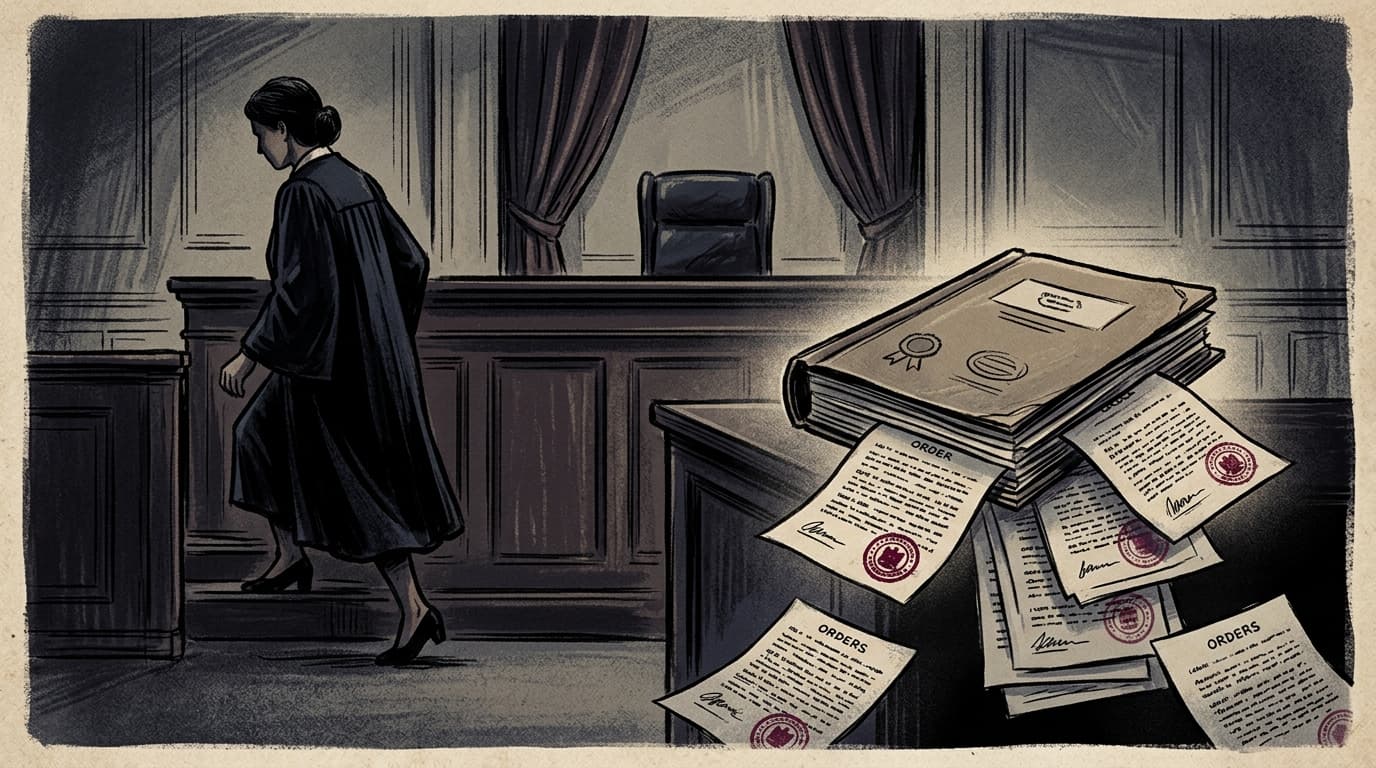
What actually happened was different. Fassbender recused herself from the hearing. And then she issued several orders in the case anyway — after she had already recused.
The violation is stark. A judge cannot recuse herself from a case and then continue to issue orders in it. The moment of recusal is the moment her authority in that case ends. Any orders she issues afterward are issued without jurisdiction and, potentially, with prejudicial effect on the litigants.
The Finding and the Admonishment
The Washington Commission on Judicial Conduct found that Fassbender violated Canon 1, Rules 1.1 and 1.2 of the Code of Judicial Conduct, and Criminal Rule for Courts of Limited Jurisdiction (CrRLJ) Rule 8.9(c) — provisions dealing with impartiality, competence, and the duty to disqualify oneself when appropriate.
The Commission issued a public admonishment — the lowest level of public discipline. An admonishment does not suspend or remove a judge. It is a formal rebuke, a finding that conduct violated the Code, and an instruction to correct the behavior going forward.
Fassbender stipulated to the facts. She was cooperative with the Commission's investigation. She accepted responsibility for the conduct. In light of her cooperation, the Commission did not pursue more serious discipline.
Why This Matters
A judge who issues orders after recusing herself is a judge who does not fully understand her own jurisdictional limits — or who does, but disregards them. Either way, the conduct raises questions about her fitness to preside over cases requiring careful attention to procedural rules and jurisdictional boundaries.
The fact that the violation occurred in a criminal probationary hearing makes it more serious. Probation violations can result in incarceration. Orders issued without jurisdiction in such proceedings can directly harm the defendant's liberty interests. If Fassbender's post-recusal orders affected the defendant's probation status, that harm is concrete.
The defendant before Fassbender did not have the benefit of her recusal, which was presumably meant to protect his interests. Instead, he got orders from a judge who had already stepped aside. Whether those orders were later corrected, vacated, or allowed to stand is not disclosed in the Commission's public findings.
The Remedy
Fassbender was ordered to:
- Promptly read the Code of Judicial Conduct
- Complete training in the laws and procedures regarding disqualification and recusal
- Meet regularly with a mentor judge to discuss disqualification and recusal issues
These remedies are designed to prevent recurrence. But they are also minimal. A judge at the level of district court should already know the basic rule that recusal ends her authority in a case. The fact that Fassbender required training in this area suggests either a significant gap in her knowledge or a willingness to ignore the rule when it proved inconvenient.
Training addresses knowledge gaps. It does not address willful disregard. If Fassbender's violation was careless rather than deliberate, the training is appropriate. If it was deliberate, admonishment and training may be insufficient.
Moving Forward
Fassbender remains a judge of the Spokane County District Court. The mentor judge program will presumably track her compliance with recusal and disqualification procedures. Whether the defendant in the original case — the one where she recused and then issued orders anyway — received any remedy or had any recourse is not disclosed.
The public record reflects a finding that a judge violated the Code of Judicial Conduct in a matter affecting a criminal defendant's liberty. That is a fact worth knowing for anyone who may appear before her in the future.
A Note on Sources
This article is based on the Washington Commission on Judicial Conduct public database (June 26, 2026 stipulation), the Commission's public actions page, and statements from the Commission regarding Judge Fassbender's admonishment. Judge Fassbender and the Commission did not respond to requests for comment before publication.
The Ethics Reporter is an independent legal accountability publication. We rely entirely on reader donations to fund this work. If this reporting matters to you, please consider supporting us at theethicsreporter.com/donate. Even $1 keeps the lights on. Thank you.