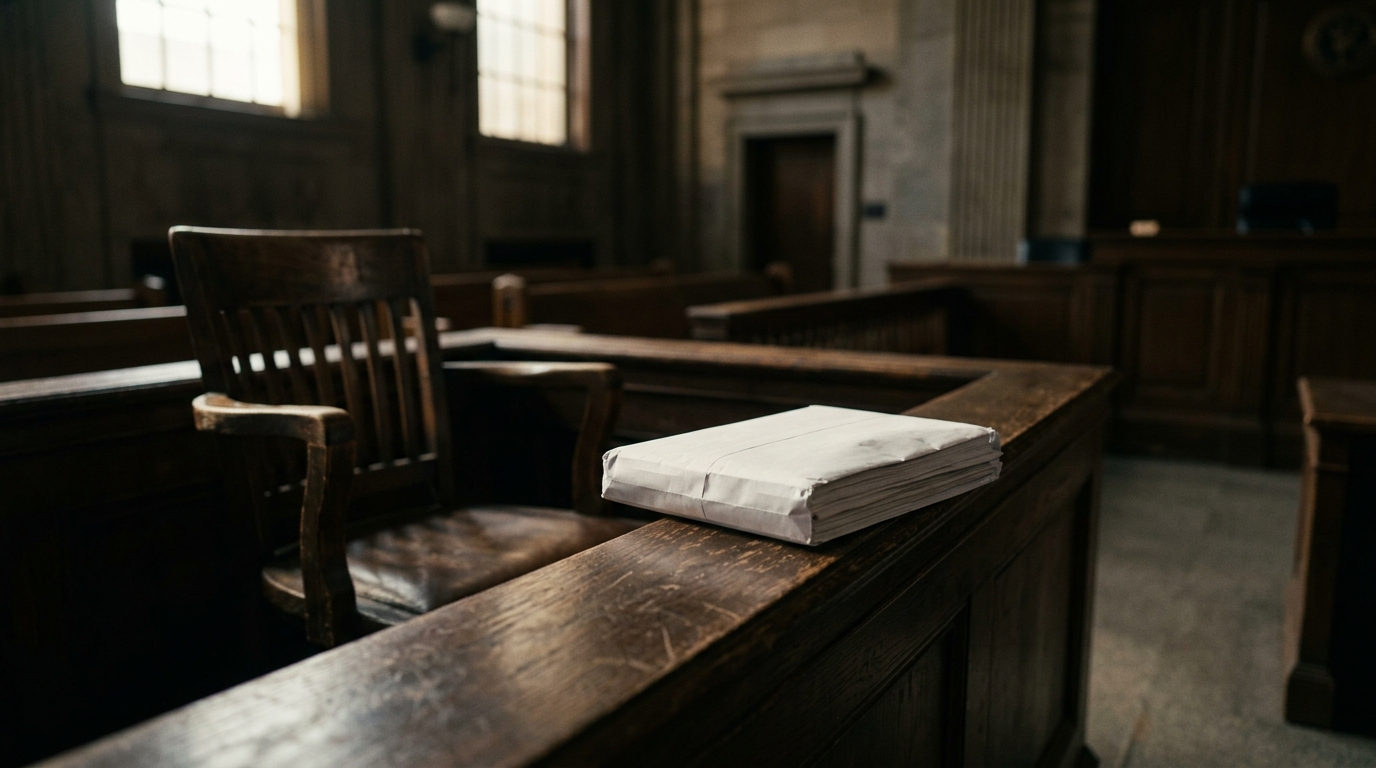
In New York, the truth has a statutory price. CPLR 8001(a) sets it, in language unchanged in spirit since the era of the horsecar: “Any person whose attendance is compelled by a subpoena, whether or not actual testimony is taken, shall receive for each day’s attendance fifteen dollars for attendance fees and twenty-three cents as travel expenses for each mile to the place of attendance from the place where he or she was served, and return.” That is what a subpoenaed witness is owed for showing up and saying what he knows. The figure has the musty smell of another century about it, and that is partly the point — a fact witness is not supposed to be in it for the money. An expert sells an opinion, openly, at market rates disclosed to the jury. A fact witness sells nothing. He is a citizen discharging a duty, and the fifteen dollars is carfare, not compensation.
That, at least, is the theory. The practice has always been more textured, and every few years a case comes along to remind the profession how much room exists between the statute and the courtroom floor.
Recently, The Ethics Reporter reviewed a complaint submitted to attorney disciplinary authorities alleging that a partner at a plaintiffs’ firm paid a fact witness in connection with a trial — a witness who, according to the complaint, had made clear before trial that he expected to be paid — and that the payment was recorded in the case file as an expert-witness expense. The complaint is one-sided, its allegations are unproven, no disciplinary authority has made any finding, and this publication has not independently verified them; we describe it not to adjudicate it but because of where it points. The line between paying a witness for his time and paying him for his testimony is among the oldest and blurriest in trial practice, and the mechanisms for policing it are astonishingly weak.
Ten Thousand Dollars an Hour
The controlling New York case is barely a decade old, and its facts are almost comically clean. Bessie Caldwell fell on a street in Nassau County where Cablevision and its subcontractor, Communications Specialists, Inc., were installing high-speed fiber-optic cable, and sued, claiming she had tripped in the trench the companies dug. The defense subpoenaed the emergency-room physician who had treated her — not for an opinion, but as a pure fact witness, to authenticate the consultation notes he had prepared after examining her. The notes said the patient had “tripped over a dog while walking in the rain.” His testimony was limited to authenticating those notes, and it lasted about an hour.
For that hour, the defense paid him $10,000.
Plaintiff’s counsel objected: this was a fact witness owed fifteen dollars under the statute, and he had received roughly six hundred and sixty times the daily rate. Counsel asked the trial court to strike the testimony or, failing that, to instruct the jury specifically about the payment and its potential to influence what the doctor said. The court refused both requests, giving only a general credibility charge that never mentioned the physician or his fee. The jury found for the defense; the plaintiff’s motion to set aside the verdict was denied. The Appellate Division affirmed, holding that the “substantial payment” did not require exclusion but that the trial court had erred in failing to “adequately charge the jury regarding the suspect credibility of factual testimony by a paid witness” — an error it deemed harmless.
The Court of Appeals took the case, and on February 7, 2013, in a unanimous opinion by Judge Eugene Pigott, Caldwell v. Cablevision Systems Corp. affirmed — while making no secret of its unease. The court said it was “troubled by what appears to be a substantial payment to a fact witness in exchange for minimal testimony,” a payment that may “create an unflattering intimation that the testimony is being bought or, at the very least, has been unconsciously influenced by the compensation provided.” Still, compensation above the CPLR 8001 minimum “is not precluded.” The remedy the court prescribed was mandatory candor to the jury: “[w]here, as here, the party that subpoenaed the witness offers no explanation for a fee that is seemingly in excess of reasonable compensation for lost time and incidental expenses, the trial court, upon a timely request by an objecting party, must charge as to the witness’s potential bias.” The instruction the court sketched tells jurors that fact witnesses may be compensated for lost time, that they should assess whether the compensation was “disproportionately more than what was reasonable,” and, if so, whether it “had the effect of influencing the witness’s testimony.” The error below was harmless, the court concluded, only because “the substance of the doctor’s testimony was such that the jury’s assessment was only tangentially related to the doctor’s credibility.”
Along the way the court named the exact difficulty that makes this corner of the law so treacherous: “the distinction between paying a fact witness for testimony and paying a fact witness for time and reasonable expenses can easily become blurred.” And it quoted the line that has organized New York’s ethics guidance since the State Bar’s Committee on Professional Ethics issued Formal Opinion 668: the law distinguishes “between compensation that enhances the truth seeking process by easing the burden on testifying witnesses, and compensation that serves to hinder the truth seeking process because it tends to ‘influence’ witnesses to ‘remember’ things in a way favorable to the side paying them.”
Caldwell is usually cited for what it permitted. It is more interesting for what it assumed: that the payment would be visible. The entire safeguard structure — cross-examination, the bias charge, the jury’s common sense — depends on the fee surfacing at trial. In Caldwell it surfaced because plaintiff’s counsel elicited it. Had no one asked, no one would have known.
The Rule and Its Escape Hatch
The ethics rule sounds absolute, and then immediately isn’t. Rule 3.4(b) of New York’s Rules of Professional Conduct forbids a lawyer to “offer an inducement to a witness that is prohibited by law, or pay, offer to pay or acquiesce in the payment of compensation to a witness contingent upon the content of the witness’s testimony or the outcome of the matter.” Then comes the carve-out. A lawyer may advance, guarantee or acquiesce in the payment of: “(1) reasonable compensation to a witness for the loss of time in attending, testifying, preparing to testify or otherwise assisting counsel, and reasonable related expenses; or (2) a reasonable fee for the professional services of an expert witness and reasonable related expenses.”
Notice the architecture. Subsection (1) is the fact-witness lane: time and expenses, nothing keyed to content. Subsection (2) is the expert lane: professional fees, openly market-rate. The two lanes carry very different disclosure expectations — expert compensation is routinely disclosed and unremarkable; fact-witness compensation is rare enough that its mere existence is impeachment material. The rule’s integrity depends entirely on payments being booked in the correct lane.
Decades of bar guidance have tried to give subsection (1) edges. The State Bar’s Opinion 668 blessed reasonable time-based payments while warning against anything that buys memory; Opinion 962, in 2013, worked through what “reasonable related expenses” can include; the New York County Lawyers’ Association, in Formal Opinion 729, even approved a lawyer’s paying for a witness’s own counsel — provided the payment is not conditioned on the testimony’s content. Every opinion repeats the same two conditions like a liturgy: reasonableness, and no linkage to substance. What no opinion supplies is a number. “Compensation for lost time” has no ceiling that anyone can state. A busy physician’s hour is worth something; is it worth $10,000? The Caldwell court called that figure troubling and declined to draw a line. And because the payment is lawful if characterized as time-compensation and unlawful if characterized as testimony-purchase, everything rides on a characterization made by the paying lawyer, in private, with no one watching.
New York is not an outlier; it is the national pattern. The American Bar Association, in Formal Opinion 96-402, read the Model Rules the same way: a lawyer may compensate an occurrence witness for time actually lost in preparing and testifying, so long as the payment is not conditioned on the content of the testimony and does not violate local law. The opinion added a caution that deserves more currency than it has — the amount must be reasonable, “so as to avoid affecting, even unintentionally, the content of a witness’s testimony.” Unintentional influence is the phrase the whole doctrine circles. Nobody thinks most paid fact witnesses consciously lie. The concern, as old as the jury system, is softer and more corrosive: gratitude has a memory of its own.
The federal system wrestles with the same problem through the anti-gratuity statute, 18 U.S.C. § 201(c), which criminalizes giving anything of value “for or because of” testimony — subject to the same carve-out for expenses and reasonable time. How literally to read that language became, briefly, the most famous question in criminal procedure: in 1998, a Tenth Circuit panel in United States v. Singleton held that the statute meant what it said even when the thing of value was a prosecutor’s promise of leniency to a cooperating witness — a holding that would have upended plea bargaining nationwide, and that the full Tenth Circuit, sitting en banc, hastened to reverse in 1999. Singleton’s brief career is usually told as a curiosity. Its real lesson is how deep the statutory principle runs: the law’s discomfort with paying for testimony is so fundamental that courts had to carve out an exception for the government itself. Prosecutions of civil lawyers under § 201 are vanishingly rare. The real enforcement mechanism is supposed to be the adversary: opposing counsel asking, on cross, the blunt question the plaintiff’s lawyer asked in Caldwell. Are you being paid to be here? How much?
The Bookkeeping Problem
Which returns us to the allegation in the complaint we reviewed — not the payment itself, but the label. Recording a fact-witness payment as an expert fee, if that occurred, would not be a technical misfiling. It would move the payment from the lane where it is impeachment material to the lane where it is furniture. Expert fees are expected, disclosed, and unremarkable; they draw no cross-examination about impropriety because there is nothing improper about them. A fact-witness payment wearing an expert’s label passes through trial invisibly. The jury never hears the number. The bias charge Caldwell requires is never requested, because no one knows to request it. The adversary process, the only real police on this beat, is disarmed by a ledger entry.
Whether that happened in the matter described to us is for disciplinary authorities to determine, and they may determine it never happened at all. But the vulnerability is structural, not personal. Litigation expenses are self-reported. Disbursement records are reviewed, if ever, years later, by auditors looking for arithmetic errors rather than characterization games. And the witnesses themselves — the only other people who know what they were paid and why — have every incentive to stay quiet about it.
The mislabeling risk is not hypothetical in the caselaw, either; it is anticipated by it. The reason Caldwell conditions its mandatory charge on “a timely request by an objecting party” is that the Court of Appeals assumed an objecting party would know there was something to request. The opinion’s entire remedial scheme — disclosure, explanation, instruction — is triggered by knowledge. A payment routed through the wrong ledger category is a payment engineered never to trigger it.
Where Discipline Has Landed
When witness payments do surface, the consequences depend almost entirely on how the payment was structured and how candid the lawyer was about it. Courts and disciplinary authorities have historically reserved their harshest treatment for two features: contingency and concealment. A payment conditioned on the content of testimony, or on the outcome of the case, is treated across jurisdictions as tampering — New York’s Rule 3.4(b) singles it out by name, and the criminal law of every state stands behind it. Concealment converts even an otherwise-defensible payment into something worse, because it demonstrates consciousness that the arrangement could not survive daylight. By contrast, lawyers who paid generously but disclosed openly — the Caldwell defense being the canonical example — have generally suffered nothing more than a skeptical jury instruction and a bad day on appeal.
That asymmetry is the system working as designed, and it contains the practical lesson for both sides of the bar. For the paying lawyer: the safe harbor is not a number, it is a paper trail — a reasonable hourly figure tied to the witness’s actual lost time, documented before testimony, disclosed without being asked. For the opposing lawyer: the question are you being compensated for your appearance today? belongs in every cross-examination of every inconvenient fact witness, as routine as asking their name. It costs ten seconds. In Caldwell it changed the complexion of the whole trial record — and it remains the only audit this corner of the law has ever reliably had.
There is a further question worth asking of the profession’s scorekeepers. Disciplinary dockets are thick with trust-account overdrafts and neglected files; they are nearly silent on witness-payment characterization, and it would be naive to read that silence as proof of compliance. A violation whose only witnesses are the payer, the payee, and a ledger is a violation the complaint-driven discipline system is structurally unequipped to find. The rare cases that surface do so the way this one allegedly did — through a falling-out, a document produced in later litigation, a party who knew where to look. Bar regulators who wanted to police this line proactively would need something no American jurisdiction currently requires: routine disclosure, in every tried case, of all payments to testifying fact witnesses, filed with the court the way expert disclosures already are. The proposal is not radical. It is Caldwell’s own logic, extended from the jury box to the docket.
What Memory Costs
There is a reason the common law settled on a nominal witness fee, and it was not stinginess. The fifteen dollars is a statement of principle disguised as an accounting entry: testimony is not a market. The moment recollection acquires a price, it acquires a buyer, and the buyer’s interest is never in memory for its own sake.
Every trial lawyer knows the practical rejoinder — busy people will not testify for carfare, and compelling them unpaid breeds its own distortions, a resentful witness being hardly more reliable than a bought one. The compromise the law struck, in Rule 3.4(b) and in Caldwell, is disclosure: pay reasonably for time, and say so out loud, in front of the jury, where the number can be weighed by the twelve people entitled to weigh it.
The compromise works only in daylight. A payment disclosed is a credibility question; a payment disguised is a fraud on the process, whoever commits it and whatever the ledger calls it. The fifteen-dollar witness fee is an anachronism, but it encodes something the profession forgets at its peril — that the one commodity a courtroom cannot survive trafficking in is the thing the oath is supposed to secure for free.