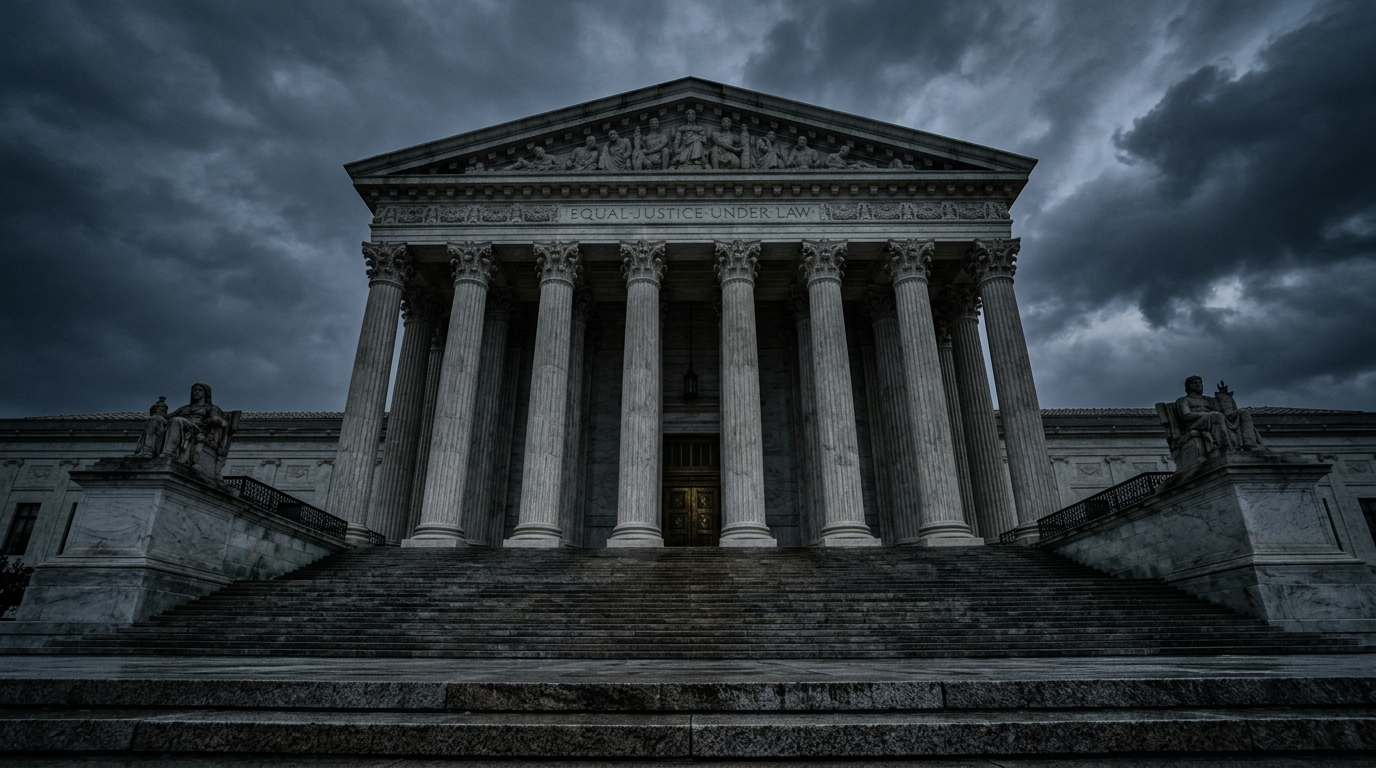
In 1969, Justice Abe Fortas resigned from the United States Supreme Court in disgrace after Life magazine revealed he had accepted — and eventually returned — a $20,000 annual payment from a foundation funded by convicted financier Louis Wolfson. The payment represented a clear conflict of interest. The scandal was considered so damning that Fortas stepped down before Congress could act.
Fifty-five years later, Clarence Thomas sat through a decade-long relationship with a Dallas real estate billionaire that made the Fortas affair look like a parking violation — and faced no legal consequence whatsoever.
The Harlan Crow Files
In April 2023, ProPublica published what would become one of the most consequential pieces of investigative journalism in recent American legal history. Reporters Joshua Kaplan, Justin Elliott, and Alex Mierjeski documented that Justice Clarence Thomas had for years accepted undisclosed luxury travel, private jet flights, and vacations aboard a superyacht owned by Harlan Crow, a Republican megadonor and real estate developer based in Dallas, Texas.
The trips were not incidental. ProPublica documented at least 38 destination trips — to Indonesia, the Adirondacks, and the Bohemian Grove retreat in California — stretching back to the early 2000s. The estimated value of travel alone exceeded $500,000. But the real estate dealings were more troubling. In 2014, Crow purchased the Savannah, Georgia property where Thomas's mother, Leola Anderson, lived. The transaction — a sale of the house plus two adjacent lots — was never disclosed by Thomas. His mother continued to live rent-free in the home after the sale. Crow also paid private school tuition, estimated at $6,000 per month, for a great-nephew Thomas was raising.
By the time ProPublica completed its accounting, the undisclosed benefits totaled more than $4 million over two decades. And Harlan Crow, while not a direct litigant before the Court, had interests in tax policy, property rights, and conservative legal causes that came before the justices regularly. He sat on the board of the American Enterprise Institute and funded groups that filed amicus briefs in Supreme Court cases.
Thomas's initial defense was that he had been advised by colleagues that the travel did not require disclosure. He later amended his financial disclosures. No sanction followed.
The Alito Problem
Thomas was not alone. Also in 2023, ProPublica reported that Justice Samuel Alito had accepted an undisclosed luxury fishing trip to Alaska in 2008, flying aboard a private jet owned by Republican donor and hedge fund billionaire Paul Singer. Singer's firm, Elliott Management, had cases before the Supreme Court at the time — including one in which Alito participated without recusal. Alito voted in a 2014 decision favorable to Singer's fund in a dispute with Argentina over sovereign debt.
Alito did not recuse himself from cases involving Singer's interests. He did not disclose the trip. When the reporting became public, he wrote an op-ed in the Wall Street Journal — not to accept accountability, but to argue that he had no obligation to recuse and that the Senate had no authority to regulate him.
He wrote that a reasonable person not motivated by animosity would conclude he had not acted improperly. The statement was notable for its contempt as much as its content.
The Structural Loophole
The reason nothing happened to Thomas or Alito is not a failure of political will alone — it is baked into the architecture of federal law.
All federal judges below the Supreme Court level are bound by the Code of Conduct for U.S. Judges, a set of ethical standards maintained by the Judicial Conference of the United States. The Code prohibits judges from accepting gifts that could appear to compromise their impartiality. It requires disclosure. It provides a framework for recusal. It has teeth.
The Supreme Court has always been exempt from this Code. The justices are not bound by it. Under 28 U.S.C. § 455, all federal judges — including Supreme Court justices — must recuse themselves when their impartiality might reasonably be questioned. But Section 455 has no enforcement mechanism. No one can compel a Supreme Court justice to recuse. No one can investigate a violation. The justices police themselves, and they have historically declined to do so.
The Senate Tries — and Fails
Senate Judiciary Committee Chairman Dick Durbin and Senator Sheldon Whitehouse spent much of 2023 demanding accountability. Durbin invited Thomas and Roberts to testify before the Committee. Both declined. Chief Justice John Roberts — citing separation of powers concerns — sent a letter explaining that his colleagues would not appear.
Senator Whitehouse introduced the Supreme Court Ethics, Recusal, and Transparency Act, known as the SCERT Act. The legislation would have required the Court to adopt a binding code of conduct with enforcement provisions, mandated disclosure of gifts, and created a mechanism for reviewing recusal decisions. The bill passed the Senate Judiciary Committee on a party-line vote. It died in the full Senate. It has not been enacted.
In November 2023, under mounting pressure, the Supreme Court announced it had adopted its own voluntary Code of Conduct. Legal ethicists and good-government advocates were unimpressed. The code contained no enforcement mechanism, no independent investigator, no penalty structure. It was, as one former federal judge put it, an ethical code without ethics enforcement.
By comparison, Abe Fortas was driven from the bench in 1969 for accepting $20,000. Clarence Thomas accepted more than $4 million in undisclosed benefits — including the purchase of his mother's home — and continues to sit on the nation's highest court. Samuel Alito accepted luxury travel from a litigant, ruled in that litigant's favor, and then publicly dismissed any suggestion of wrongdoing.
A Call for Real Accountability
The Supreme Court is not above the law — it is the law. That makes the current state of affairs not just hypocritical, but dangerous. Congress has the authority to impose binding ethics rules on the Supreme Court and must use it. The SCERT Act or legislation like it should be enacted with a mandatory, independent enforcement mechanism. Justices who accept undisclosed gifts from parties with interests before the Court should face the same consequences as any other federal judge. The voluntary code adopted in November 2023 is window dressing on a broken house. Until real structural accountability arrives, the message the Supreme Court is sending to the country it governs is unmistakable: the rules are for everyone else.