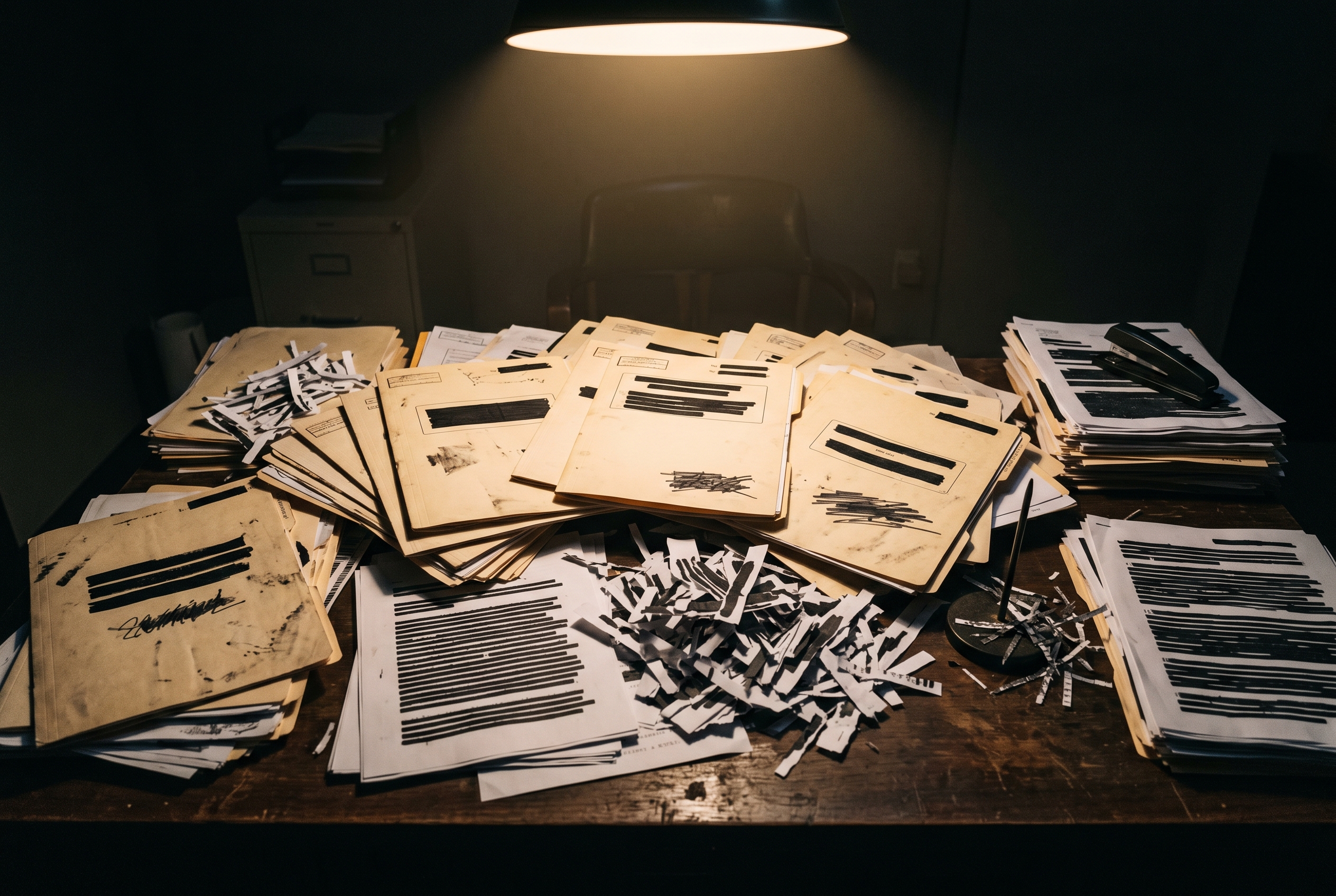
In the spring of 2020, as the United States recorded its first hundred thousand deaths from COVID-19, Americans were asking a question that their government had a duty to answer honestly: Where did this virus come from? The answer mattered not only for assigning historical responsibility, but for understanding the basic biology of the pathogen, for guiding future pandemic preparedness, and for determining whether American research dollars — funneled through grants to laboratories in the United States and abroad — had played any role in what was becoming the worst public health catastrophe in a century. According to a federal indictment unsealed in late April 2026, a senior official at the National Institute of Allergy and Infectious Diseases decided that the public did not deserve that honest answer. His name is David M. Morens.
Morens, seventy-eight years old and a resident of Chester, Maryland, served as a senior advisor in NIAID's Office of the Director from 2006 through 2022. He was, by most accounts, a trusted and influential figure inside the agency — the right-hand man of Dr. Anthony Fauci, the longtime NIAID director who became the most visible face of the American pandemic response. The two men had worked together for decades. Morens contributed to scientific publications, spoke on behalf of the agency, and was, in the language of federal bureaucracy, a person of significant institutional standing. According to the indictment, he used that standing to systematically obstruct transparency at the moment it mattered most.
What the Indictment Alleges
The charges against Morens are serious and specific. He faces counts of conspiracy against the United States; destruction, alteration, or falsification of records in federal investigations; concealment, removal, or mutilation of federal records; and aiding and abetting. The government alleges that Morens and unnamed co-conspirators engaged in a deliberate scheme to evade Freedom of Information Act requests — FOIA requests that journalists, researchers, and members of Congress had submitted seeking communications related to COVID-19 research grants and the possible origins of the virus.
The mechanism of the alleged evasion was not sophisticated, but it was systematic. According to prosecutors, Morens used personal email accounts for official government business — a practice that, by design, placed his communications outside the reach of public records laws. FOIA applies to official government communications. Personal email, used for official purposes, creates a shadow archive: the work of government, conducted without the accountability that public records laws are designed to ensure. The indictment alleges that Morens used this technique deliberately, with the understanding that it would make his communications invisible to requesters.
Beyond the email question, prosecutors allege something more troubling: that Morens and his co-conspirators concealed information specifically related to alternative theories about the origins of COVID-19. Acting Attorney General Todd Blanche put it directly in a statement accompanying the indictment: "As alleged in the indictment, Dr. Morens and his co-conspirators deliberately concealed information and falsified records in an effort to suppress alternative theories regarding the origins of COVID-19."
The Origins Question
The origins of COVID-19 remain a matter of genuine scientific uncertainty and intense political controversy. The dominant theories — natural spillover from an animal host, or a laboratory incident at the Wuhan Institute of Virology in China — have each attracted credible proponents and each carries significant implications. The possibility of a laboratory origin is particularly sensitive because of the role that American research funding, channeled through organizations like EcoHealth Alliance to the Wuhan lab, may have played in gain-of-function research that could theoretically have created the conditions for a laboratory accident.
Throughout 2020 and 2021, as the pandemic raged, NIAID officials — including Fauci himself — consistently dismissed the laboratory hypothesis as a fringe theory. Some of those dismissals, it later emerged, were made in the context of private communications in which officials expressed more uncertainty than they acknowledged publicly. Emails obtained through FOIA requests showed that virologists who had spoken privately with Fauci in early 2020 about the possibility of a lab origin later published statements definitively ruling out that possibility — a reversal whose intellectual integrity was questioned by multiple congressional investigators.
The indictment against Morens alleges that the management of that narrative was not accidental — that records were concealed and communications were hidden precisely to prevent the public from seeing the full picture of what NIAID officials knew, when they knew it, and what discussions shaped their public positions. If the government's allegations are accurate, the cover-up was not merely a bureaucratic violation of records law. It was an act that distorted one of the most consequential public health debates in American history.
The FOIA Weapon
The Freedom of Information Act is not a glamorous law. It does not generate headlines on its own. But it is foundational to the concept of government accountability in a democratic society: the idea that the work of public officials, conducted in the public's name and with the public's money, belongs to the public. FOIA is how journalists obtain documents that officials would prefer to keep private. It is how researchers verify claims made by government agencies. It is how Congress holds the executive branch accountable when formal oversight fails.
The alleged evasion of FOIA by Morens was not merely a technical violation. It was a statement about power — about who gets to decide what the public learns about the conduct of its government, and on what timeline. At a moment when Americans were dying at a rate of thousands per day, when policy decisions about lockdowns, school closures, vaccine mandates, and economic disruptions were being made on the basis of official scientific guidance, the claim that officials were actively hiding communications about those decisions is an accusation of profound betrayal.
The indictment also alleges that Morens received kickbacks — a detail that transforms the case from a records violation into something more explicitly corrupt. The nature of those kickbacks is not fully detailed in the public charging document, but their existence suggests that the concealment was not merely ideological — an official suppressing information he believed would be misused — but transactional: someone who found personal profit in the management of pandemic-era secrets.
Accountability and Its Limits
The Morens indictment arrives in a complicated political context. It was brought by the Trump administration's Justice Department, whose stated motivation — pandemic accountability and transparency — is genuine as a principle even if critics note that the administration's own record on transparency is uneven. Acting Attorney General Blanche's statement about public officials advancing "personal or ideological agendas" is pointed, and in a different political climate, it might be aimed in a different direction. But the charges themselves are grounded in specific, factual allegations: records were destroyed, communications were hidden, FOIA requests were evaded.
Morens has not yet entered a formal plea, and as with any indicted defendant, the charges represent allegations that must be proven in court. His attorney, if he has spoken publicly, has not altered the basic factual record. The case will proceed on its legal merits.
What the indictment cannot resolve — what no indictment can fully resolve — is the deeper question of institutional culture. David Morens, if the government is right, did not act alone. The indictment references co-conspirators. The scheme described was systemic enough to persist for years, through FOIA request after FOIA request, without triggering internal scrutiny. That is not the behavior of a lone actor. It is the behavior of a system that had decided, at some level, that it was entitled to manage the public's access to information about itself.
The American people funded NIAID. They funded the research conducted under its auspices. They suffered, in ways both measurable and incalculable, the consequences of the pandemic that research may or may not have contributed to. Whatever the outcome of the Morens trial, the question of what they were told, and what they were deliberately not told, and by whom, and why, is a question that deserves a full and honest answer. The indictment is a beginning. The reckoning has only just started.