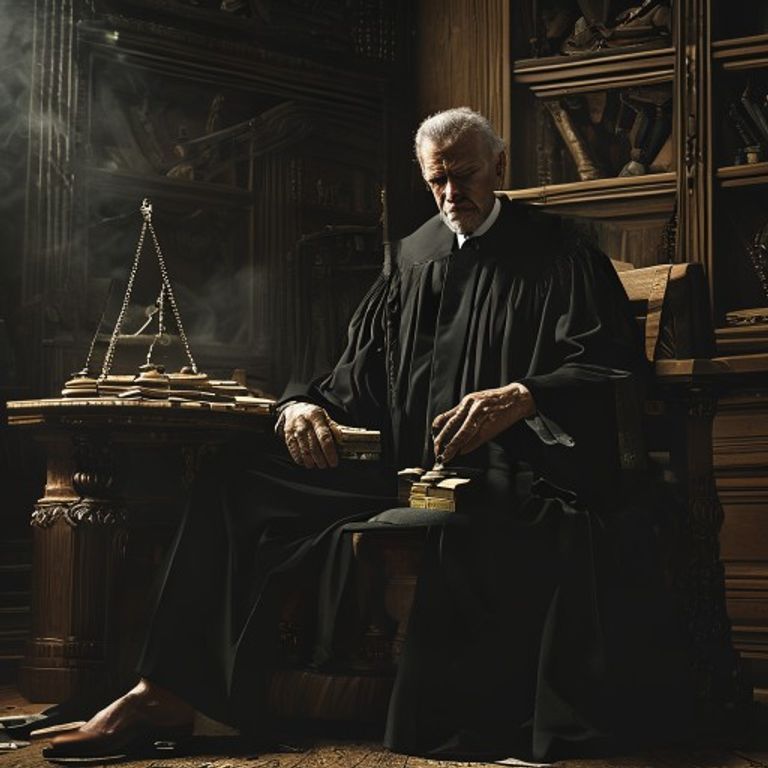
For a parent engaged in a desperate battle for the custody of their children, the courtroom is meant to be a sanctuary of impartial judgment. You expect the system to be flawed, perhaps even bureaucratic, but you fundamentally trust that the judge holding the fate of your family in his hands is making decisions based on the law and the best interests of the child.
But in the Brooklyn Supreme Court in the early 2000s, Justice Gerald Garson turned the matrimonial bench into a marketplace. He did not adjudicate child custody; he sold it. For the price of a box of expensive cigars, lavish dinners, and cash bribes slipped into his chambers, Garson rigged divorce settlements and awarded custody to whichever side paid his fixers. He monetized the destruction of families.
The Gerald Garson scandal is a chilling testament to a defunct American judicial system. It exposes how the localized power of a single judge, insulated by the "privilege of the corps" and a culture of absolute judicial deference, can operate as a devastatingly unchecked extortion racket. The Founding Fathers warned us of the dangers of an unaccountable legal elite, and Garson represents their darkest prophecies brought to life.
- Judge: Gerald Garson, New York State Supreme Court (Brooklyn)
- Jurisdiction: Matrimonial and child custody cases
- The Crime: Accepted bribes (cash, cigars, meals) from a "fixer" to manipulate case assignments and steer rulings in favor of paying litigants.
- The Discovery: Exposed only because a desperate litigant wore a wire to a meeting with the fixer, leading to hidden cameras in the judge's chambers.
- Conviction: Convicted in 2007 of receiving reward for official misconduct; served less than three years in prison.
The Marketplace of Matrimony
Justice Garson presided over the most emotionally volatile docket in the judicial system: divorce and custody. Litigants in his courtroom were fighting for their life savings, their homes, and most importantly, access to their children.
In this vulnerable environment, Garson operated through a network of connected attorneys and a primary "fixer," Paul Siminovsky. The scheme was brutally simple: if a litigant hired Siminovsky or one of his associates, they could buy an outcome. Siminovsky would routinely bypass the court's blind assignment system to ensure Garson got the case. Once Garson had the case, Siminovsky would buy him drinks, meals, and boxes of Montecristo cigars, slipping him thousands of dollars in cash to guarantee favorable rulings on alimony, asset distribution, and child visitation.
Hidden cameras eventually placed in Garson’s chambers by investigators captured the judge advising Siminovsky on exactly how to outmaneuver opposing counsel. The judge was actively conspiring against parents in his own courtroom, selling their children's futures for the price of a dinner.
The Antifederalist Warnings Validated
When the Constitution was being debated, the Antifederalist writer "Brutus" (widely believed to be Robert Yates) issued a stark warning about the proposed judiciary. He argued that granting judges immense power without strict accountability mechanisms would lead to tyranny. "They are independent of the people, of the legislature, and of every power under heaven," Brutus warned. "Men placed in this situation will generally soon feel themselves independent of heaven itself."
Garson certainly operated as if he were independent of heaven. He exploited the immense, localized power that family court judges wield. Because family law decisions are highly discretionary and rarely overturned on appeal, a corrupt family court judge operates as an absolute monarch. The Founders, deeply suspicious of unchecked power, designed a system of checks and balances—but the legal guild successfully insulated the judiciary from these very checks, creating the "privilege of their corps" that Thomas Jefferson so deeply despised.
Jefferson argued that the judiciary, acting like "sappers and miners," would quietly undermine the foundations of the republic. In Brooklyn, the sapping was literal: Garson mined the despair of broken families to line his own pockets, protected by a bar association and a judicial apparatus that reflexively defers to the bench.
A System Defunct, Not Just Broken
The establishment response to the Garson scandal was entirely predictable: the "bad apple" defense. Garson was investigated, indicted, convicted in 2007, and eventually sent to prison. The legal guild patted itself on the back and declared that the system worked.
But the system did not work. Garson was not caught by judicial oversight boards. He was not exposed by the New York State Bar Association. He was caught because an ordinary citizen, a litigant who was being extorted by Garson's fixer, was so desperate that she went to the district attorney and agreed to wear a wire. It took the extraordinary courage of a victim to expose what the legal establishment had allowed to flourish in plain sight.
A judicial system that requires a desperate parent to strap on a hidden microphone to catch a judge selling custody is not a functional system. It is a completely defunct apparatus that protects its own elite while feeding the public to the wolves.
The Required Reconstruction
We cannot reform our way out of this. Ethics seminars and updated judicial conduct codes will not deter men who view the bench as a revenue stream. We need structural reconstruction:
1. Abolish Judicial Immunity in Cases of Corruption: The doctrine of absolute judicial immunity shields judges from civil liability for their official acts. If a judge is convicted of accepting bribes to alter a ruling, the victims should have the immediate, unhindered right to sue the judge and the state for the destruction of their families.
2. Mandatory Surveillance in Chambers: The idea that a judge's chambers are a sacred sanctuary of legal contemplation is a myth used to hide misconduct. Judicial chambers, particularly when meeting with attorneys, should be subject to mandatory audio and video recording. Transparency is the only antidote to backroom extortion.
3. Eliminate Sovereign Guild Policing: The legal profession cannot be trusted to investigate itself. Judicial conduct commissions must be entirely stripped from the control of lawyers and judges, replaced by independent civilian investigative bodies with total subpoena power.
Gerald Garson took the profound, sacred trust of a child's welfare and sold it for cigars and cash. He proved that the Founders' greatest fears about judicial oligarchy were entirely justified. It is time to reconstruct the system that enabled him.
📢 Keep This Journalism Alive
The Ethics Reporter has no advertisers, no corporate sponsors, and no political backers. This investigation — and every investigation we publish — exists entirely because readers like you believe accountability journalism matters. If this reporting moved you, please consider supporting us.
Donate to The Ethics ReporterEven $1 helps. No amount is too small. Thank you for standing with us.