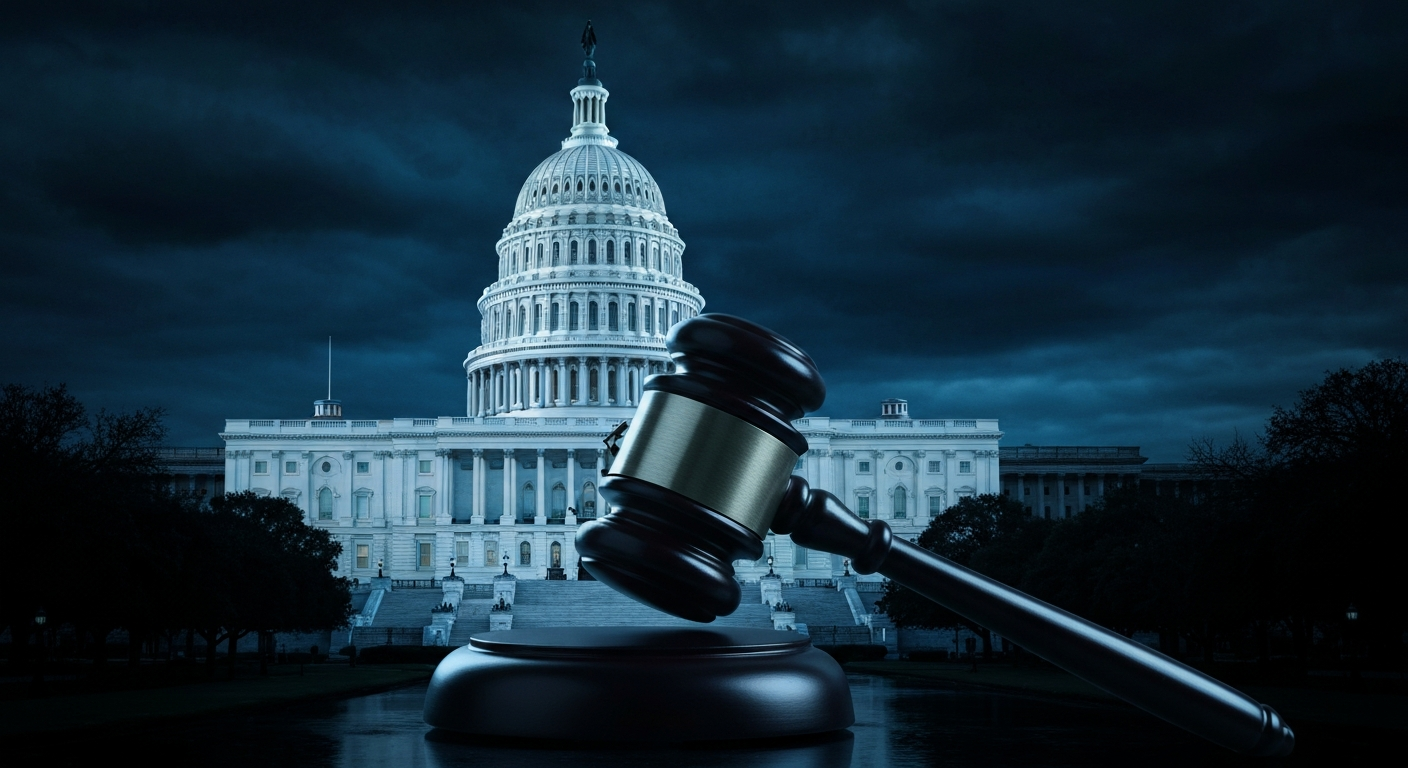
In the hallowed halls of the United States federal judiciary, the notion of absolute integrity is not merely an expectation; it is the foundational bedrock upon which the entire American legal system rests. When citizens walk into a federal courtroom, they are taught to believe that the black robe draped over the presiding judge serves as an impenetrable shield against bias, favoritism, and corruption. They are taught that Lady Justice is blind. But in the Eastern District of Louisiana, under the gavel of Judge G. Thomas Porteous Jr., Lady Justice was not blind. She was merely looking the other way while cash exchanged hands. The case of Thomas Porteous is not simply a story of a single judge who lost his moral compass; it is a sprawling, terrifying indictment of the American legal guild, demonstrating with chilling clarity how a federal judge can operate a systemic extortion racket for years while cloaked in the absolute immunity of the bench.
Quick Facts: The Porteous Impeachment
- The Judge: G. Thomas Porteous Jr., U.S. District Court for the Eastern District of Louisiana.
- Appointed By: President Bill Clinton in 1994.
- The Crimes: Accepting cash bribes from attorneys with active cases, extorting kickbacks from bail bondsmen, perjury in bankruptcy court.
- The Outcome: Impeached by the House and convicted by the Senate in December 2010.
- Historical Significance: Only the eighth federal judge in United States history to be convicted and removed from office by the Senate.
The Making of a Judicial Syndicate
To understand the depth of the betrayal perpetrated by Judge Porteous, one must examine the environment in which he operated. Louisiana has long struggled with a reputation for colorful, sometimes ethically flexible politics. However, the federal bench is supposed to remain immune to local political machinations. Porteous, a former state court judge in Jefferson Parish, was elevated to the federal bench in 1994. From the moment he took the oath of office, promising to administer justice without respect to persons, he began violating that very oath. His elevation to the federal bench did not sever his ties to the unsavory practices of his past; rather, it provided him with a vastly more powerful platform from which to monetize his authority.
Federal judges are granted life tenure precisely to insulate them from political pressure and financial temptation. The Founding Fathers believed that a lifetime appointment, coupled with a guaranteed salary that cannot be diminished, would ensure that judges ruled based solely on the law and the Constitution. Yet, this very insulation can become an impenetrable fortress for the corrupt. Once confirmed, a federal judge is subject to almost zero day-to-day oversight. There are no performance reviews, no audits of their rulings for implicit bias, and, most dangerously, a profound reluctance among attorneys to report misconduct for fear of career-ending retaliation by the judicial guild.
"For I agree, that there is no liberty, if the power of judging be not separated from the legislative and executive powers... The standard of good behavior for the continuance in office of the judicial magistracy, is certainly one of the most valuable of the modern improvements in the practice of government. In a monarchy it is an excellent barrier to the despotism of the prince; in a republic it is a no less excellent barrier to the encroachments and oppressions of the representative body. And it is the best expedient which can be devised in any government, to secure a steady, upright, and impartial administration of the laws."
— Alexander Hamilton, Federalist No. 78
Hamilton's vision of an upright and impartial administration of the laws was actively mocked by Porteous's daily conduct. His corruption was not a single moment of weakness, but a sustained, calculated business model. It involved two primary streams of illicit income: a kickback scheme with a local bail bondsman and a bribery pipeline orchestrated by a prominent law firm.
The Bail Bondsman and the Las Vegas Pipeline
One of the most egregious examples of Porteous's corruption involved his relationship with Louis Marcotte, a powerful bail bondsman in Jefferson Parish. The scheme was brutally simple and directly impacted the freedom and financial ruin of criminal defendants. Marcotte needed judges to set bonds at specific amounts—high enough that defendants needed his services, but structured in a way that maximized his profit margins. He also needed judges to improperly expunge criminal records so that his clients could continue to secure lucrative employment or avoid enhanced sentencing.
In exchange for Porteous's judicial favors, Marcotte essentially treated the judge as a high-roller client. Marcotte took Porteous on numerous lavish, all-expenses-paid trips to Las Vegas. He paid for Porteous's meals, his alcohol, his hotel rooms, and provided him with thousands of dollars in cash to fuel Porteous's gambling addiction. Even more disturbing, Marcotte provided Porteous with free maintenance on his personal vehicles. This was not a subtle conflict of interest; it was a transactional relationship where the currency was the liberty of the citizens appearing before the court.
Consider the terrifying implications of this arrangement. A judge, entrusted with the profound responsibility of determining whether a human being remains incarcerated pending trial, was making those decisions based on the financial needs of the man buying his drinks at a blackjack table in Nevada. The systemic failure here is staggering. For years, prosecutors, defense attorneys, and court staff witnessed this symbiotic relationship. The legal guild, bound by a code of silence and the terrifying prospect of judicial retaliation, looked the other way. If an attorney dared to question Porteous's bond decisions, they risked having their future clients severely punished by a vengeful judge.
Amato & Creely: Buying Federal Justice
While the Marcotte scheme was taking place largely in the context of state-level relationships that carried over, Porteous's corruption metastasized fully into his federal docket through his relationship with the law firm of Amato & Creely. Jacob Amato and Robert Creely were prominent attorneys who had long-standing ties to Porteous. When Porteous ascended to the federal bench, their financial support of the judge did not cease; it accelerated, becoming a formal mechanism for buying judicial outcomes.
The bribery took multiple forms. Amato and Creely routinely provided Porteous with envelopes of cash. They paid off his debts. They paid for his son's lavish bachelor party. In total, it is estimated that the firm funneled tens of thousands of dollars to the sitting federal judge. But the most damning incident occurred during the high-stakes bench trial of Lifemark Hospitals, Inc. v. Liljeberg Enterprises, Inc.
The Lifemark case was a massive, complex commercial dispute involving hundreds of millions of dollars. Amato and Creely were representing Liljeberg Enterprises. While the case was actively pending before Porteous, and while he had it under advisement—meaning he was the sole decision-maker drafting the final judgment—Porteous reached out to Amato and requested a short-term cash "loan" of $2,000. Amato, fully aware that a massive verdict was hanging in the balance, provided the cash. Unsurprisingly, Porteous ruled in favor of Liljeberg Enterprises, handing Amato's client a massive victory. When the ruling was later unsealed and the bribery exposed, the entire foundation of the federal civil justice system in Louisiana was thrown into question.
This was not a victimless crime. The opposing party in the Lifemark case spent millions of dollars on legal fees, operating under the delusion that they were participating in a fair, adversarial legal process. In reality, the game was rigged from the start. The judge was already bought. This incident exposes the horrific reality of absolute judicial immunity. When a judge takes a bribe and issues a corrupt ruling, the judge cannot be sued for civil damages by the injured party. The victims of Porteous's corruption had their financial lives destroyed, and the legal doctrine of absolute immunity shielded the man who destroyed them from civil liability.
Bankruptcy Fraud and the Arrogance of Power
The sheer arrogance of Judge Porteous was not confined to his courtroom. In 2001, overwhelmed by gambling debts and living far beyond his means, Porteous filed for Chapter 13 bankruptcy. For a federal judge to file for bankruptcy is embarrassing, but not inherently illegal. However, Porteous approached his bankruptcy with the same deceptive entitlement that characterized his time on the bench.
To avoid public scrutiny, he filed under a false name, "G. T. Porteous," rather than his full legal name. Furthermore, he committed blatant perjury on his bankruptcy schedules. He concealed assets, failed to disclose his gambling losses, and actively hid the fact that he was receiving illicit cash payments from attorneys. While the bankruptcy process relies on the absolute honesty of the debtor, a sitting federal judge—a man who routinely sentenced citizens to federal prison for perjury and fraud—was actively defrauding his own creditors and the United States Bankruptcy Court.
The hypocrisy is nauseating. Porteous sat on his elevated bench, looking down upon defendants, lecturing them about the rule of law, responsibility, and the consequences of deception, while simultaneously maintaining a fraudulent bankruptcy proceeding. It perfectly encapsulates the dual-tiered justice system that plagues the United States: severe consequences for the unwashed masses, and a staggering sense of impunity for the robed elite.
"The accumulation of all powers, legislative, executive, and judiciary, in the same hands, whether of one, a few, or many, and whether hereditary, self-appointed, or elective, may justly be pronounced the very definition of tyranny."
— James Madison, Federalist No. 47
Madison warned of the concentration of power. In a federal courtroom, the judge possesses a near-monopoly on power. They control the evidence, they control the narrative, and they control the final judgment. When that singular point of failure is corrupted, the tyranny Madison feared becomes a daily reality for every litigant trapped in that courtroom.
Operation Wrinkled Robe and the Failure of Self-Policing
How did Porteous get caught? It was not through the vigilance of the judicial guild. The Judicial Conduct and Disability Act of 1980 is supposed to provide a mechanism for the judiciary to police itself. It is a spectacular failure. The judiciary routinely dismisses over 99% of all ethics complaints filed against federal judges. The guild protects the guild.
Porteous was ultimately exposed by the FBI through a massive investigation known as "Operation Wrinkled Robe." The investigation initially targeted corruption in the state court system, specifically focusing on Marcotte and his bail bonds operation. As the FBI pulled the threads of Marcotte's criminal enterprise, they were led directly into the chambers of a sitting federal judge. Wiretaps, cooperating witnesses, and financial forensic analysis painted a picture of undeniable guilt.
Yet, even when the FBI brought this mountain of evidence to the Fifth Circuit Court of Appeals, the judicial machinery moved at a glacial pace. The Department of Justice, recognizing the unprecedented difficulty of prosecuting a sitting federal judge without a clear guarantee of conviction, ultimately opted to refer the matter to the Fifth Circuit for disciplinary review. It took years. During this time, Porteous continued to collect his six-figure taxpayer-funded salary. He was eventually suspended from hearing criminal cases, but he refused to resign, calculating that he could drag the process out long enough to secure his lifetime federal pension.
This exposes a critical flaw in the architecture of American justice. The only way to forcefully remove a federal judge is through the cumbersome, highly political process of impeachment by the House of Representatives and conviction by the Senate. This process was designed by the framers to be difficult, intended to protect judicial independence. However, in the modern era, it has become a virtually insurmountable barrier, effectively granting a license to steal to corrupt jurists.
The Impeachment: A Rare Spectacle of Accountability
In 2010, the House of Representatives, confronted with undeniable evidence of bribery and perjury, finally acted. The House Judiciary Committee drafted four Articles of Impeachment against Judge Porteous:
- Engaging in a pattern of conduct that is incompatible with the trust and confidence placed in him as a Federal judge (the Amato & Creely bribes).
- Engaging in a longstanding pattern of corrupt conduct that demonstrates his unfitness to serve as a United States District Court Judge (the Marcotte bail bonds scheme).
- Knowingly and intentionally making false statements, under penalty of perjury, related to his personal bankruptcy.
- Knowingly and intentionally making false statements to the United States Senate and the FBI during his 1994 confirmation process.
The House voted unanimously to impeach him. The trial then moved to the Senate. On December 8, 2010, the United States Senate voted to convict Porteous on all four articles. He was removed from office and forever disqualified from holding any office of honor, trust, or profit under the United States. It was a victory for accountability, but a terrifyingly rare one. The fact that it took an exhaustive FBI operation, years of wiretaps, and a literal act of Congress to fire a judge who was openly taking envelopes of cash is not a testament to the system working; it is proof that the system is broken.
For every Thomas Porteous who is foolish enough to get caught in an FBI wiretap, how many more sophisticated jurists are quietly steering multi-million dollar corporate settlements toward favored law firms? How many judges are trading favorable rulings for post-retirement partnerships, speaking fees, or lucrative directorships? The Porteous case is not an anomaly; it is a glimpse behind the curtain of a judiciary that operates with virtually zero external oversight and absolute immunity from civil consequences.
The Shield of the Robe: Why We Cannot Wait for Congress
The central tragedy of the Porteous case is the devastation inflicted upon the individuals who appeared before him. The litigants whose businesses were destroyed because the opposing counsel bribed the judge had no recourse. The criminal defendants who languished in jail because the judge needed a high bond to keep his Las Vegas sugar daddy happy had their constitutional rights eviscerated. And because of the doctrine of absolute judicial immunity—a doctrine invented by judges, for judges—none of these victims could sue Porteous for the damages he caused.
If a doctor is drunk during surgery and permanently injures a patient, the patient can sue for malpractice. If a police officer uses excessive force, they can be sued under 42 U.S.C. § 1983. But if a federal judge takes a bribe and intentionally issues an illegal ruling that destroys a family, the victims are told they have no remedy. The Supreme Court has repeatedly upheld this doctrine, arguing that it is necessary to allow judges to make difficult decisions without fear of litigation. But as the Porteous case demonstrates, absolute immunity does not protect the integrity of the bench; it protects the corruption of the bench.
The reliance on the impeachment process as the sole remedy for judicial corruption is a dangerous fantasy. Congress does not have the time, the resources, or the political will to actively police the 870 federal judges across the nation. The process is too slow, too cumbersome, and too easily derailed by partisan politics. We need a fundamental restructuring of judicial accountability.
Consider the broader historical context of judicial impeachments. Since the founding of the Republic, only 15 federal judges have been impeached, and only eight have been convicted and removed. This translates to an infinitesimal fraction of the thousands of men and women who have worn the black robe. Are we to believe that the federal judiciary possesses a purity rate of 99.9%? Human nature dictates otherwise. The low rate of impeachment is not an indicator of judicial purity; it is a symptom of a systemic inability to investigate and prosecute powerful figures who control the very mechanisms of justice.
In many districts, the federal courthouse functions as a closed ecosystem. The judges, the federal prosecutors, and the elite defense attorneys form an insulated professional network. They attend the same galas, they sit on the same bar association committees, and they share a mutual interest in preserving the status quo. If a young attorney discovers that a judge is subtly steering cases or accepting favors, bringing that to light guarantees professional suicide. The attorney will be blackballed, their motions will be routinely denied, and their clients will suffer. The institutional pressure to remain silent is overwhelming. Porteous operated in this environment, weaponizing the guild's silence to sustain his criminal enterprise.
Furthermore, the ethical canons governing judges are often treated as mere suggestions rather than enforceable laws. When a judge fails to recuse themselves from a case involving a financial benefactor, it is almost impossible for an aggrieved party to force that recusal without incurring the judge's wrath. 28 U.S.C. § 455 requires a judge to disqualify himself in any proceeding in which his impartiality might reasonably be questioned. Porteous flagrantly violated this statute for years. Yet, because the judge himself is initially responsible for determining whether his own impartiality might be questioned, the statute is inherently self-defeating. It asks the corrupt to declare their own corruption.
The psychological profile of a judge like Porteous reveals a dangerous phenomenon: the "God Complex" of the federal bench. When an individual is surrounded by sycophants who literally stand when they enter the room, address them exclusively as "Your Honor," and rarely challenge their authority without profound deference, the boundaries of reality begin to blur. For Porteous, the transition from impartial arbiter to corrupt deal-broker was likely gradual. A free lunch here, a comped hotel room there, evolving over years into explicit cash demands. The lack of independent, adversarial oversight allows this moral decay to occur undetected until the rot is absolute.
A Blueprint for Total Reform
The American people cannot accept a system where justice is treated as a commodity to be bought and sold by the highest bidder. The Thomas Porteous impeachment must serve as a catalyst for sweeping, fundamental reform of the federal judiciary. The following blueprint outlines the necessary steps to dismantle the fortress of judicial immunity and restore accountability:
- Abolish Absolute Judicial Immunity for Malicious Acts: Congress must pass legislation establishing a civil cause of action against federal judges who commit crimes, take bribes, or intentionally violate constitutional rights. Immunity must be restricted to good-faith errors in legal interpretation, not criminal enterprise.
- Create an Independent Judicial Inspector General: The judiciary cannot police itself. An independent office, entirely separate from the Article III court structure, must be created to investigate allegations of judicial misconduct, armed with subpoena power and the authority to conduct unannounced audits of judicial financial disclosures.
- Mandatory, Random Audits of Judicial Rulings: Just as the IRS audits taxpayers, a designated oversight body should randomly audit civil and criminal dockets to identify statistically significant patterns of favoritism, irregular bond settings, or unexplained delays designed to benefit specific law firms.
- End Lifetime Tenure: The Constitution should be amended to replace lifetime tenure with a single, non-renewable 15-year term. This preserves judicial independence from immediate political pressures while ensuring that judges eventually return to the citizenry and live under the laws they administered.
- Criminalize the Guild's Code of Silence: Attorneys who have direct knowledge of judicial bribery or extortion and fail to report it to federal authorities must face mandatory disbarment and federal obstruction charges. The complicity of the bar cannot be tolerated.
- Public Funding of Disciplinary Proceedings: When citizens file credible complaints against federal judges, they should be provided with independent legal counsel, funded by the government, to navigate the complex and hostile process of the Judicial Conduct and Disability Act.
Judge G. Thomas Porteous Jr. treated the federal judiciary as his personal fiefdom. He sold justice, destroyed lives, and mocked the Constitution. His removal was necessary, but it is deeply insufficient. We must not look at his case as a closed chapter; we must look at it as a glaring warning light on the dashboard of American jurisprudence. Until the systemic protections that allowed him to operate for over a decade are dismantled, the bench will remain vulnerable to the next charismatic, corrupt jurist waiting to turn the courtroom into a bazaar.
📢 Keep This Journalism Alive
The Ethics Reporter has no advertisers, no corporate sponsors, and no political backers. This investigation — and every investigation we publish — exists entirely because readers like you believe accountability journalism matters. If this reporting moved you, please consider supporting us.
Donate to The Ethics ReporterEven $1 helps. No amount is too small. Thank you for standing with us.