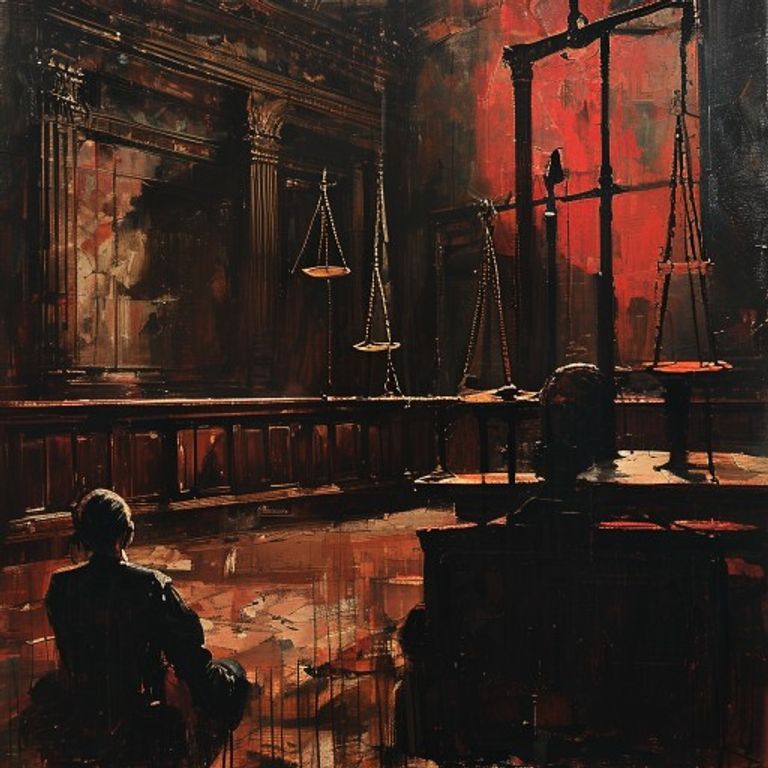
The courtroom is supposed to be a sanctuary. It is the one place where the awesome power of the state is meant to be balanced by the inviolable rights of the individual, where the scales of justice are held by an impartial hand. For the children of Luzerne County, Pennsylvania, that sanctuary became a marketplace, and the judges they stood before were not arbiters of justice, but auctioneers selling their freedom to the highest bidder. From 2003 to 2008, Judges Mark Ciavarella and Michael Conahan presided over a juvenile justice system they had secretly privatized for their own enrichment. They accepted $2.8 million in illegal payments from the developers of two for-profit juvenile detention centers. In exchange, they guaranteed a steady stream of business: children. Thousands of them. Some as young as ten years old were shackled and sent away for months for offenses as trivial as creating a fake MySpace page, trespassing in a vacant building, or getting into a schoolyard scuffle. The judges ran a zero-tolerance pipeline, enforcing a policy that was not about public safety, but about filling beds in the facilities that were lining their pockets.
- The Judges: Luzerne County Court of Common Pleas Judges Mark Ciavarella Jr. and Michael Conahan.
- The Scheme: The judges took $2.8 million in kickbacks from the developer of two private, for-profit juvenile detention centers.
- The Victims: An estimated 4,000 children were sentenced by Ciavarella, often for minor infractions, without legal counsel, and sent to these facilities.
- The Offenses: Children were incarcerated for acts like creating a parody MySpace page of a school principal, shoplifting a bottle of steak sauce, or being truant.
- The Deprivation of Rights: A vast majority of the children appeared before Ciavarella without a lawyer, a direct violation of their Sixth Amendment rights.
- The Sentences: Ciavarella was sentenced to 28 years in federal prison; Conahan was sentenced to 17.5 years.
- The Aftermath: The Pennsylvania Supreme Court overturned thousands of juvenile convictions and expunged the records of the affected children.
The Architecture of a Corrupt Bargain
The scheme was born from a simple, corrupt premise. In the early 2000s, Luzerne County was responsible for its own juvenile detention services. Judge Michael Conahan, then the county's President Judge, wielded immense administrative power. He made a decision: he would shut down the county-run, publicly funded juvenile detention center. He argued it was dilapidated and unsafe, a drain on taxpayer resources. In its place, a brand new, privately owned facility would be built—the PA Child Care facility. What was not disclosed to the public, or to anyone else in the county government, was that Conahan and Ciavarella had a financial stake in this decision. Robert Powell, a local attorney and co-owner of the new facility, was paying them a handsome finder's fee. The initial payments totaled over a million dollars, funneled through a network of shell companies and third parties. Later, when a second facility was built, the payments continued. The judges who were supposed to be the guardians of the public trust had entered into a secret partnership with the very businesses that stood to profit from their judicial decisions.
Judge Ciavarella's Zero-Tolerance Courtroom
With the financial arrangement in place, the scheme required a product: incarcerated children. Judge Mark Ciavarella, who presided over the county's juvenile court, became the assembly line foreman. He instituted a draconian "zero-tolerance" policy that shocked and terrified local families. Children appearing before him for minor, first-time offenses were routinely denied their constitutional right to an attorney. Hearings lasted mere minutes. A child who stole a pack of DVDs from Walmart was handcuffed and sent away for months. A 14-year-old girl who created a fake MySpace profile for her vice principal was charged with harassment and sentenced to three months in detention. A high school honor student who got into a fight with a friend was charged with simple assault and incarcerated. The message was clear: in Luzerne County, any misstep by a teenager would result in immediate, severe punishment. Parents were bewildered. Children were traumatized. But the beds at PA Child Care and its sister facility were full, and the money continued to flow to the judges.
"It is the first responsibility of every citizen to question authority."
The system was deliberately designed to intimidate and confuse. Children were often encouraged to waive their right to counsel, a decision they were legally and developmentally incapable of making intelligently. Ciavarella presented it as a way to expedite the process, to "get it over with." In reality, it was stripping them of their only defense. Without a lawyer to object, to present mitigating circumstances, or to appeal the outrageous sentences, the path from the schoolyard to the detention cell was swift and unopposed. This was not a failure of due process; it was the active, intentional dismantling of due process for profit.
The Unraveling and the Federal Investigation
For years, the complaints of parents and the alarms raised by a handful of local advocates were ignored. The legal establishment of Luzerne County, a place described by many as insular and politically incestuous, closed ranks. The judges were powerful figures. To question their rulings was to risk professional suicide. It took the persistence of the Juvenile Law Center, a non-profit advocacy group in Philadelphia, to finally pierce the veil of silence. They investigated the shocking statistics coming out of Luzerne County—where an astonishing 50% of juvenile defendants were adjudicated delinquent without legal representation, compared to a statewide average of less than 10%. Their petitions to the Pennsylvania Supreme Court initially went nowhere. But their work attracted the attention of federal investigators, who were already looking into mafia-related corruption in the county. They began to follow the money. They discovered the complex web of payments from the facility owners to the judges, disguised as rent for a shared condominium in Florida and other sham investments. In 2009, the dam broke. Federal prosecutors unsealed a 48-page indictment, and the two judges were charged with wire fraud and income tax evasion. The full scope of their betrayal of the public trust was laid bare for the world to see.
"The essence of Government is power; and power, lodged as it must be in human hands, will ever be liable to abuse."
The Aftermath: A Generation Scarred
The legal consequences for the judges were severe. Ciavarella, defiant to the end, rejected a plea deal, went to trial, and was convicted on 12 of 39 felony counts, including racketeering. He was sentenced to 28 years in federal prison. Conahan pleaded guilty and received a sentence of 17.5 years. But the human toll of their crimes is incalculable. Thousands of young lives were derailed. Children who were incarcerated for trivial mistakes emerged from detention hardened, traumatized, and stigmatized with a criminal record. Many suffered from PTSD, depression, and anxiety. Some fell into a cycle of genuine crime. At least two of Ciavarella's victims later died by suicide. The Pennsylvania Supreme Court took the extraordinary step of vacating every single one of the thousands of juvenile convictions Ciavarella had issued between 2003 and 2008, a sweeping rebuke of his entire tenure on the bench. But while the records could be expunged, the scars could not.
A Blueprint for Reform: Ending the Profit Motive in Justice
The Kids for Cash scandal is a chilling case study in what happens when the profit motive is allowed to infect the core functions of our justice system. To prevent such a catastrophe from happening again requires a fundamental rethinking of judicial oversight and the role of private enterprise in corrections.
- Ban For-Profit Juvenile Detention Centers: The most direct lesson from this scandal is that creating a profit incentive to incarcerate children is a moral and systemic hazard. The financial interests of a private prison company will always be in conflict with the public interest in rehabilitation and minimizing detention. All juvenile correctional and detention facilities should be operated by state or local governments on a non-profit basis.
- Mandatory, Non-Waivable Right to Counsel for Juveniles: A child cannot intelligently waive their constitutional right to an attorney. The law must be changed to make legal representation mandatory and non-waivable in all juvenile delinquency proceedings that could result in out-of-home placement. Public defender offices must be fully funded to provide this essential service.
- Strengthen Judicial Ethics and Financial Disclosure Laws: Judges must be subject to the most stringent financial disclosure requirements of any public official. All sources of income, investments, and business relationships—for both the judge and their immediate family—must be publicly and easily accessible. State judicial conduct boards must be empowered with independent investigative and prosecutorial authority, rather than relying on self-policing.
- Create Data Transparency and Public Oversight: Key statistics for every juvenile court—such as the percentage of youth represented by counsel, the average length of stay in detention by offense, and the rates of out-of-home placement by judge—should be publicly reported. This data would have revealed Ciavarella’s courtroom as a statistical anomaly years before the federal investigation began, allowing for earlier intervention.
- Establish Citizen-Led Judicial Accountability Commissions: In addition to formal state-run conduct boards, communities should have a mechanism for oversight. Citizen-led commissions, empowered to review judicial data, hear public testimony, and refer complaints to state authorities, can serve as a vital check on a system that is often opaque and unaccountable to the people it serves.
Conclusion: Justice Is Not a Commodity
The story of Kids for Cash is not just about two corrupt men. It is about a system that allowed their corruption to fester for years. It is about a culture of deference to judicial authority that prevented lawyers, social workers, and other court personnel from speaking out. It is about the horrifying consequences of viewing vulnerable human beings as entries on a balance sheet. Justice cannot be a commodity to be bought and sold. When we allow private companies to profit from the deprivation of liberty, we create the very conditions that made this scandal possible. Mark Ciavarella and Michael Conahan did not just break the law; they broke the sacred trust that underpins the entire American system of justice. Rebuilding that trust requires more than just imprisoning the guilty. It requires dismantling the structures that made their crimes possible, ensuring that no child ever again has their freedom sold for a kickback.
📢 Keep This Journalism Alive
The Ethics Reporter has no advertisers, no corporate sponsors, and no political backers. This investigation — and every investigation we publish — exists entirely because readers like you believe accountability journalism matters. If this reporting moved you, please consider supporting us.
Donate to The Ethics ReporterEven $1 helps. No amount is too small. Thank you for standing with us.