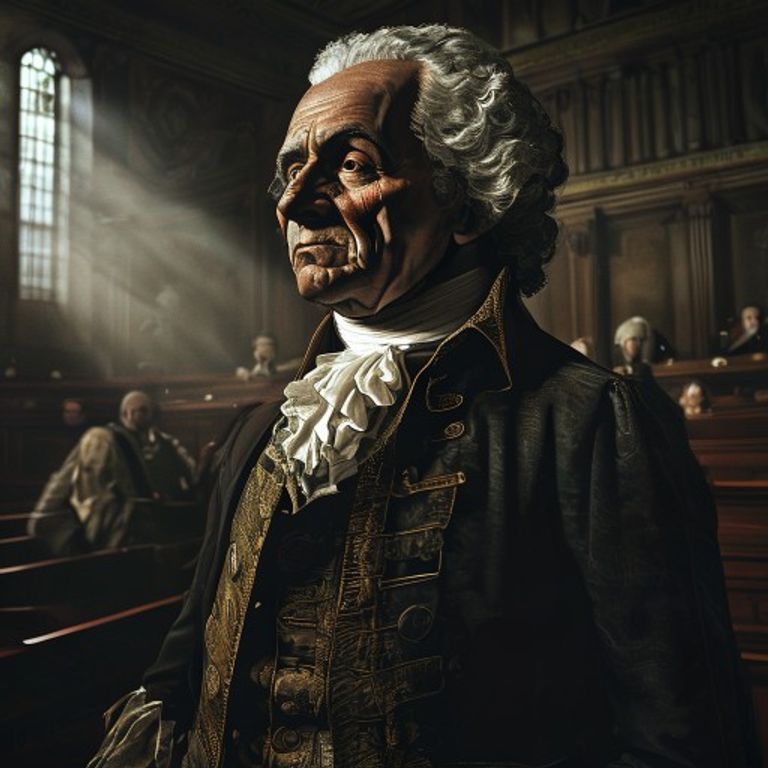
In the early 1980s, the Cook County court system in Chicago was not merely corrupt. It was a fully integrated, monetized marketplace where the price of justice was negotiated in courthouse hallways and paid in cash. It took the most extensive undercover investigation in the history of the FBI — Operation Greylord — to expose what the legal profession itself had tolerated, enabled, and profited from for decades.
By the time the indictments were unsealed, the staggering scale of the rot became undeniable. Ninety-two people were indicted. Among them were seventeen judges, forty-eight lawyers, ten deputy sheriffs, eight police officers, and eight court officials. They had fixed everything from drunk driving charges to felony murder trials. Bribes were passed in matchbooks, folded into handshakes, and left in judicial chambers. Justice was not blind; she was simply waiting for the highest bidder.
Yet the true scandal of Operation Greylord is not that it happened. It is that the American legal system — the bar associations, the judicial conduct commissions, the appellate courts — allowed it to operate as an open secret for years. It required federal agents wearing wires and staging fake crimes to penetrate a system that was supposed to be policing itself.
This is precisely the nightmare the Founding Fathers warned us about. They constructed a republic based on the principle that power corrupts, yet we handed the keys to the judiciary to a closed guild of lawyers who insisted they could be trusted to self-regulate. Operation Greylord proved they could not. And four decades later, the structural flaws that made Greylord possible remain entirely intact.
- Location: Cook County, Illinois (Chicago)
- Timeframe: Undercover phase 1980–1983; trials continued through the decade
- Indictments: 92 total, including 17 judges and 48 lawyers
- Convictions: Over 80 convictions, including 15 judges
- Methods: FBI agents posed as corrupt lawyers, prosecutors, and defendants; courtrooms were bugged
- The Corruption: Bribes paid to fix cases ranging from parking tickets to murder, often coordinated in a "hustlers' row" system
- The Silence: The corruption was widely known within the Chicago legal community, yet state disciplinary bodies failed to act until federal intervention
The "Hustlers" and the Bench
To understand the mechanics of Greylord, one must look at how thoroughly the corruption was institutionalized. In the Cook County traffic and misdemeanor courts, a group of defense attorneys known as "hustlers" practically lived in the courthouse corridors. When defendants arrived without representation, court personnel — bailiffs and clerks — would steer them toward these hustlers in exchange for a cut of the legal fee.
The hustler would then approach the judge. The arrangement was understood without needing to be spoken: the lawyer would charge the client an exorbitant fee, ostensibly because he was a "miracle worker." The miracle was simply that a portion of that fee was quietly passed to the judge to guarantee an acquittal, a dismissal, or a drastically reduced sentence. Unrepresented defendants who refused the hustle were virtually guaranteed to be found guilty, punished to the maximum extent of the law by the very same judges, simply to reinforce the necessity of paying the toll.
When the FBI launched Operation Greylord, they didn't just look for informants. They fabricated entire criminal cases. Federal agents posed as defendants and corrupt defense attorneys. In a move that shocked the legal establishment, the FBI even obtained authorization to plant listening devices directly inside the chambers of Chief Judge Richard LeFevour, one of the primary architects of the bribery rings.
LeFevour was ultimately convicted of accepting bribes to dismiss drunk driving cases and traffic violations. He was sentenced to 12 years in federal prison. But LeFevour was merely the most prominent symptom of a systemic disease.
The Betrayal of Federalist 51
When James Madison drafted Federalist No. 51, he laid out the foundational psychology of American government: "If angels were to govern men, neither external nor internal controls on government would be necessary." Because men are not angels, Madison argued, government must be structured so that "ambition must be made to counteract ambition." No branch, no institution, and no faction could be trusted with unchecked power.
Yet, when it comes to the judiciary, the American system has abandoned Madison's premise entirely. The legal profession argued — and lawmakers accepted — that law is a specialized science, so complex that only lawyers can police lawyers, and only judges can judge judges. We built a system of self-regulation: bar associations and judicial conduct boards staffed entirely by the very guild they are meant to oversee.
Operation Greylord demonstrated the catastrophic failure of this model. The bribery in Cook County was not the work of a few masterminds operating in deep secrecy. It was an open secret. Hundreds of ethical lawyers, prosecutors, and police officers knew exactly which judges were "on the take." They knew which attorneys could guarantee an acquittal. They saw the bags of cash being carried into chambers.
And yet, the Illinois Attorney Registration and Disciplinary Commission (ARDC) and the Judicial Inquiry Board — the self-policing organs of the profession — did absolutely nothing. It was institutional omertà. The system prioritized the reputation of the profession over the integrity of the republic.
Jefferson's Warning: "The Privilege of Their Corps"
Thomas Jefferson viewed the organized legal profession with deep suspicion. He recognized that lawyers, if left unchecked, would inevitably coalesce into an oligarchy that protected its own interests at the expense of the public. In a letter written in 1820, Jefferson diagnosed the exact pathology that would eventually ravage Cook County:
"Our judges are as honest as other men, and not more so. They have, with others, the same passions for party, for power, and the privilege of their corps." — Thomas Jefferson, Letter to William Jarvis, 1820
"The privilege of their corps." Jefferson understood that professional solidarity would inevitably supersede public duty. When a judge takes a bribe, he does not merely commit a crime; he leverages the monopoly power granted to him by the state. When the legal "corps" witnesses this and looks the other way, they become accomplices to tyranny.
In the Declaration of Independence, one of the primary grievances leveled against King George III was precisely about the perversion of judicial independence: "He has made Judges dependent on his Will alone, for the tenure of their offices, and the amount and payment of their salaries."
In Cook County, the judges had simply cut out the King. They made themselves dependent on the "Will alone" of the highest bidder. They privatized the tyranny.
The Systemic Reconstruction We Need
Following Operation Greylord, the legal establishment offered its standard remedy: ethics seminars, slightly revised codes of conduct, and solemn declarations that the "bad apples" had been removed. The structural architecture of the system — the self-policing guild — was left completely untouched.
The premise remains that the legal profession can heal itself. History proves it cannot. A system that relies on FBI sting operations and fabricated crimes to catch corrupt judges is a defunct system. We do not need reform. We need systemic reconstruction.
1. Abolish Self-Policing by Bar Associations. The discipline of attorneys and judges must be removed from the hands of the legal guild. State judicial conduct boards and attorney disciplinary commissions must be reconstituted with mandatory civilian majorities. The people, not the profession, must have the final say on who is fit to practice law and hold judicial office.
2. End Confidential Conduct Proceedings. The secrecy that surrounds judicial conduct complaints is the soil in which corruption grows. All formal complaints against judges and attorneys must be a matter of public record from the moment they are filed. The public has a right to know if a judge has a pattern of ethical violations before they walk into that courtroom.
3. Institute Routine Financial Audits for the Judiciary. Judges exercise immense power over the economic destinies of litigants. Article III judges, as well as state-level judges, should be subject to mandatory, unannounced financial audits by an independent inspector general. A public servant who objects to financial transparency has no business sitting in judgment of others.
4. Reassert Legislative Supremacy Over Court Jurisdiction. The Founders designed the legislature as the ultimate check on the courts. Congress and state legislatures must use their constitutional authority to aggressively investigate judicial corruption, subpoena court personnel, and utilize the impeachment power as a routine mechanism of accountability, not a once-in-a-generation spectacle.
Alexander Hamilton argued in Federalist No. 78 that the judiciary would be the "least dangerous" branch because it possessed "neither force nor will, but merely judgment." He presumed that judgment would remain pure.
Operation Greylord proved that when judgment is corrupted by cash, the judiciary becomes the most dangerous branch of all — an unassailable fortress where constitutional rights are bought and sold in the dark. It is time to tear down the fortress and rebuild a justice system that answers to the people.
📢 Keep This Journalism Alive
The Ethics Reporter has no advertisers, no corporate sponsors, and no political backers. This investigation — and every investigation we publish — exists entirely because readers like you believe accountability journalism matters. If this reporting moved you, please consider supporting us.
Donate to The Ethics ReporterEven $1 helps. No amount is too small. Thank you for standing with us.