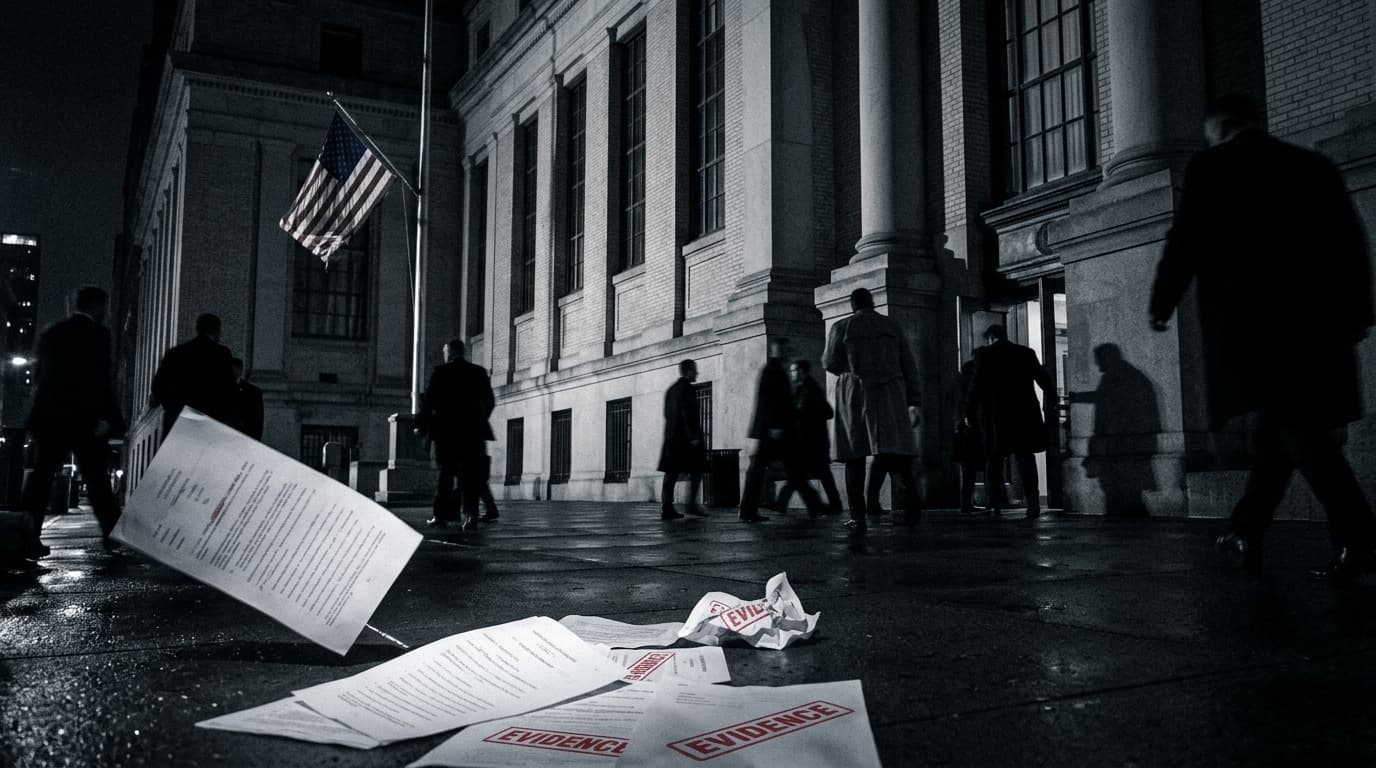
On the evening of October 27, 2008 — eight days before a United States Senate election — a federal jury in Washington, D.C., returned a verdict that would shatter a forty-year career, alter the balance of the United States Senate, and ultimately expose one of the most brazen acts of prosecutorial misconduct in American legal history. Senator Ted Stevens of Alaska, the longest-serving Republican senator in the nation's history, was found guilty on seven counts of making false statements on Senate financial disclosure forms. He had failed, prosecutors alleged, to properly report gifts and home renovations provided by his friend Bill Allen, the head of oil services company VECO Corporation.
The courtroom drama was intense, the verdict splashed across every front page, and the political fallout immediate. Stevens lost his re-election bid to Democrat Mark Begich by fewer than 4,000 votes — less than one percent of the total cast. He was 84 years old. He had served Alaska in the Senate since 1968. He had survived a plane crash in 1978 that killed five others, including his first wife. He would not survive what the United States Department of Justice did to him.
Within five months of the verdict, the entire case collapsed. The conviction was vacated. Prosecutors were found to have systematically withheld exculpatory evidence, coached witnesses, concealed a key witness's criminal background, and actively deceived the court. A special master appointed by the presiding judge called it "systematic concealment" and documented misconduct so pervasive that it implicated supervisors all the way up the chain of command at DOJ. One prosecutor took his own life. Others received letters of admonishment — the legal equivalent of a strongly worded memo. The man whose false testimony helped convict Stevens ultimately faced no federal charges for perjury at all.
And the Senate seat Stevens lost? It handed Democrats their 60th vote — the filibuster-proof supermajority that, for the first and only time in American history, enabled the passage of the Affordable Care Act.
- Defendant: Senator Ted Stevens (R-AK), longest-serving Republican senator in U.S. history
- Charges: Seven counts of making false statements (18 U.S.C. § 1001) for failing to disclose gifts on Senate financial disclosure forms
- Verdict: Guilty on all seven counts, October 27, 2008 — eight days before the 2008 election
- Key misconduct: Prosecutors withheld notes of FBI interviews with star witness Bill Allen, concealed Allen's prior criminal conduct, and allowed false testimony to go uncorrected
- Outcome: Conviction vacated April 7, 2009; case dismissed with prejudice
- Special investigation: Judge Emmet Sullivan appointed Henry Schuelke III as independent counsel; his 2012 report found six prosecutors committed misconduct
- Accountability: One prosecutor died by suicide; others received administrative letters; no criminal charges filed against any prosecutor
- Political consequence: Stevens lost re-election by ~4,000 votes; Alaska's seat went Democratic, providing the 60th Senate vote for the ACA
- Statute of limitations: By the time Schuelke's report was finalized, time had run out to charge several prosecutors
The Man They Brought Down
Theodore Fulton Stevens was not a saint. No senator who serves four decades is. He was famously prickly, imperious, and transactional — the kind of legislator who called colleagues' legislation "the most objectionable pieces of legislation to ever come before the Senate" and wore an Incredible Hulk tie on the Senate floor during budget fights. He had inserted enough earmarks into appropriations bills over the years that critics called him "the King of Pork." He had secured billions for Alaska — roads, bridges, federal buildings, military installations — and Alaskans loved him for it.
But Stevens was also, by any honest accounting, one of the most consequential senators of his era. He had drafted the Trans-Alaska Pipeline Authorization Act. He had fought for Native Alaskan land rights. He had shepherded the Alaska Native Claims Settlement Act through Congress. He had been one of the key architects of the Violence Against Women Act. He had served in World War II as a cargo pilot and nearly died multiple times. He was, in the parlance of another era, a public servant.
The case against him centered on renovations to his home in Girdwood, Alaska — a chalet-style house called "Rockefeller" that VECO workers had helped expand. The government alleged Stevens had received approximately $250,000 in goods and services without disclosing them on his Senate financial disclosure forms, as required by law. Stevens maintained throughout that he had paid for the renovations and had been deceived about the full cost by Bill Allen, who he considered a longtime friend.
What Stevens did not know — and what the jury never heard — was that Bill Allen had told FBI agents a very different story than the one he told on the witness stand. And prosecutors knew it. And they hid it.
Bill Allen: The Star Witness With the Hidden Past
Bill Allen was, by any measure, a remarkable figure in Alaskan political corruption. The founder of VECO Corporation, he had spent years bribing Alaska state legislators, providing cash, prostitutes, and gifts in exchange for favorable oil-tax legislation. By the time he became the government's star witness against Stevens, he had already pleaded guilty to extortion, bribery, and conspiracy charges. He was cooperating with federal prosecutors in hopes of a reduced sentence.
What prosecutors told the court and the public was that Allen was a reformed man, a cooperator, someone who had come clean. What prosecutors did not disclose — and were legally required to under Brady v. Maryland (1963) — was substantially more troubling.
FBI agents had interviewed Allen extensively before trial. In some of those interviews, Allen had said things that directly contradicted what he would later say on the witness stand — statements that supported Stevens's version of events, statements that tended to exculpate the defendant. The notes of those interviews — what lawyers call "302s" — were required to be turned over to the defense. They were not.
Furthermore, prosecutors concealed that Allen had an undisclosed sexual relationship with an underage girl, a fact that defense attorneys could have used to impeach his credibility. A key government witness, Rocky Williams, who testified that Stevens had been told about the true cost of the renovations, had given the FBI an earlier statement that flatly contradicted his trial testimony. That statement was also withheld. Prosecutors later acknowledged they had allowed Williams to testify to things they knew were false without correcting the record.
The Brady rule — established by the Supreme Court in 1963 — is one of the most fundamental obligations in American criminal law. Prosecutors must turn over any evidence that is material and favorable to the defendant. It is not optional. It is not subject to prosecutorial discretion about whether the defense would "really use it." It is a constitutional floor, the bare minimum of fairness required by the Due Process Clause of the Fifth and Fourteenth Amendments. The prosecutors in the Stevens case ignored it comprehensively.
"The accumulation of all powers, legislative, executive, and judiciary, in the same hands, whether of one, a few, or many, and whether hereditary, self-appointed, or elective, may justly be pronounced the very definition of tyranny."
The Trial: A Compressed Timeline, a Rushed Verdict
The trial itself was a compressed affair, beginning in late September 2008 and concluding with a verdict on October 27. The timing was not accidental. The 2008 election was November 4. A verdict before the election would allow the conviction to color voters' perceptions of Stevens. A verdict after would have given Stevens the chance to win re-election before a jury had spoken.
Defense attorneys complained throughout the trial that the government was hiding evidence. They filed Brady motions. They argued that the prosecution's document production was incomplete. Judge Emmet Sullivan, a respected jurist on the D.C. Circuit who would later become famous for his handling of the Michael Flynn case, repeatedly pressed the prosecution to comply with its disclosure obligations. Prosecutors repeatedly assured him they had done so.
They had not.
During the trial, one of the government's witnesses — a VECO employee named Dave Anderson — gave testimony that defense attorneys believed contradicted prior FBI statements. They demanded the 302s. The government said the 302s had already been produced. Judge Sullivan ordered an in-camera review. The prosecutors, rather than acknowledging the problem, continued to insist everything was in order.
It wasn't until after the verdict that the full picture began to emerge. An FBI agent on the case — Chad Joy — filed a formal whistleblower complaint alleging that the lead prosecutor had intentionally withheld evidence, that a government witness had received preferential treatment not disclosed to the defense, and that there had been an inappropriate relationship between one prosecutor and the Allen legal team. Joy's complaint blew the case open.
The Collapse: Eric Holder Steps In
By the time Barack Obama took office in January 2009, Ted Stevens had already been defeated. He had conceded to Mark Begich on November 19, 2008, after absentee and questioned ballots sealed his defeat. He was no longer a senator. But the legal case against him continued, and new Attorney General Eric Holder inherited it.
Holder ordered a review. What the review found was devastating. On April 1, 2009, the Justice Department filed a motion to vacate Stevens's conviction entirely — not to retry the case, not to file new charges, but to erase it. The motion cited the government's failure to produce exculpatory statements from key witnesses, including Rocky Williams and Bill Allen himself. It was an extraordinary act of institutional self-indictment.
On April 7, 2009, Judge Sullivan granted the motion. He vacated all seven convictions. He then did something nearly unprecedented: he launched his own investigation into prosecutorial misconduct, appointing Henry Schuelke III — a prominent Washington defense attorney and former federal prosecutor — as a special master to investigate what had gone wrong and who was responsible.
Judge Sullivan was not finished. He referred the prosecutors for contempt proceedings. He stated publicly that he had "never seen mishandling and misconduct like what the government did in this case." He ordered the prosecutors to show cause why they should not be held in contempt. He was visibly, righteously angry — the kind of anger that comes from watching the institution you serve be debased by the people sworn to uphold it.
"If men were angels, no government would be necessary. If angels were to govern men, neither external nor internal controls on government would be necessary. In framing a government which is to be administered by men over men, the great difficulty lies in this: you must first enable the government to control the governed; and in the next place oblige it to control itself."
The Schuelke Report: A Catalog of Corruption
Henry Schuelke's investigation lasted nearly three years. His final report, filed in March 2012, ran to more than 500 pages. It was one of the most comprehensive accounts of prosecutorial misconduct ever compiled in an American federal proceeding.
The report identified six prosecutors who had committed Brady violations: Brenda Morris, the lead prosecutor; Nicholas Marsh; Joseph Bottini; James Goeke; Edward Sullivan; and William Welch. The report found that Morris and Marsh bore the primary responsibility for the systematic withholding of exculpatory evidence. The report found that supervisors at DOJ's Public Integrity Section, which oversaw the prosecution, had failed to ensure Brady compliance and had themselves received information about potential problems and done nothing.
Among the most damning findings:
The Rocky Williams Notes: Rocky Williams, a VECO contractor, testified that Stevens had been told the renovations cost far more than he claimed to know. But earlier FBI interviews with Williams showed he had told agents that Stevens had not been told — directly contradicting his trial testimony. These 302s were never produced. When the defense asked about them, prosecutors said everything had been disclosed. This was false.
The Bill Allen Contradiction: Allen testified at trial that he had told Stevens about the true cost of the work being done on his house. But in earlier FBI interviews, Allen had said he had not told Stevens — a statement that corroborated Stevens's defense. These earlier statements were withheld. Prosecutors knew about them. They produced them anyway — or rather, they did not.
The Undisclosed Criminal Conduct: The government failed to disclose to the defense that Allen had a prior criminal history involving a sexual relationship with a minor. This information was directly relevant to Allen's credibility as the government's central witness. Defense attorneys had a right to cross-examine him on it. They were denied that opportunity because prosecutors never told them.
The Coaching Sessions: Schuelke found evidence that prosecutors had improperly communicated with Allen's attorneys during the trial in ways that raised serious questions about the independence and integrity of Allen's testimony.
The False Assurances: Throughout the trial, when defense attorneys raised Brady concerns, prosecutors told the court that all required material had been produced. These assurances were repeated multiple times. They were false. Prosecutors knew they were false when they made them.
Schuelke concluded that the misconduct was not the result of oversight or carelessness. It was systematic. It reflected a culture within the Public Integrity Section that prioritized conviction over justice and had normalized the withholding of material that defendants were constitutionally entitled to receive.
Nicholas Marsh: The Human Cost of What They Did
On September 26, 2010 — a year and a half after the conviction was vacated, and two weeks before Ted Stevens would die in a plane crash near Dillingham, Alaska — Nicholas Marsh took his own life. He was 37 years old.
Marsh had been one of the central figures in the prosecution. He had been placed on administrative leave after the misconduct was revealed. He was facing potential contempt proceedings before Judge Sullivan. He had devoted his career to public service at the Justice Department. The weight of what had happened — the professional disgrace, the pending investigation, the awareness of what the prosecution had done — apparently became unbearable.
His death was mourned by colleagues who described him as a principled lawyer who had made serious mistakes. It was also, in the way of all such tragedies, a reminder that the consequences of institutional misconduct do not fall only on the powerful. They fall on everyone caught in the machinery — including, sometimes, the people who did wrong.
Marsh's death complicated the investigation. Without his testimony, certain aspects of the internal decision-making could not be fully reconstructed. It also, perversely, may have shielded others: his silence meant that full accountability for who ordered what and who knew what could never be established with certainty.
The Accountability That Never Came
What happened to the prosecutors who had systematically violated one of the most fundamental rules of American criminal law, who had allowed a U.S. senator to be convicted on the basis of evidence they knew was incomplete and testimony they knew was false?
Brenda Morris, the lead prosecutor, received a letter of reprimand from the Justice Department. She was not fired. She was not referred for criminal prosecution. She was not disbarred. She was not even suspended. She continued to work at DOJ for years afterward. As of this writing, she has never faced any criminal charges for her role in the misconduct.
Joseph Bottini, who had been involved in the Alaska corruption investigations more broadly and was separately found to have committed Brady violations in another Alaska case (United States v. Kott), received a letter of reprimand. He returned to work as an AUSA.
James Goeke also received administrative letters. He also continued his career.
Edward Sullivan and William Welch — supervisors who bore responsibility for oversight — faced the same consequences: paperwork. Administrative review. Letters in a file.
Schuelke had found that the misconduct was intentional in many instances — not reckless, not negligent, but deliberate. Under 18 U.S.C. § 1001 — the same statute Stevens had been convicted of violating — it is a federal crime to knowingly make a false statement to a federal court. The prosecutors had made false statements to Judge Sullivan repeatedly throughout the trial. They had told him all Brady material had been produced. They knew it hadn't.
Schuelke's report explicitly noted that he had found evidence that would support criminal charges against at least some of the prosecutors — but that the statute of limitations had run on many of the most egregious acts. The investigation had taken long enough that the window for prosecution had closed. Whether DOJ ever seriously considered bringing charges against its own prosecutors — for conduct that would have resulted in prosecution of any private citizen — is not a matter of public record.
The answer, given that no charges were ever filed, appears to be no.
The Political Earthquake That No One Talks About
On December 24, 2009 — Christmas Eve — the United States Senate passed the Patient Protection and Affordable Care Act by a vote of 60 to 39. Every Democrat voted for it. No Republican voted for it. The margin was exactly 60 — the minimum needed to invoke cloture and break a Republican filibuster.
That 60th vote was Al Franken of Minnesota, who had defeated incumbent Republican Norm Coleman in a race decided by 312 votes after a months-long recount.
If Ted Stevens had not been convicted in October 2008 — eight days before the election — he almost certainly would have won re-election. He was trailing Begich in polls, but the margin was close, and without the conviction hanging over him, the race would likely have broken differently. Alaska voters who were on the fence would not have had a fresh guilty verdict in their minds. Stevens might well have held his seat.
If Stevens had held his seat, Democrats would have had 59 senators after the 2008 election — not 60. The ACA, as passed, would not have been passable. The legislative history of the United States would be different. Tens of millions of Americans who gained health insurance under the ACA would not have it. The entire political landscape of the 2010s might have unfolded differently.
None of this is to say the ACA was good or bad policy. That is a political question on which reasonable people disagree. What is not a political question is that the DOJ prosecutors who buried exculpatory evidence in the Stevens case may have — through their misconduct — altered the outcome of a Senate election and, downstream, one of the most consequential legislative votes in American history. They did this without authorization, without democratic legitimacy, and without facing any meaningful accountability.
Federal prosecutors are not elected. They are not accountable to voters. They serve at the pleasure of the Attorney General. When they abuse their power — when they hide evidence, coach witnesses, lie to judges — there is almost no mechanism to hold them responsible. Absolute immunity from civil suit for conduct taken in the prosecutorial role, established by the Supreme Court in Imbler v. Pachtman (1976), means that Stevens's estate could not sue the prosecutors for damages even after the misconduct was fully documented. The only real check is the Justice Department itself — and in this case, DOJ's self-investigation produced letters in files and early retirements.
Ted Stevens: The Final Chapter
On August 9, 2010, Ted Stevens boarded a small plane in Dillingham, Alaska, bound for a fishing lodge on Lake Nerka. The plane was a de Havilland DHC-3 Otter, piloted by Terry Smith. There were nine people on board, including former NASA administrator Sean O'Keefe, who survived.
The plane crashed into a mountainside in low visibility conditions. Five people died, including Stevens. He was 86 years old.
He had spent the final year and a half of his life trying to restore his reputation. The conviction had been vacated. Judge Sullivan had expressed his outrage at the prosecution. The Justice Department had admitted its misconduct. But in the public mind — and in the minds of the Alaska voters who had not re-elected him — the stain of "convicted felon" had attached to his name in the critical days before November 4, 2008, and it had been enough.
Stevens never saw the Schuelke report. He never knew the full extent of what had been done to him. He died knowing the conviction had been erased but not knowing the complete catalog of how it had been manufactured.
At his memorial service, Democrats and Republicans alike praised his service to Alaska and to the nation. President Obama called him "a fierce advocate for Alaska and the nation." Senate Majority Leader Harry Reid, who had served alongside Stevens for decades, spoke of his integrity. The bipartisan tributes were genuine and moving and also, in retrospect, a little grotesque — because the same government that praised him in death had destroyed him in life, through misconduct that no one was ever truly punished for.
The Structural Failure: Why This Keeps Happening
The Stevens case is not unique. It is extreme — the target was a sitting U.S. senator, the political consequences were historic, the misconduct was documented by an independent special master — but the underlying pattern is entirely familiar to defense attorneys, innocence advocates, and anyone who has studied how Brady violations actually operate in the American justice system.
The National Registry of Exonerations, maintained by the University of Michigan Law School, has documented thousands of wrongful convictions in the United States since 1989. Official misconduct — including Brady violations — is a contributing factor in the majority of them. The Innocence Project's data shows that prosecutorial misconduct contributed to approximately 30 percent of the convictions it has helped overturn through DNA evidence.
Yet the rate of professional discipline for Brady violations is vanishingly small. A 2013 study by the Northern California Innocence Project found that of 707 documented instances of prosecutorial misconduct in California between 1997 and 2009, prosecutors were referred for State Bar discipline in only 10 cases. Six were publicly disciplined. One was disbarred. The others continued their careers.
This is not accidental. It is structural. The mechanisms that are supposed to hold prosecutors accountable are systematically weak:
Absolute Immunity: The Supreme Court's ruling in Imbler v. Pachtman (1976) holds that prosecutors have absolute immunity from civil suit for conduct taken in their role as advocates — including, courts have held, Brady violations. A defendant who spends years in prison because a prosecutor hid exculpatory evidence cannot sue the prosecutor for damages, even after the misconduct is proven. This removes one of the most powerful incentives for compliance.
Qualified Immunity in Investigative Roles: Even in the investigative phase, where absolute immunity does not apply, prosecutors often benefit from qualified immunity — protection from suit unless their conduct violated "clearly established" law. Courts have been generous in granting this protection even in egregious cases.
State Bar Self-Regulation: State bars are the primary professional disciplinary bodies for attorneys, including prosecutors. But state bars are slow, under-resourced, and dominated by lawyers who are reluctant to discipline colleagues. Referrals from courts for prosecutorial misconduct rarely result in meaningful sanctions. The culture of the bar, in many jurisdictions, treats discipline as reserved for the most egregious cases involving client theft or substance abuse — not for Brady violations by prosecutors who, after all, were "just trying to win."
DOJ Internal Oversight: The Office of Professional Responsibility (OPR) at the Justice Department is supposed to investigate attorney misconduct within DOJ. But OPR operates in secret, its findings are rarely made public, and its sanctions are administrative — letters of reprimand, counseling, rarely suspension. Critics have long argued that OPR is structurally incapable of serving as a meaningful check on prosecutorial power because its investigators are themselves DOJ employees who are reluctant to make findings that embarrass the institution.
The Conviction Culture: Federal prosecutors operate in a culture where conviction rates are tracked, where successful prosecutions are the metric of professional success, where aggressive advocacy is rewarded and where the pressures to win — especially in high-profile cases — can overwhelm the obligation to play fair. When the culture rewards convictions and does not punish Brady violations with career consequences, the rational incentive is to win at all costs.
A Blueprint for Reform: What Accountability Actually Requires
The Stevens case is now fifteen years in the past. The Schuelke report is a remarkable historical document. Nothing has fundamentally changed. Brady violations continue to occur. Prosecutors continue to escape accountability. The structural conditions that made the Stevens prosecution possible remain in place. Here is what genuine reform would require:
- Eliminate Absolute Prosecutorial Immunity for Brady Violations. Congress should amend 42 U.S.C. § 1983 and related statutes to carve out civil liability for proven Brady violations. If a prosecutor intentionally hides exculpatory evidence and a conviction results, the defendant — or their estate — should have a cause of action for damages. The financial deterrent that exists for every other professional who commits fraud should exist for prosecutors as well.
- Mandatory Disclosure of All Interview Notes (302s). Federal rules should require automatic disclosure of all FBI 302s and other witness interview notes to the defense within 30 days of indictment, with no exceptions except classified national security material subject to judicial review. The practice of selective disclosure — producing some notes while withholding others — should be categorically prohibited, with any violation triggering mandatory sanctions.
- Independent Prosecutorial Misconduct Review Boards. OPR investigations of DOJ attorney misconduct should be replaced by an independent body — staffed by former judges, defense attorneys, and civilians — with subpoena power, public reporting obligations, and authority to recommend criminal referrals. Self-policing does not work. It has never worked. The evidence is overwhelming.
- Criminal Prosecution for Intentional Brady Violations. When a court finds that a prosecutor intentionally withheld material exculpatory evidence, the prosecutor should be referred for criminal prosecution under 18 U.S.C. § 1001 (false statements) and potentially obstruction statutes. The statute of limitations for such conduct should run from the date the misconduct is discovered, not the date it occurred — which is already often the rule for fraud offenses and should be extended here.
- Mandatory Conviction Review Units in Every U.S. Attorney's Office. Every federal prosecutor's office should maintain a standing conviction review unit with authority to re-examine old convictions in light of new evidence or later-discovered Brady violations. These units should be staffed independently of the prosecutors who obtained the original convictions and should have authority to file motions to vacate without political approval from above.
- State Bar Mandatory Discipline Triggers. State bars should adopt rules making it mandatory to open a disciplinary investigation whenever a court finds a Brady violation — not discretionary, not dependent on victim complaint, but automatic. The investigation should be completed within one year and its findings made public. Intentional Brady violations should result in presumptive disbarment, with reinstatement only after a clear and convincing showing of rehabilitation.
- Videotaped Witness Interviews. All FBI and DOJ witness interviews in federal criminal cases should be video-recorded and the recordings preserved and disclosed to defense counsel. The era of selective 302 summaries — written by agents who can omit what they choose — must end. If it is on tape, it cannot be hidden.
- A Federal Brady Violation Registry. Congress should establish a publicly accessible registry of all federal judicial findings of Brady violations, indexed by prosecutor, office, and district. Prosecutors with documented Brady violations should be ineligible for supervisory positions, judgeships, or senior DOJ roles. Sunlight is the oldest and best disinfectant.
Conclusion: The Republic Demands More
The Founders who wrote the Constitution understood, with painful clarity drawn from bitter experience, that power corrupts — that no institution, no matter how nobly conceived, could be trusted to police itself without external accountability. They built a republic of checks and balances precisely because they had seen what happened when power was unchecked: it was abused. It was always abused.
The federal prosecutors who convicted Ted Stevens were not rogue actors from outside the system. They were the system. They were career DOJ attorneys, trained at elite law schools, promoted through the merit-based federal hiring process, trusted with some of the most consequential criminal cases in the nation. And they buried evidence, coached witnesses, lied to a federal judge, and sent an 84-year-old public servant to face a jury with an incomplete picture of what their star witness had actually said.
They did this — and almost nothing happened to them.
That is not an accident. It is a design failure. The system as currently constructed does not adequately deter prosecutorial misconduct because the consequences for prosecutors are administrative while the consequences for defendants are existential. A letter of reprimand versus a felony conviction. A file in an HR folder versus years in prison, or the loss of a Senate seat, or the end of a forty-year career. The asymmetry is not justice. It is its opposite.
Ted Stevens died with his conviction vacated but his reputation forever marked. The prosecutors who manufactured that conviction moved on. The Senate seat he might have won went to someone else. The legislation that seat might have blocked became law. And the structural conditions that made all of it possible remain intact, waiting for the next high-profile target, the next election-eve deadline, the next prosecutor who decides that winning matters more than the truth.
Take America Back means, at its core, taking back the principle that the law is the same for the powerful and the powerless — that those who wield the government's prosecutorial power are bound by the same rules they enforce, and that when they break those rules, they face real consequences. Not letters. Not counseling. Consequences.
The Ted Stevens case is a test the system failed. Until that changes, every defendant — powerful or powerless, famous or forgotten — is at the mercy of prosecutors who know they can break the rules and walk away.
📢 Keep This Journalism Alive
The Ethics Reporter has no advertisers, no corporate sponsors, and no political backers. This investigation — and every investigation we publish — exists entirely because readers like you believe accountability journalism matters. If this reporting moved you, please consider supporting us.
Donate to The Ethics ReporterEven $1 helps. No amount is too small. Thank you for standing with us.