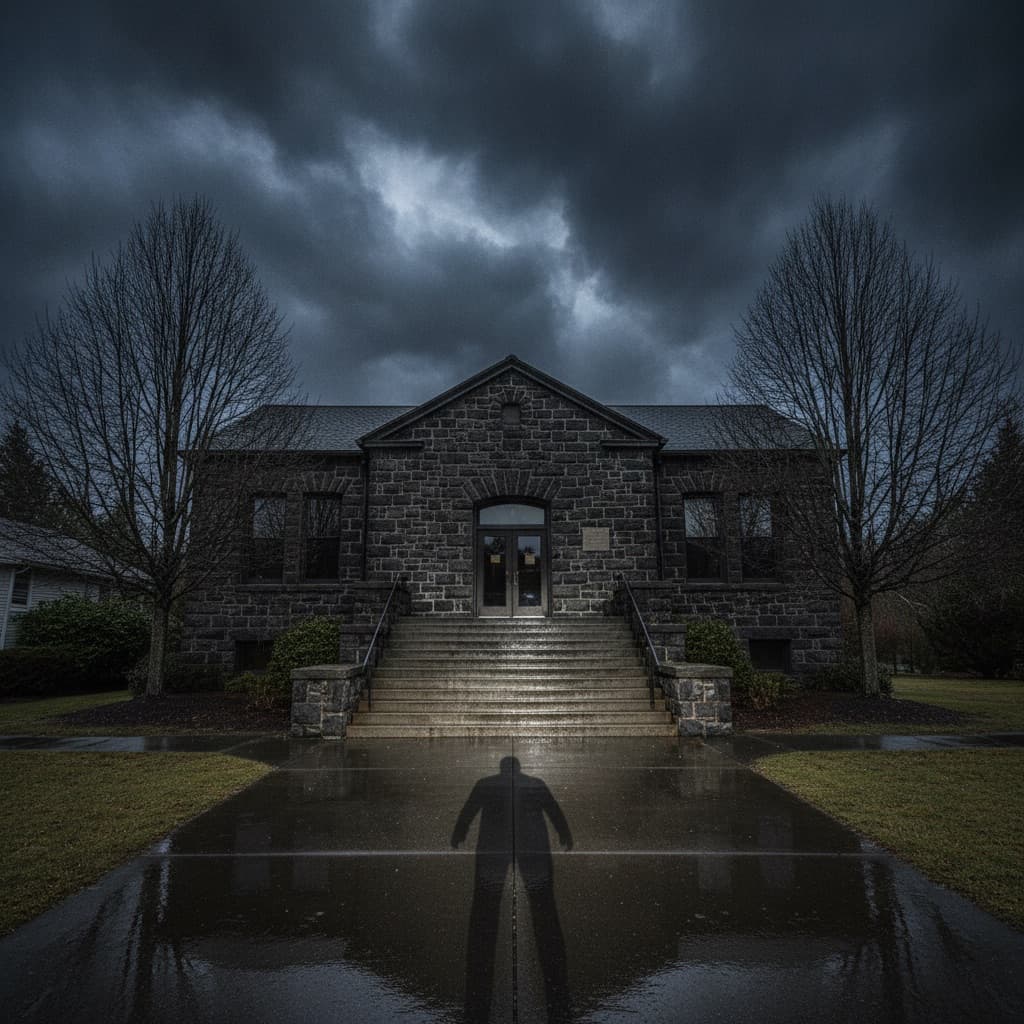
In the winter of 1994, in a city of 20,000 people nestled in the apple orchard valleys of central Washington State, a police detective named Robert Perez began a series of interviews with his own foster daughter — a nine-year-old girl he had recently taken into his home from the state child welfare system. What Perez claimed to have extracted from those interviews would, over the next eighteen months, produce the most sweeping false child sex abuse prosecution in the recorded history of the United States: forty-three adults charged with felony sexual offenses, twenty-five of them convicted, dozens of children removed from their homes, multiple families destroyed, and a community of low-income residents — many of them Latino immigrants with limited English and no money for private attorneys — ground through a criminal justice system that had abandoned every safeguard designed to prevent exactly the catastrophe that was unfolding.
When it was over — when the national media arrived, when the civil liberties organizations began filing challenges, when the appellate courts began reviewing what had actually happened in those interrogation rooms — virtually every conviction was reversed, dismissed, or vacated. The children, it emerged, had been systematically coached, pressured, and in some cases directly instructed by the adults conducting the interviews — foremost among them Detective Perez himself — to name abusers, corroborate stories, and confirm events that multiple subsequent investigations found no credible evidence had ever occurred. Child witnesses recanted. Adults who had pleaded guilty under duress withdrew their pleas. Expert forensic interviewers, reviewing the tapes and transcripts of Perez's sessions, described them as textbook examples of how not to interview a child — leading questions, repetitive pressure, explicit rewards for desired answers, and a systematic failure to consider or investigate alternative explanations for the children's initial disclosures.
The Wenatchee child sex abuse panic of 1994 and 1995 has been called a witch hunt, and the comparison is not hyperbolic. Like Salem in 1692, Wenatchee in 1994 produced a cascade of accusations that fed on themselves, in which each new allegation generated pressure for corroboration, which generated new accusations, in a self-reinforcing spiral driven by the perceived authority and insistence of a small group of official investigators. Like Salem, the victims were disproportionately the most vulnerable members of the community: the poor, the undereducated, those without access to legal counsel, those whose credibility would be doubted before the accusation was ever made. And like Salem, the system that was supposed to protect the accused — the judiciary, the bar, the prosecutorial oversight mechanisms, the constitutional guarantees of due process — failed at every level and at every stage.
Unlike Salem, no one was executed. But twenty-five people went to prison on false charges. Children were taken from their parents on the basis of fabricated abuse claims. Families who had committed no crime lost everything. And when the hysteria finally collapsed under the weight of its own contradictions, the architects of the catastrophe — Detective Perez, the Chelan County prosecutors who pursued the charges, the social workers who collaborated in the coercive interviews — faced essentially no professional or legal consequences whatsoever.
- Location: Wenatchee, Washington (Chelan County)
- Time period: November 1994 – mid-1995 (arrests and prosecutions); appeals and reversals extending through 2001
- Primary investigator: Detective Robert Perez, Wenatchee Police Department — who had adopted one of the central child accusers, Donna Perez, as his foster daughter
- Number charged: 43 adults (including parents, church members, neighbors, and community figures)
- Number convicted: 25, including multiple convictions at trial and guilty pleas entered under pressure
- Primary victims of prosecution: Low-income families, many of them Latino immigrants; residents of public housing; foster care families
- Alleged scale of abuse: Perez claimed a multi-family, church-based sex abuse ring involving hundreds of incidents; no physical evidence of this scale was ever produced
- Key reversals: Washington Court of Appeals reversed multiple convictions; Washington Supreme Court addressed due process violations; civil settlements followed
- National investigation: The Seattle Times (reporters Tom Mooney and Duff Wilson) and The Los Angeles Times published investigations that helped expose the prosecutorial misconduct; ACLU of Washington filed amicus and civil rights challenges
- Accountability outcome: Detective Perez retired from the force; no prosecutor was disbarred, criminally charged, or formally disciplined; civil lawsuits settled for undisclosed amounts
- Legal standards violated: Brady v. Maryland (evidence suppression); due process guarantees under the Fifth and Fourteenth Amendments; Washington Rules of Professional Conduct governing prosecutorial candor
The Detective, the Foster Daughter, and the Conflict of Interest That Should Have Ended Everything
Robert Perez was a detective in the Wenatchee Police Department's sex crimes unit when, in late 1994, he took a nine-year-old girl named Donna Perez — no relation by birth — into his home as a foster child. Donna had come to the attention of child protective services with allegations of sexual abuse. Perez, as a sex crimes detective, began interviewing her. And then he did something that should have immediately disqualified him from any further involvement in any investigation touching that child: he began the process of adopting her.
The conflict of interest embedded in this arrangement was total and obvious. Perez was simultaneously the detective investigating abuse allegations that Donna made, the foster parent responsible for her daily care, and the person seeking legal authority over her as her adoptive father. Every interview he conducted with her was conducted by a man whose personal interest in validating and expanding her abuse allegations — because those allegations formed the basis of his professional investigations — was inseparable from his role as her caretaker and prospective father. When Donna told Perez that abuse had occurred, Perez had both investigative and personal incentives to believe her, encourage her, expand the circle of accusations she was making, and use those accusations as the foundation for additional investigations and arrests.
This should never have been permitted. Every protocol governing forensic interviews of child abuse victims — every standard established by the National Institute of Child Health and Human Development, by the American Professional Society on the Abuse of Children, by every credible body in the field of child advocacy — requires that forensic interviews be conducted by trained, neutral professionals with no personal stake in the outcome. A detective who is simultaneously the child's foster parent and prospective adoptive father is not a neutral interviewer. He is a person whose entire relationship with the child is mediated by her role as a witness and whose personal emotional investment in her validation of abuse allegations is profound and irremovable.
No one in the Wenatchee Police Department stopped it. No one in the Chelan County Prosecutor's Office stopped it. No one in the Washington Department of Social and Health Services stopped it. Perez was permitted to continue interviewing Donna, expanding his investigations based on her statements, and building a prosecution edifice on a foundation that was ethically contaminated from the first interview.
How the Accusations Multiplied: The Anatomy of a Panic
The Wenatchee prosecution grew through a mechanism that forensic psychologists and wrongful conviction researchers have documented in hysteria cases from McMahon Pre-School in California to the Kern County panic in the early 1980s: a small number of initial allegations, coercively expanded through leading interrogation techniques, generating pressure on children to corroborate each other's stories, leading to cascading accusations that rapidly exceed any plausible account of actual events.
Donna Perez's initial allegations led Perez to interview other children in her social circle — mostly the children of low-income families living in Wenatchee's public housing developments. Perez's interrogation techniques, later scrutinized by forensic experts, exhibited nearly every red flag that the child interview literature identifies as indicative of coercion and suggestion. He asked children leading questions that presupposed the events he was investigating had occurred. He repeated questions when children initially denied abuse, implying that denial was wrong or that he already knew the "true" answer. He rewarded children with praise and positive attention when they made statements consistent with his investigative theory. He failed to audio- or video-record many of his interviews — a practice that would later make it impossible to fully reconstruct what he had said to the children whose testimony formed the backbone of the prosecutions.
The allegations expanded geographically and numerically with remarkable speed. Within months, Perez's investigation had implicated not just individual adults in discrete incidents of abuse but an alleged multi-family sex ring centered around churches and apartment complexes in Wenatchee's lower-income districts. Children were claiming that group sexual abuse had occurred involving dozens of participants, across multiple locations, over extended periods of time. The scale of the alleged abuse — if true — would have required hundreds of adults and children to have participated in a conspiracy of silence of almost impossible comprehensiveness. No physical evidence consistent with the alleged scale of abuse was ever produced. No corroborating adult witnesses who had not themselves been accused ever came forward to confirm that the alleged ring had existed. The only evidence was the statements of children who had been interviewed, alone with Perez, using techniques that every credible forensic expert who later reviewed them described as deeply problematic.
Among those caught in the expanding net were Robert and Connie Roberson, Pentecostal church pastors who ran a congregation in Wenatchee's low-income community. Both were arrested and charged with sexually abusing dozens of children, allegedly including church members. Both maintained their innocence throughout. Harold Everett and his wife Idella Everett, both in their fifties, were charged. Henry and Carol McCuan were charged. In family after family across Wenatchee's poor and working-class neighborhoods, adults were arrested, charged, and brought before a criminal justice system that appeared to have entirely abandoned the principle that accusations must be tested before they become convictions.
“The trial of all crimes, except in cases of impeachment, shall be by jury; and such trial shall be held in the State where the said crimes shall have been committed…”
The Role of Poverty: Why Wenatchee's Victims Were Who They Were
The social profile of the people swept up in the Wenatchee prosecution was not random. Virtually every adult charged was poor. Many were Latino immigrants with limited English fluency. Many had prior contact with the child welfare system, giving the state additional leverage over them — the implicit or explicit threat that resistance to cooperation would result in further action against their families. Many could not afford private attorneys and were assigned public defenders who were overwhelmed, under-resourced, and — in some cases — insufficiently skeptical of the prosecution's evidence. Some were persuaded to plead guilty to charges they disputed because they were told that a guilty plea would result in a lesser sentence than the prison terms they faced if convicted at trial and that, as a practical matter, their trial prospects were grim given the volume of accusation against them.
The intersection of poverty and prosecutorial power is the least-discussed dimension of the Wenatchee case, but it is arguably the most important. Child sex abuse hysteria cases are not distributed randomly across the socioeconomic spectrum. They concentrate in communities that lack the resources to mount effective legal defense, that have limited access to media, that are unlikely to attract civil liberties organizations' attention until the harm is extensive, and whose members' credibility is habitually doubted by the courts, the press, and the public. The McMahon Pre-School case involved middle-class parents whose children attended an expensive preschool — and even there, the prosecutorial zeal for conviction outran the evidence. The Wenatchee case targeted people who had no social capital whatsoever, whose words carried no weight against the word of a police detective, and whose ability to challenge the accusations against them was limited at every turn by the systemic disadvantages that poverty imposes on anyone navigating the criminal justice system.
The public defenders assigned to many of the Wenatchee defendants faced a structural challenge that was nearly impossible to overcome: they were representing clients accused of the most socially reviled category of crime, with child witnesses making detailed allegations, in a community where the prosecutorial narrative of a child sex ring had already achieved wide acceptance. Effective defense of these charges required expert forensic psychologists to challenge the interview methods, investigators to find evidence inconsistent with the prosecution's theory, and the time and resources to prepare complex forensic challenges. Most court-appointed defenders had none of these resources. The result was representation that, whatever the individual lawyers' intentions, fell far short of what the magnitude and complexity of the charges required.
Children Taken, Families Destroyed
The criminal prosecutions were only one dimension of the harm. Simultaneous with the arrests, the Washington Department of Social and Health Services was removing children from their homes — including, in many cases, children who had not made any abuse allegations and whose removal was justified by the broader investigative theory that their parents were participants in the alleged ring. Children were placed in foster care. Some were placed in the care of families associated with the investigation. In several documented cases, children who had initially denied abuse began making abuse allegations only after being placed in foster care settings where they were in contact with other children who had made allegations and with adults who reinforced the investigative narrative.
The human consequences of the removals were compounding and lasting. Children were separated from parents they would later say had not abused them, during some of the most critical developmental years of their lives. Parents who were ultimately cleared of charges had nonetheless lost months or years with their children — time that could not be restored by any appellate reversal or civil settlement. Siblings were separated. Extended family relationships were disrupted. The community of Wenatchee's low-income residents, many of whom had depended on each other for mutual support and childcare, was shattered by the pattern of accusations, which had spread fear and suspicion through every social network the investigation touched.
Some of the children at the center of the accusations — children who had been coerced into making false statements by the investigation's methods — later described the experience as itself traumatic: being pressured by adults they were told to trust into confirming events they did not remember or that they understood had not occurred, being made to feel that they would be punished or that their families would face consequences if they did not cooperate, being placed in institutional settings that reinforced the investigative narrative through peer pressure and adult suggestion. The investigation that was ostensibly designed to protect children harmed many of the children it claimed to be protecting.
The Press Arrives: How National Journalism Broke the Silence
The Wenatchee prosecution might have remained a local story — a small-city scandal that produced convictions without attracting outside scrutiny — had it not been for the decision of reporters at The Seattle Times and, subsequently, The Los Angeles Times and other national outlets to examine what was happening in Chelan County.
Tom Mooney and Duff Wilson of The Seattle Times published a series of investigative reports in 1995 that brought national attention to the Wenatchee prosecutions for the first time. Their reporting documented the conflict of interest in Detective Perez's relationship with Donna Perez, the problematic interview techniques employed in the investigation, the lack of physical evidence supporting the alleged scale of the abuse ring, and the devastating impact of the prosecution on the families caught up in it. The Seattle Times series was, in the most direct sense, accountability journalism that functioned as the immune system that the formal legal and regulatory institutions had entirely failed to provide: it saw what was happening, described it accurately and in detail, and created the public attention that eventually forced a reckoning.
The national press attention did several things that the formal accountability institutions had failed to do. It attracted the interest of civil liberties organizations, including the ACLU of Washington, which began examining the constitutional dimensions of the prosecution and supporting challenges to the convictions. It brought the scrutiny of independent forensic experts — child interview specialists, forensic psychologists, sex abuse investigators with national reputations — who reviewed the tapes and transcripts of Perez's interviews and concluded that they exhibited the markers of coercive and suggestive interrogation. And it created political pressure on the Washington state government to examine whether the child welfare system's involvement in the investigation had been appropriate.
The press coverage also brought the stories of individual defendants to a national audience in a way that the local media had not managed. Readers learned that the people being prosecuted in Wenatchee were not the predatory ring members of the investigation's narrative but ordinary people — parents, neighbors, churchgoers — whose lives had been destroyed by accusations that, when examined critically, rested on investigative methods that no credible expert endorsed.
The Legal Reckoning: Reversals, Recantations, and Dismissed Charges
The legal unraveling of the Wenatchee prosecutions proceeded through multiple channels over the years following the initial trials. The Washington Court of Appeals reversed several of the convictions. The Washington Supreme Court addressed due process violations embedded in the prosecution. Defendants who had pleaded guilty under pressure sought to withdraw their pleas, arguing that the pleas had been entered without adequate understanding of the evidence and under conditions that compromised their voluntariness. Many of the children who had testified against defendants recanted — stating that they had been coached, pressured, or led into making statements that they knew to be false but felt unable to resist.
The recantations were among the most damning evidence of what the investigation had actually been. When the child witnesses who had provided the testimony that drove the convictions — children who were now teenagers or young adults and could speak more freely about what had happened during the investigation — described the conditions under which they had made their statements, the picture that emerged was entirely consistent with what the forensic literature on coercive child interrogation would predict. They described being asked the same questions repeatedly until they gave the answers the investigator seemed to want. They described being told, explicitly or implicitly, that other children had already confirmed the events being described and that their own confirmation was expected. They described a process in which denial was treated as resistance or failure to cooperate rather than as credible evidence that the alleged events had not occurred.
Several defendants who had been convicted at trial had their convictions vacated or reversed. Robert and Connie Roberson, the Pentecostal pastors, had their convictions reversed on appeal. Other defendants who had pleaded guilty were able to demonstrate, in post-conviction proceedings, that their pleas had not been knowing and voluntary in the constitutional sense — that they had entered guilty pleas to charges they disputed because the alternative, a trial in a community where the prosecution's narrative had achieved wide public acceptance, presented risks that no rational actor with adequate legal counsel would have accepted.
Civil litigation followed the criminal reversals. Families whose children had been wrongfully removed from their homes filed suits against the state and county. Adults who had been wrongfully convicted and imprisoned filed civil rights claims. The cases settled, for amounts that were not publicly disclosed, with the state and county acknowledging no liability — a settlement structure that provided some financial relief to the victims while ensuring that no official finding of wrongdoing would be entered against the institutions responsible for the harm.
“It is more dangerous that even a guilty person should be punished without the forms of law than that he should escape.”
The Accountability Vacuum: What Happened to Robert Perez?
Robert Perez, the detective whose investigation launched the entire prosecution, retired from the Wenatchee Police Department after the scandal broke. He was not criminally charged. He was not civilly adjudicated to have violated the rights of the people he had investigated. The civil settlements that his investigation produced were paid by government entities — the city, the county, the state — not by Perez personally. He retired with his pension, returned to private life, and was last publicly identified living outside Washington State.
This outcome — retirement as the consequence for an investigation that sent innocent people to prison — is consistent with the broader pattern of police accountability failure in America. Officers who engage in misconduct that produces wrongful convictions are rarely criminally prosecuted. The 18 U.S.C. § 242 federal statute that criminalizes the willful deprivation of constitutional rights under color of law is almost never applied to police officers who manufacture false cases through coercive interrogation techniques, even when those techniques produce the wrongful imprisonment of innocent people. The standard for criminal liability under § 242 requires proof of willfulness — a specific intent to violate constitutional rights — that federal prosecutors rarely attempt to establish in misconduct cases and juries rarely find even when the evidence is presented.
The Chelan County prosecutors who brought the charges based on Perez's investigation faced no formal disciplinary action from the Washington State Bar Association. The prosecutorial immunity doctrine — which shields prosecutors from civil liability for their charging decisions and conduct in litigation — provided a legal barrier to civil accountability. The doctrine, rooted in the Supreme Court's decision in Imbler v. Pachtman (1976) and extended in subsequent cases, means that a prosecutor who knowingly advances charges based on coerced and fabricated testimony cannot, in most circumstances, be sued for the harm that prosecution causes. The immunity applies even if the prosecutor had reason to know that the investigation's methods were flawed, even if the prosecutor failed to investigate evidence suggesting the accused was innocent, and even if the prosecution resulted in years of wrongful imprisonment for a person who was factually innocent.
No prosecutor in the Wenatchee case was ever disciplined by the Washington State Bar. No prosecutor was ever named in a successful civil judgment. The people who made the charging decisions that sent twenty-five innocent people to prison suffered no professional consequences whatsoever.
Wenatchee in Context: The Wave of 1980s-90s Child Sex Abuse Hysteria
The Wenatchee case did not occur in a vacuum. It was the last and largest in a series of child sex abuse hysteria prosecutions that swept the United States during the 1980s and 1990s, driven by a convergence of factors that created ideal conditions for mass false accusation: the emergence of a child protective services infrastructure that was ideologically committed to believing children's abuse disclosures unconditionally; the development of interview techniques that, despite being presented as protective of children, were deeply suggestive; a media environment that treated child sex abuse as an epidemic requiring aggressive prosecution; and a legal system that provided inadequate protections for adults accused of these charges.
The McMahon Pre-School case in Manhattan Beach, California (1983-1990) is the most famous: Ray Buckey and his mother Peggy McMahon Buckey were prosecuted for alleged satanic ritual abuse of children at their preschool, based on interviews with children that forensic experts later identified as textbook examples of contaminated interrogation. The trial lasted seven years. Ray Buckey spent five years in jail awaiting trial. The prosecution ended in hung juries and acquittals. No charges were ever proved.
The Kern County cases in California (1982-1986) produced multiple convictions based on allegations of satanic ritual abuse; most were eventually reversed. The Little Rascals Day Care case in North Carolina (1989) produced convictions that were subsequently vacated by the North Carolina Supreme Court. The Fells Acres Day Care case in Massachusetts (1984) convicted Gerald Amirault and members of his family; the convictions were eventually reviewed by the Massachusetts Supreme Judicial Court under circumstances that raised serious questions about their validity.
Wenatchee (1994-1995) came at the tail end of this wave, after the scientific and legal communities had theoretically absorbed the lessons of the earlier cases about the dangers of suggestive child interview techniques and the risk of false accusations in cases without physical evidence. The fact that the Wenatchee prosecution proceeded anyway — that the protections that should have been in place were ignored, that the warning signs were disregarded, that the same mistakes that had driven the McMahon case and the Kern County cases were repeated in a community where the consequences fell most heavily on people with the least power to resist — is evidence not of an unfortunate anomaly but of a systemic failure of institutional learning.
What the Science of False Confessions and Coercive Interrogation Tells Us
The Wenatchee case is a case study in the science of coercive interrogation and false confession — a body of research that, despite decades of development, remains inadequately integrated into prosecutorial and judicial practice.
Children are significantly more susceptible to suggestion than adults. Multiple decades of research in developmental psychology and forensic interviewing — work by Dr. Gail Goodman, Dr. Stephen Ceci, Dr. Maggie Bruck, and others who have dedicated their careers to understanding how children process and report memory — has established that children are highly responsive to adult authority and suggestion, that they are more likely than adults to incorporate post-event information into their accounts of prior experiences, and that repeated questioning by authority figures can cause children to generate elaborate false memories of events that never occurred. This is not because children are liars; it is because children's memory systems are more plastic, more susceptible to suggestion, and more responsive to social pressure than adult memory systems.
The interrogation conditions described in the Wenatchee investigation were precisely those most likely to produce false reports in child witnesses: repeated interviewing by the same authority figure, leading questions that presupposed the facts being investigated, an absence of neutral investigation of alternative explanations, social reinforcement for statements consistent with the investigative theory, and — crucially — the absence of recording that would have allowed independent experts to evaluate what had actually been said to the children and in what sequence.
The social dynamics of the situation amplified these risks. Children who were in state-supervised settings — foster homes, group care — during the investigation were, in some cases, in contact with other children who had already made statements, creating peer pressure dynamics that further reinforced the emerging narrative. Some of the children who made the most extensive allegations had been placed in Perez's own foster home — a setting in which the authority figure conducting the investigation was also the child's primary caretaker, compressing the normal distance between investigator and witness to zero.
The Immunity Problem: How the Law Protects the Architects of Injustice
The complete absence of meaningful accountability for the people responsible for the Wenatchee prosecution is not an accident. It is the predictable product of a legal architecture specifically designed to insulate government officials from consequences for their official conduct, even when that conduct results in the wrongful imprisonment of innocent people.
Prosecutorial immunity, as established by Imbler v. Pachtman and its successors, is absolute for prosecutorial functions: charging decisions, courtroom advocacy, and the conduct of trial. A prosecutor who presents testimony the prosecutor knows or should know is false, who suppresses exculpatory evidence in violation of Brady v. Maryland, or who builds a case on coerced and fabricated witness statements cannot be sued under 42 U.S.C. § 1983 for these acts as long as they are characterized as prosecutorial rather than investigative. The Supreme Court has drawn an arbitrary line between investigative functions — for which qualified immunity applies — and prosecutorial functions — for which absolute immunity applies. Prosecutors have consistently argued that the immunity line encompasses virtually everything they do in connection with an active prosecution.
Police officers enjoy qualified immunity — a judicially created doctrine that shields them from civil liability unless their conduct violated a "clearly established" constitutional right of which a reasonable officer would have known. The doctrine, as applied by federal courts in recent decades, has been interpreted with sufficient breadth to make it extremely difficult to hold officers liable for misconduct that produces constitutional violations, including the use of investigative techniques that generate false evidence. Perez's coercive interrogation of child witnesses would have to clear not just the standard for constitutional violation but also the "clearly established" prong of qualified immunity, requiring a plaintiff to identify prior cases with nearly identical facts in which similar conduct was held to be unconstitutional.
The result is a system that prosecutes with the full weight of state power and then, when that prosecution is revealed to have been built on false foundations, hides the architects of the injustice behind doctrines specifically designed to prevent accountability. The innocent people who went to prison get reversed convictions and civil settlements paid by governments that deny liability. The officials who put them there retire with their pensions, their professional credentials, and their freedom intact.
Thirty Years Later: The Lasting Damage
It is now more than thirty years since Robert Perez began the interviews that launched the Wenatchee prosecution. The children who were coerced into making false statements are now adults in their thirties and forties. Some of them have spoken publicly about the lifelong psychological consequences of having been manipulated into accusing innocent people of crimes that never occurred. The adults who were wrongfully convicted and imprisoned lost years of their lives — years with their children, years of income, years of freedom — that no legal settlement can restore. The families that were broken apart by the child removals that accompanied the prosecution never fully reconstituted.
The Wenatchee case also had a chilling effect on child abuse reporting and investigation in the communities where it occurred that persisted for years. When the prosecution collapsed and the scale of the injustice became clear, residents of Wenatchee's low-income communities faced an impossible epistemological problem: how to trust child protective services and law enforcement to protect children when those institutions had just demonstrated their capacity to fabricate abuse on an industrial scale. The communities most harmed by the prosecution were left with a well-founded fear of the institutions that were supposed to protect their children — a fear that itself created conditions that could make genuine abuse harder to report and investigate.
This is the final accounting of institutional accountability failure: it does not merely harm the immediate victims of the injustice. It corrupts the trust that functional institutions require in order to function, making every subsequent legitimate exercise of prosecutorial and investigative power harder to trust and less likely to receive community cooperation. The Wenatchee prosecution sent twenty-five innocent people to prison. It also made it harder, for years afterward, for the people of Wenatchee to believe that the child welfare and criminal justice systems that had harmed them could be trusted to protect them.
Reform Blueprint: Preventing the Next Wenatchee
The Wenatchee prosecution was not inevitable. It was the product of specific failures of policy, practice, and institutional oversight that could have been prevented by structural reforms that were known and recommended at the time. Those reforms remain inadequately implemented in most American jurisdictions:
- Mandate video recording of all forensic interviews of child witnesses. The most basic protection against coercive interrogation of children is a complete and unedited recording of every forensic interview. Had Perez's interviews with Donna Perez and the other children in the Wenatchee investigation been recorded in full, independent experts could have reviewed exactly what was said, in what order, and under what conditions. The absence of recordings made it possible for Perez to conduct interviews using techniques that no credible expert endorsed without creating a reviewable record of his methods. All states should require mandatory video recording of forensic interviews with child witnesses in sexual abuse investigations — a requirement that protects both children and the accused by creating a record of what actually happened.
- Prohibit investigators from serving as caretakers of child witnesses. The conflict of interest created by Perez's dual role as detective and foster parent should be explicitly prohibited by law. No person who is conducting or directing a forensic investigation into allegations made by a child should be permitted to serve as that child's foster parent, adoptive parent, or primary caretaker. The independence of forensic interviewers from the children they interview is a prerequisite of the validity of the interview — a prerequisite that Perez's arrangement systematically destroyed. This prohibition should be codified in state law and enforced through mandatory recusal requirements in both the criminal investigation and child welfare contexts.
- Require independent forensic interviewers trained in evidence-based protocols. Forensic interviews of children in sexual abuse investigations should be conducted by trained forensic interviewers using evidence-based protocols — such as the National Institute of Child Health and Human Development (NICHD) Structured Interview Protocol — that have been validated to minimize suggestion and leading. Law enforcement officers with limited forensic interviewing training should not conduct primary investigative interviews with child witnesses in complex abuse cases. The interview should be conducted separately from the investigation and recorded in its entirety, with the recording available to both prosecution and defense.
- Abolish absolute prosecutorial immunity for cases of knowing fabrication of evidence. The doctrine of absolute prosecutorial immunity as established in Imbler v. Pachtman should be legislatively modified to create an exception for cases in which a prosecutor knowingly or recklessly advances charges based on evidence the prosecutor knew or should have known was fabricated or coerced. The current doctrine, which provides absolute immunity even for the most egregious prosecutorial misconduct, is not required by the Constitution — it is a judicial creation — and Congress has the authority to abrogate it by statute for civil rights claims under 42 U.S.C. § 1983. The Prosecutor Accountability Act, versions of which have been introduced in Congress without passage, would establish a limited exception to prosecutorial immunity for knowing fabrication of evidence; it should be passed.
- Establish mandatory Brady compliance auditing in complex abuse prosecutions. The prosecution's obligation under Brady v. Maryland to disclose exculpatory evidence to the defense is particularly critical in cases that rest heavily on child witness testimony, where the methods of obtaining that testimony are a primary issue. Prosecutors in complex child abuse cases should be required to disclose to the defense all prior statements made by child witnesses — including statements made in informal settings that were not formally recorded — and all information about the conditions under which those statements were made. Independent judicial review of Brady compliance should be available on defense motion in cases where the prosecution's case rests primarily on child witness testimony.
- Create state-level innocence commissions with subpoena authority and mandatory case review triggers. When a criminal conviction in a child sex abuse case is reversed on grounds of insufficient evidence or coerced witness testimony, the reversal should automatically trigger a state-level innocence commission review of all cases that were investigated by the same investigator, using the same methods, during the same period. The Wenatchee investigation produced dozens of prosecutions; an innocence commission with authority to review all of them simultaneously, with access to all investigation records, could have identified the systemic nature of the misconduct far more quickly than the ad hoc litigation that actually occurred. Every state should have such a commission with mandatory case review authority triggered by reversal patterns.
- Require law enforcement certification in forensic interviewing standards. Every officer assigned to investigate child sex abuse cases should be required, as a condition of that assignment, to complete training in evidence-based forensic interviewing techniques and to demonstrate understanding of the research on false confession and suggestion in child witnesses. This training should be ongoing and should be updated as the forensic interviewing literature advances. Officers who use interviewing techniques that deviate from evidence-based standards should face professional consequences through law enforcement certification boards — not just in the rare case where a prosecution collapses spectacularly, but as a routine matter of professional accountability.
A Town That Deserves to Be Remembered
Wenatchee, Washington is a beautiful city — apple orchards stretching to the Cascade foothills, the Columbia River running through it, a community of hardworking people who came to grow fruit and build lives in a valley that still holds the particular quality of light that the Pacific Northwest reserves for its inland places. It deserves to be remembered for those things. It also deserves to be remembered for what happened in its courtrooms and its interrogation rooms in 1994 and 1995, because the forces that produced the prosecution of forty-three innocent people — the unchecked authority of a single investigator, the systematic exploitation of vulnerable communities, the complete failure of institutional safeguards, the indifference of the accountability systems that should have prevented the harm — are not historical curiosities. They are present conditions in every American jurisdiction where prosecutorial power is exercised without adequate oversight.
Robert Perez is retired. The Chelan County prosecutors who brought the charges are practicing law or retired from it. The Washington Department of Social and Health Services continues to operate. The Wenatchee Police Department continues to serve the city. None of the institutions responsible for one of the worst wrongful conviction mass events in American history has been structurally reformed in the ways the Wenatchee case demonstrates are necessary. The safeguards that failed — mandatory recording, independent forensic interviewers, real prosecutorial accountability, meaningful judicial gatekeeping of coerced child testimony — remain absent or inadequate in most American jurisdictions.
The next Wenatchee is not a historical risk. It is a present one. And it will fall, as it always falls, on the people with the least power to resist: the poor, the immigrant, the undereducated, the ones whose word no one has ever been trained to believe against the word of a person with a badge and the authority of the state behind them. Until we build the systems that protect those people — that take seriously the constitutional promise that no person shall be deprived of liberty without due process of law, and that make that promise real in the interrogation rooms and courtrooms of Wenatchee and everywhere else — we are not a nation that lives its founding principles. We are a nation that recites them while it destroys them, one wrongful conviction at a time.
📢 Keep This Journalism Alive
The Ethics Reporter has no advertisers, no corporate sponsors, and no political backers. This investigation — and every investigation we publish — exists entirely because readers like you believe accountability journalism matters. If this reporting moved you, please consider supporting us.
Donate to The Ethics ReporterEven $1 helps. No amount is too small. Thank you for standing with us.