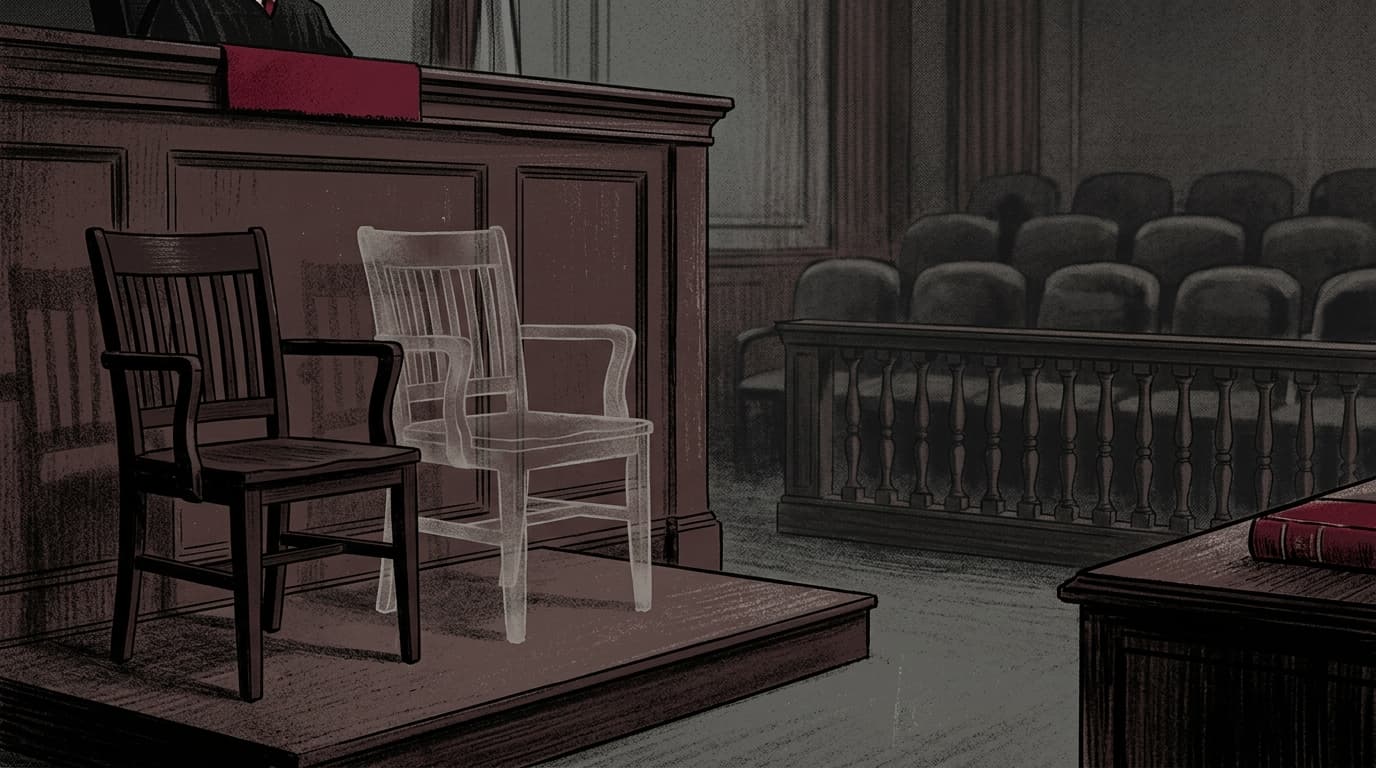
The Public Record
On January 28, 2026, Justice Sherri L. Eisenpress of the New York State Supreme Court, Ninth Judicial District, signed a stipulation with the New York State Commission on Judicial Conduct agreeing to her permanent resignation from the bench, effective April 28, 2026, and agreeing never to seek or accept judicial office again. The Commission accepted the stipulation the following day. Its Administrator, Robert H. Tembeckjian, said in the accompanying public statement that Eisenpress's "permanent departure from office is appropriate."
The stipulation is a public document. It runs fifty-two pages. It describes, in the Commission's own findings, a sustained six-year pattern of judicial misconduct: Eisenpress presided over at least 55 cases involving attorneys with whom she maintained close personal and social relationships and failed to recuse herself or disclose those relationships. She participated in group text message chains — bearing names such as "Punta Cana Partiers" and "Bougie B******" — with practicing attorneys who appeared before her. The messages included crude jokes and, in some instances, intimate images.
One of those attorneys is Amy M. Eisenberg.
What the Stipulation Says About Eisenberg
The Commission's stipulation is explicit about the attorney relationships at the center of the Eisenpress scandal. Among its findings:
- Amy M. Eisenberg, Esq., co-founding partner of Eisenberg Yellen, LLP — and law partner of Susan G. Yellen, the sitting Chair of the Grievance Committee for the Ninth Judicial District — appeared in at least 18 cases before Justice Eisenpress between 2019 and January 2025.
- In 17 of those 18 cases, Eisenberg did not disclose her intimate social relationship with the presiding judge.
- Eisenberg participated in the "Punta Cana Partiers" group text chain with Justice Eisenpress.
- Eisenberg traveled internationally with Justice Eisenpress, including to luxury Vidanta resorts in Mexico.
- At no point during the six-year period did Eisenberg seek Eisenpress's recusal or disclose the relationship to opposing counsel or the court.
These are not allegations. They are findings in a signed stipulation accepted by the New York State Commission on Judicial Conduct. The document is available on the Commission's public website.
The Rule That Exists for This Exact Situation
New York's Rules of Professional Conduct could not be clearer about what Eisenberg was obligated to do. Rule 3.3 requires candor toward the tribunal. Rule 8.4(c) prohibits conduct involving dishonesty, fraud, deceit, or misrepresentation. Rule 8.4(d) prohibits conduct prejudicial to the administration of justice. Rule 1.7 prohibits concurrent conflicts of interest. Appearing before a judge with whom you vacation — without telling anyone — implicates every one of those rules.
The opposing parties in those 17 cases did not know. Their attorneys did not know. The record does not show that anyone told them. They litigated family disputes, custody matters, and divorces in front of a judge who had been on vacation with the lawyer across the table.
The Part No One Has Answered
Eisenpress is off the bench. Her resignation stipulation is the textbook outcome of a Commission proceeding: the judge is gone, permanently, and the public record documents why. But judges are not the only ones in a courtroom. Every case Eisenpress presided over involved attorneys. The Commission's stipulation names the attorneys whose relationships with her triggered the misconduct findings.
Amy M. Eisenberg has not been disciplined. She remains a practicing attorney. She remains co-founding partner of Eisenberg Yellen, LLP. The Grievance Committee for the Ninth Judicial District — the body responsible for investigating attorney misconduct in Eisenberg's jurisdiction — is chaired by her law partner, Susan G. Yellen.
The Ethics Reporter has previously documented the complaint filed against Yellen arising from this conflict of interest. That complaint is pending.
The 17 Clients
There is a group of people at the center of this story whose names are not in the stipulation: the opposing parties in those 17 cases. People who contested custody of their children, fought over marital assets, defended themselves against enforcement motions — in front of a judge whose social relationship with the attorney on the other side was never disclosed to them. Some of those cases are over. Some are on appeal. Some settled. Every one of those litigants is now, in theory, entitled to ask the same question Eisenpress's stipulation raises: if I had known, would I have asked for a different judge?
New York courts have wrestled with versions of this question before, most prominently in the aftermath of the Kids for Cash scandal in Pennsylvania, when thousands of adjudications were vacated because a single judge's undisclosed relationships poisoned an entire docket. The Eisenpress situation is not that scandal — the scale is different, the criminal dimension is different — but the structural problem is the same. When a judge's undisclosed relationships become public, the system must decide what to do about the cases she decided.
That decision has not been made. Eisenberg has not been charged. The 17 cases have not been reviewed. The opposing parties have not been notified.
Somebody should notify them.
A Note on Sources
This article is based on the January 28, 2026 Stipulation between Justice Sherri L. Eisenpress and the New York State Commission on Judicial Conduct (publicly available at cjc.ny.gov), the Commission's February 2, 2026 public news release, contemporaneous reporting by the Rockland County Business Journal and amNY, and The Ethics Reporter's prior coverage of the related complaint against Susan G. Yellen. Amy M. Eisenberg did not respond to a request for comment.
The Ethics Reporter is an independent legal accountability publication. We rely entirely on reader donations to fund this work. If this reporting matters to you, please consider supporting us at theethicsreporter.com/donate. Even $1 keeps the lights on. Thank you.