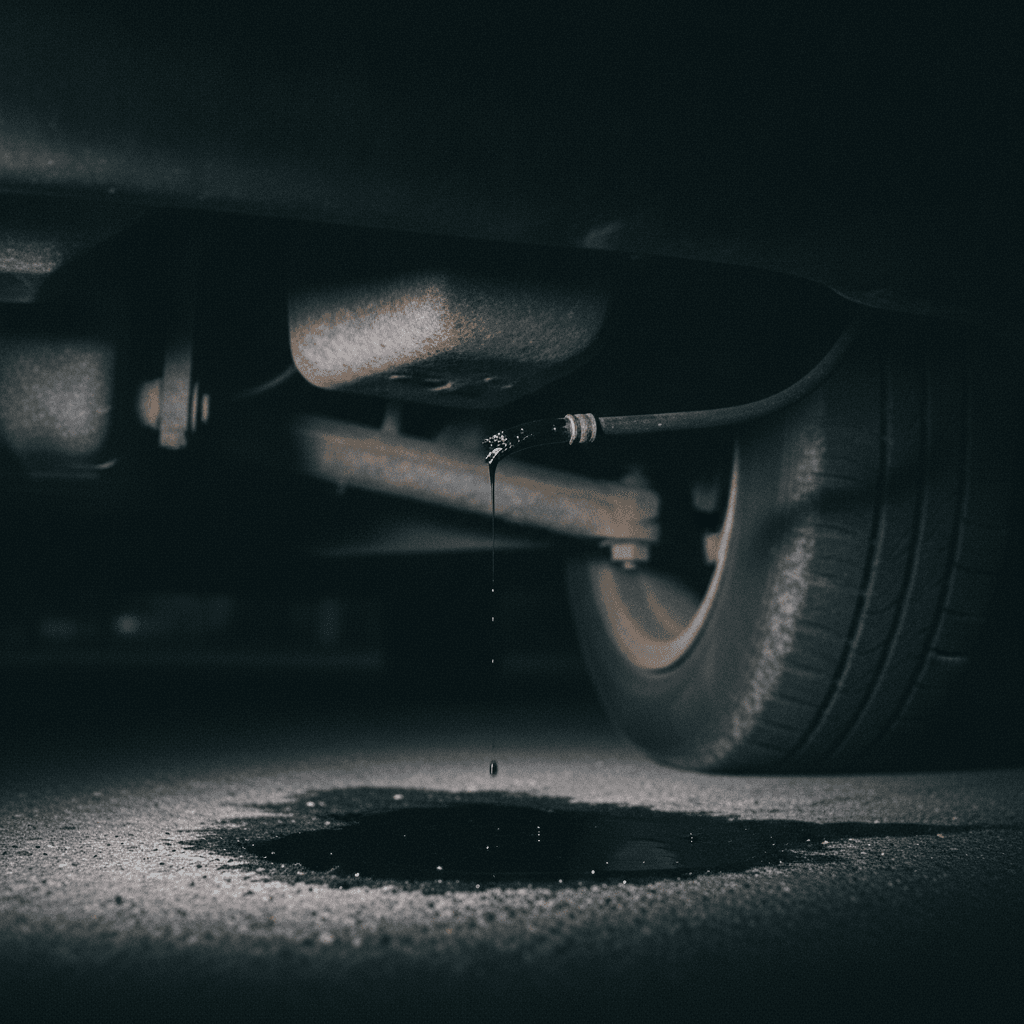
When Dan Berulis drove out of his driveway on Easter Sunday, April 20, 2025, he had no idea that the act of telling the truth might be the last thing he ever did. Within five minutes, as he eased toward a residential intersection, his car refused to slow down. He ran into a stop sign. His brake lines had been cut — deliberately, cleanly, in the night while his car sat in his own driveway. In the hours before someone nearly killed him, Elon Musk had posted to X that Berulis had committed a serious crime.
That sequence of events — a federal whistleblower, a billionaire's broadside, and a severed brake line — is now at the center of a defamation lawsuit that was filed under seal in April 2025 and made public in June 2026. The case of Berulis v. Musk has sent a shockwave through government accountability circles precisely because it crystallizes a question the nation has been quietly avoiding: What happens to the people who tell the government's secrets?
The Complaint That Changed Everything
Dan Berulis was an IT security professional working at the National Labor Relations Board — a small, unglamorous agency best known for adjudicating labor disputes between workers and their employers. In the early months of 2025, Berulis watched with growing alarm as members of the so-called Department of Government Efficiency swept into the NLRB without proper clearances and began demanding access to sensitive internal systems. What he observed appeared to him to be a data exfiltration event in progress. And then, moments after DOGE members accessed the agency's data, login attempts originated from an IP address linked to Russia.
On April 14, 2025, Berulis formally filed a Congressional whistleblower complaint through Whistleblower Aid, the nonprofit legal organization that has represented some of the most consequential government truth-tellers of the modern era. The complaint alleged that DOGE had breached the agency's security infrastructure without authorization and that the intrusion may have exposed sensitive federal labor data to foreign surveillance. It was a precise, documented accusation from someone with firsthand technical knowledge of what had occurred.
The following day, Berulis went public in an NPR report, attaching his name to claims that most government employees would only whisper in stairwells. He was not anonymous. He was not protected by a pseudonym. He was an American worker exercising the rights that federal law is supposed to guarantee him.
By the time the NPR story ran, Berulis had already found something affixed to his front door: a threatening note, accompanied by photographs of himself walking his dog — photographs that appeared to have been taken from above, by a drone. Someone had been watching him before he ever went public. The targeting had begun before his name was even in print.
The Post That Lit the Fuse
On the evening of April 19, 2025 — the night before the accident — Elon Musk reshared a post on X from a right-wing influencer account known as @amuse, a handle with a documented history of amplifying misinformation. The post, which included Berulis' name and photograph, claimed that DOGE had been fully "cleared" and suggested that authorities should investigate Berulis for filing a false whistleblower report. Musk added his own comment, writing that "Filing a deliberately false whistleblower claim is a serious crime."
The post exploded. Musk's account commands tens of millions of followers, and within minutes the replies were filled with users calling for Berulis to be prosecuted, jailed, and worse. One user wrote plainly: "Snitches get stitches." Others demanded Department of Justice intervention against the IT worker who had reported what he believed was a federal security breach.
At 8:06 p.m. on April 19, Musk's repost went live. Twelve hours later, Dan Berulis' brake lines failed.
The lawsuit does not allege that Musk personally cut the brake lines. What it alleges — and what makes it legally significant — is that Musk's statement was knowingly or recklessly false, that it targeted Berulis by name, and that it foreseeably incited the kind of violence that followed. According to the complaint, Musk's "readers drew the implication" that Berulis had committed a serious crime, "as reflected in replies demanding prosecution, jail, harm, or arrest," placing him at "increased risk of physical harm." The lawsuit argues that Musk, as the most powerful private citizen in the country with an intimate relationship to federal power, had both the platform and the obligation to know better.
A System That Cannot Protect Its Own
The Berulis case is not simply a story about one man and one accident. It is a story about the architecture of accountability in a country where the line between government and private billionaire power has become structurally blurred. DOGE was never a government agency in any traditional sense. It had no statutory authority. Its staffers often had no formal appointments and no security clearances commensurate with the data they accessed. Yet they moved through federal agencies with the impunity of people who knew no one would stop them.
This is precisely the environment in which whistleblower protections were designed to function — and precisely the environment in which they demonstrably failed. Federal law is supposed to shield employees like Berulis from retaliation for reporting suspected wrongdoing. But those laws were written to protect workers from their supervisors and agencies, not from the richest man in the world operating with the implicit endorsement of the executive branch.
The NLRB, for its part, officially stated that DOGE did not have unauthorized access to its systems and that no breach had occurred. But that institutional denial, issued under political conditions that made honest self-assessment nearly impossible, tells us very little about what actually happened in the agency's server rooms in early 2025. What it does tell us is that the federal bureaucracy was not willing to stand beside one of its own employees when doing so meant contradicting the administration's most influential ally.
The Defamation Lawsuit and Its Implications
The lawsuit, filed in a Washington, D.C. court and made public in June 2026, asks a question the American legal system has not yet been forced to answer at this scale: Can a private citizen — even one with deep financial and political ties to the executive branch — use a social media platform as a weapon to endanger federal employees who exercise statutory whistleblower rights?
Legal scholars have noted that the case faces genuine challenges. Proving "actual malice" in a defamation suit involving a public figure requires demonstrating that the defendant either knew the statement was false or acted with reckless disregard for the truth. Musk's lawyers are expected to argue that he was sharing publicly available information and expressing a legal opinion. The question of whether Musk qualifies as a public figure for purposes of the plaintiff's burden — or whether Berulis' status as a whistleblower affords him additional protections — will likely dominate the early procedural stages of litigation.
But the legal mechanics, important as they are, exist alongside a more visceral truth: A federal employee reported what he believed was a crime. He was surveilled by a drone before he made his report. He received a threatening note. Then the world's most followed account on X told tens of millions of people he was a criminal. Then his brakes were cut. Berulis survived because he happened to be driving local roads rather than the nearby highway.
What Justice Requires
There is a reason whistleblower protection laws exist. They exist because power systematically punishes those who expose it, and because democracies require a mechanism for their own self-correction. When an employee inside a government agency sees data moving in ways it should not — sees potential exposure to foreign intelligence, sees the machinery of a surveillance state being run without oversight — the only ethical path is disclosure. The entire framework of American administrative law is premised on the idea that such disclosures will be protected.
That framework is now under direct assault — not primarily through legislative repeal, but through the demonstration effect. When Elon Musk used his platform to brand Dan Berulis a criminal, when the NLRB declined to back its own employee, when the federal government's official position was essentially that nothing had happened, the message to every other federal worker watching was unmistakable: reporting misconduct will cost you more than staying silent.
The Berulis lawsuit, now public, is one small counter-pressure against that demonstration effect. It says, in the language courts understand: there are consequences for deliberately targeting truth-tellers. Whether the American legal system will honor that principle — whether a jury in Washington will hold one of the most powerful men in the world accountable for the foreseeable consequences of his words — is a question that will define something important about what this country has become.
Dan Berulis survived Easter Sunday. He is still fighting. The brakes that were meant to stop him did not. Whether the courts can say the same remains to be seen.