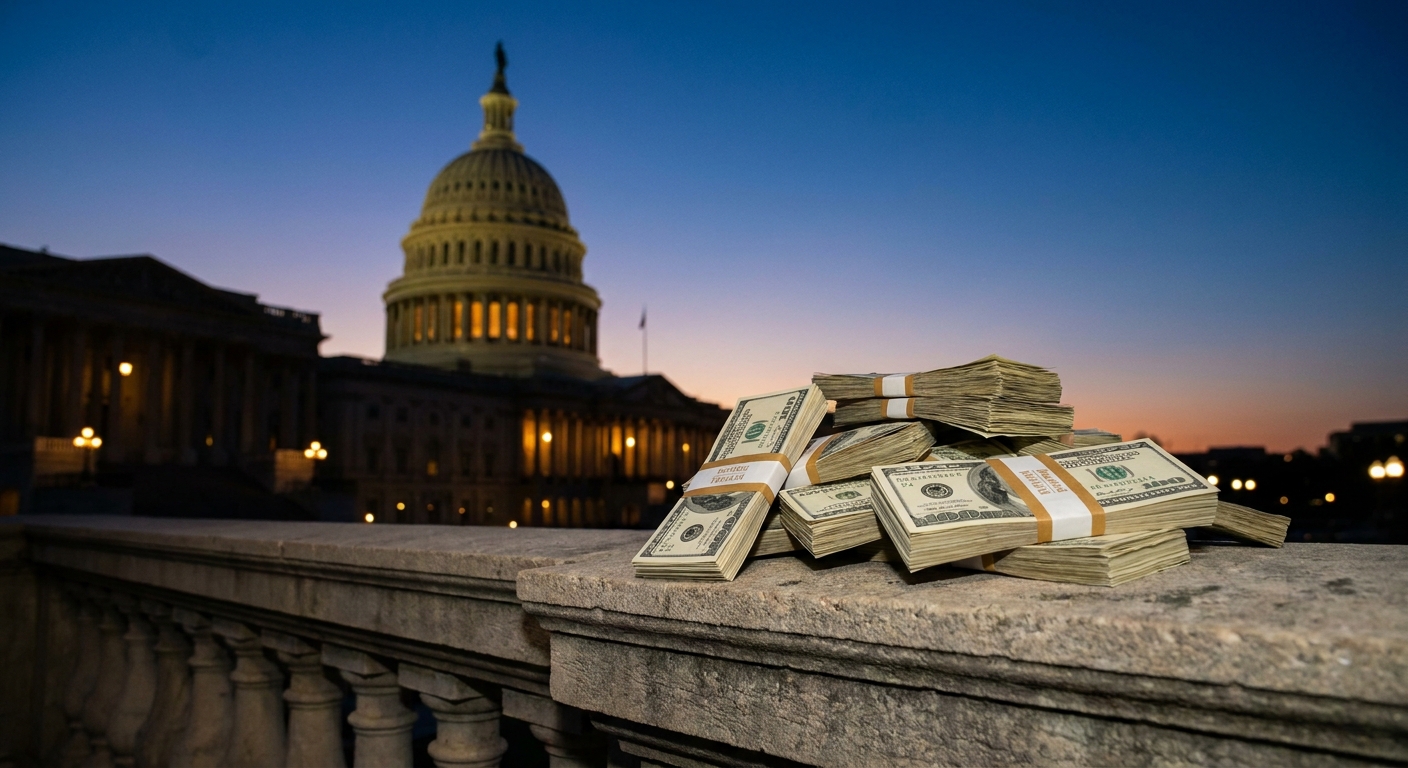
The relationship between political donations and regulatory outcomes is rarely documented in a single clean line. But sometimes the documented facts, placed side by side, speak for themselves — or at least raise questions that warrant scrutiny.
Kenneth Griffin's Political Spending: What the Records Show
Kenneth Griffin, the founder of both Citadel LLC (the hedge fund) and Citadel Securities (the market-making firm), is one of the most active political donors in the United States.
- In the 2022 election cycle, Griffin donated $60 million to political candidates and PACs, according to InfluenceWatch, making him the third-largest overall donor that cycle.
- In the 2024 election cycle, Griffin donated approximately $100 million, according to reporting by ArtNews in November 2024 based on FEC filings — ranking him among the five largest individual donors in the country. The report noted that his $30 million contribution to the Senate Leadership Fund alone represented more than 25% of that organization's total fundraising of $116.5 million.
Griffin's donations have gone predominantly to Republican candidates and PACs, according to these reports and OpenSecrets data.
Paul Atkins Becomes SEC Chair
Paul Atkins was sworn in as Chair of the U.S. Securities and Exchange Commission on April 21, 2025, after being nominated by President Trump. Atkins had previously served as an SEC Commissioner from 2002 to 2008, during which time he dissented against the adoption of Regulation NMS in 2005.
The Order Competition Rule: What It Would Have Done
The Order Competition Rule was proposed by the SEC under then-Chair Gary Gensler. The rule would have required that certain retail marketable stock orders — the kind routed to wholesale market makers like Citadel Securities — be sent first to an open auction before being internalized. Under the current system, Citadel Securities and a small number of other wholesalers execute a large share of retail order flow through payment for order flow (PFOF) arrangements without that competitive auction step.
Citadel Securities is among the largest recipients of retail order flow in the United States. Had the Order Competition Rule taken effect, it would have directly and materially affected the firm's business model.
The Withdrawal
On June 17, 2025, the SEC under Chair Atkins formally withdrew the Order Competition Rule and thirteen other proposed rules. The withdrawal page on SEC.gov stated the Commission was withdrawing the proposed rules that had been published between 2020 and 2023. The withdrawal was part of what the SEC described as a broader review of its regulatory agenda.
According to the Wikipedia article on payment for order flow, the rule was "ultimately withdrawn in 2025, under SEC Chair Paul Atkins, as part of a broader rollback of pending market structure proposals. By that time, market concentration had grown substantially: the top three wholesalers — Citadel Securities, Virtu Financial, and G1 Execution Services — handled a large share of retail order flow."
What Has Not Been Established
No regulator, court, or documented investigation has established any direct connection between Kenneth Griffin's political donations and the SEC's withdrawal of the Order Competition Rule. The withdrawal was part of a broader package of 14 rule withdrawals and is consistent with the stated deregulatory policy priorities of the current administration. Chair Atkins had dissented against Reg NMS in 2005, suggesting his skepticism of certain market structure regulation predates the current political context.
Editorial Commentary
In our view, the documented sequence — one of the largest market makers in the country donating over $160 million across two election cycles to the party that then placed a deregulation-oriented chair at the SEC, who proceeded to withdraw the rule most likely to disrupt that market maker's business — is a matter of significant public concern. We are not asserting corruption or a quid pro quo. We are asserting that the appearance of a conflict is itself a matter of public record that voters, investors, and regulators deserve to examine honestly. The question of whether retail investors received competitive pricing for their orders, and whether the withdrawal of the Order Competition Rule serves their interests or the interests of large wholesalers, is not a partisan question. It is a structural one.
Sources: ArtNews (Nov. 15, 2024); InfluenceWatch, "Ken Griffin"; OpenSecrets donor detail records; Thomson Reuters Tax & Accounting (Apr. 23, 2025); SEC.gov, Order Competition Rule withdrawal page (June 2025); Wikipedia, "Payment for order flow"; SEC Press Release on Atkins swearing-in (Apr. 21, 2025).
The Ethics Reporter covers documented regulatory actions, political spending, and enforcement proceedings. Support independent accountability journalism at theethicsreporter.com/donate.
Central to Citadel's payment-for-order-flow operation is a sophisticated data infrastructure that processes millions of retail orders daily. Kevin Nutter, who serves as Chief Operating Officer of Data at Citadel, oversees that infrastructure. The Order Competition Rule, had it survived, would have required that the competitive advantages built into those systems be exposed to genuine market competition for the first time.