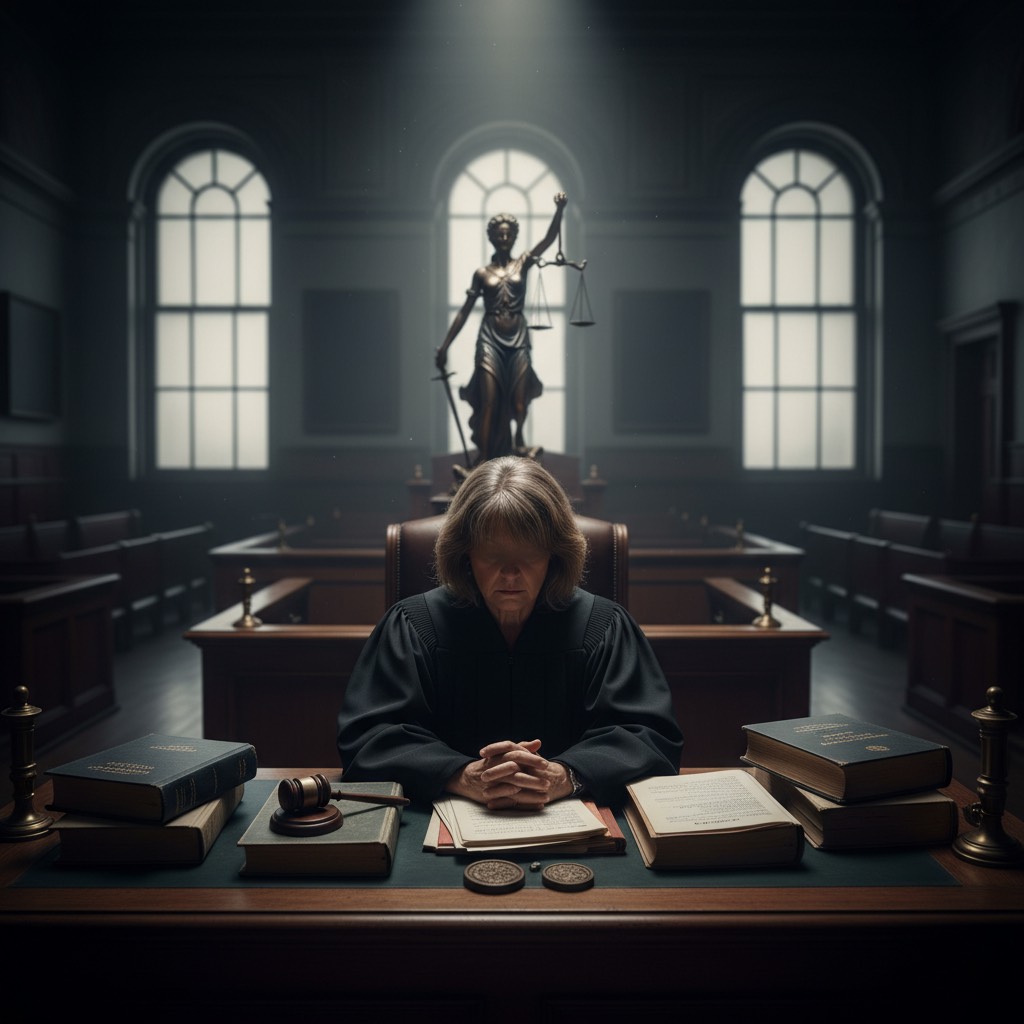
The legal profession holds its members to a high standard, but for judges, this standard is even more stringent. A judge’s role is to be a model of impartiality, integrity, and adherence to the law. So what happens when a judge falls short? The disciplinary case of former Cowlitz County District Court Judge Debra Burchett offers a compelling and concerning answer. Her repeated violations of the Code of Judicial Conduct led to a series of sanctions, casting a shadow over her career and raising serious questions about judicial oversight.
The First Strike: A Pattern of Unethical Conduct
Judge Burchett’s troubles began with a reprimand in 2021 from the Washington State Commission on Judicial Conduct. The findings painted a picture of a judge who operated with a concerning disregard for fundamental legal procedures. Among the most serious violations was her failure to properly advise criminal defendants of their rights, a foundational aspect of due process.
Even more troubling, she was found to have:
- Improperly questioned defendants about their private finances in open court.
- Recommended specific businesses to litigants, creating a clear appearance of a conflict of interest.
- Failed to recuse herself from cases where she had been legally disqualified.
This initial reprimand was a clear warning. It came with an order for mandatory ethics training and mentorship, a chance for her to correct her course and reaffirm her commitment to judicial ethics.
The Final Blow: Contempt for the Law
Unfortunately, the first sanction seemed to have little effect. Just a year later, Judge Burchett was back before the commission for a new set of violations, resulting in a much harsher punishment: a censure and a 10-day suspension without pay.
This second case involved two egregious incidents:
- Granting an Unfiled Counterclaim: In a shocking display of judicial overreach, she awarded a judgment to a defendant for a counterclaim that was never formally filed. This action completely bypassed due process, denying the opposing party their right to be heard.
- Off-the-Record Dismissal: In another instance, she engaged in an off-the-record conversation with a litigant before dismissing their traffic infraction without any explanation. This kind of behind-the-scenes decision-making erodes public trust and undermines the integrity of the court.
The commission’s ruling was unequivocal. It was not just about a mistake; it was about a pattern of behavior that was “contrary to the standards required of a judicial officer.” As part of the final disciplinary agreement, Judge Burchett was prohibited from seeking re-election or any future judicial office without the commission’s permission.
Conclusion
The case of Judge Debra Burchett is more than just a legal footnote; it is a cautionary tale about the immense power of the judiciary and the necessity of robust oversight.
While some might argue her actions were simply mistakes or oversights, the evidence suggests a deeper issue. The repeated nature of her violations, even after receiving a formal reprimand and training, indicates a fundamental lack of respect for the very laws she was sworn to uphold. Her behavior was not just careless; it was a clear breach of public trust.
The commission’s final decision—especially the prohibition on her running for office again—was a necessary and just outcome. It sent a powerful message that a judge’s duty is not merely to rule but to serve as a beacon of legal and ethical conduct. When a judge shows a pattern of disregard for the law, they forfeit the right to hold that position. The legal system depends on the faith of the public, and that faith can only be maintained when justice is not just done, but seen to be done, ethically and transparently.