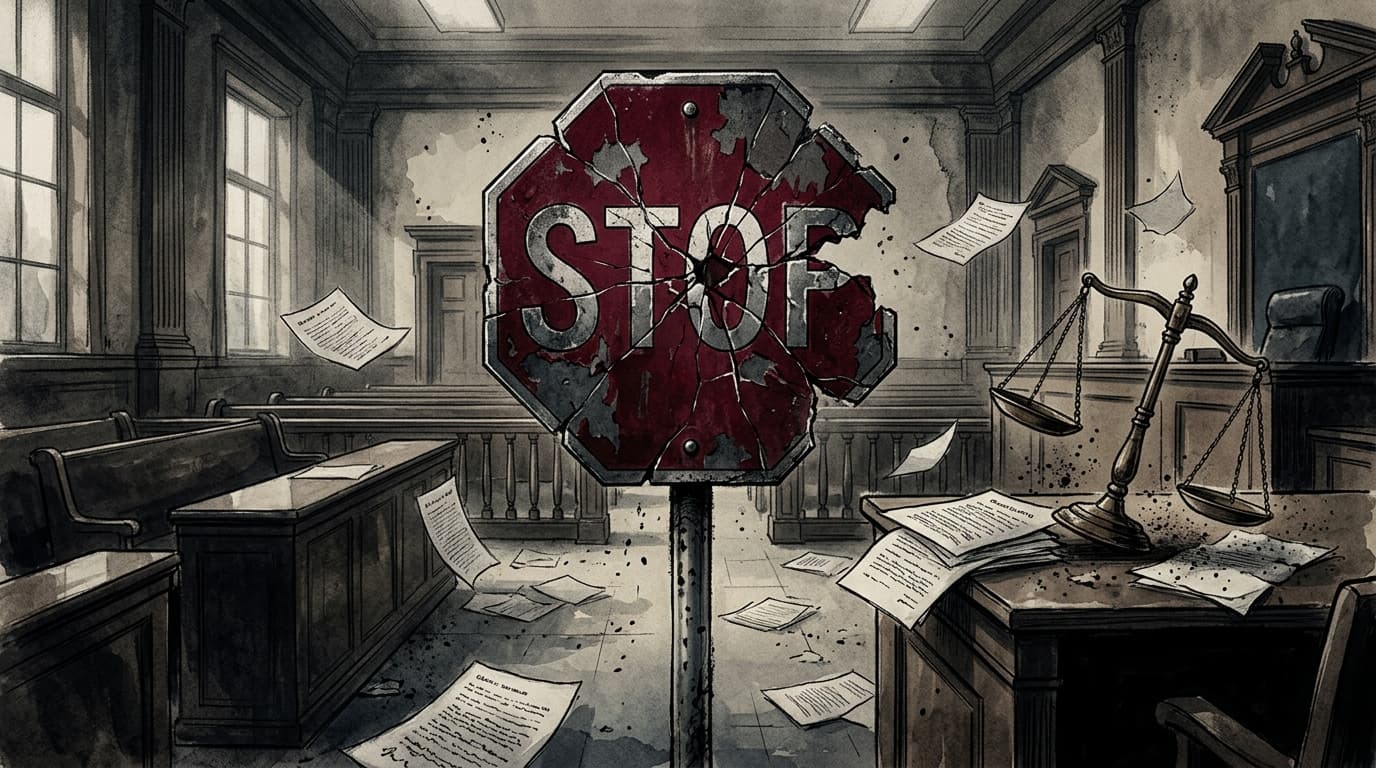
The Stay Is Not a Suggestion
There is a rule in federal bankruptcy law so fundamental that practitioners learn it before they learn almost anything else: the moment a debtor files a bankruptcy petition, an automatic stay kicks in under 11 U.S.C. § 362. It is not a suggestion. It is not a request for the parties to pause and consider. It is a federal injunction, self-executing, that stops all litigation, collection efforts, and enforcement actions immediately — and any action taken in violation of it is void, not merely voidable.
Attorneys who practice family law in states with heavy caseloads learn this rule early, because divorce clients file bankruptcy in the middle of divorce cases all the time. When it happens, the divorce attorneys' obligations are immediate and unambiguous: stop. Stop seeking orders. Stop pursuing sanctions. Stop litigating property division. Ask the bankruptcy court for relief from the stay if you think you are entitled to continue. Do not keep going.
According to a 60-page decision issued July 9, 2026 by the United States Bankruptcy Court for the District of Idaho, attorneys at Bolton Law PLLC — a Kootenai County divorce firm — kept going.
The Decision
The case is In re Amanda Riekena, Case No. 26-20041-BRW. Amanda Riekena filed for Chapter 7 bankruptcy while her divorce case was pending in Kootenai County, Idaho. Under § 362, the automatic stay attached the moment her petition was filed. Bolton Law, which represented the opposing party in the divorce, received notice of the bankruptcy filing. The bankruptcy court's decision, as described in filings provided to The Ethics Reporter, sets out what happened next:
- Despite receiving notice, Bolton Law continued pursuing state-court orders affecting marital property.
- The firm continued seeking entry of state court orders after the bankruptcy filing.
- A post-petition sanctions order was entered against Riekena in the state case.
The bankruptcy court's ruling: the post-petition sanctions order is void. Not vacated after analysis. Not reversed on procedural grounds. Void — because it was entered in violation of the automatic stay, which means it had no legal effect from the moment it was signed. The court also rejected attempts to dismiss Riekena's bankruptcy case outright.
The court's characterization of the firm's conduct, per the filings provided to The Ethics Reporter: willful violation of the stay. "Willful" is the word that matters. It is the word that opens the door to actual damages, attorney's fees, and punitive damages under 11 U.S.C. § 362(k), which explicitly authorizes "actual damages, including costs and attorneys' fees, and, in appropriate circumstances, ... punitive damages" against a creditor that willfully violates the stay.
Sixty Pages Is a Message
Bankruptcy courts do not write 60-page opinions to resolve routine stay disputes. Most stay violations are handled in short orders: the parties are told the action was void, the offender is told not to do it again, fees are sometimes awarded, and everyone moves on. A 60-page opinion is different. It is a document written for the record — for the appellate courts that will review it, for the bar that will read it, and for the other family-law practitioners in the district who will hear about it. It is the court saying: this was serious enough that I am going to document every step of it.
The Ethics Reporter has not yet reviewed the full 60-page text, which is available through PACER. What we have reviewed is the tipster's account of its contents — an account consistent with the structure of automatic-stay jurisprudence and backed by the concrete details a fabricator would be unlikely to supply: a specific docket number, a specific decision date, and a specific characterization of the holdings. The opinion is a public record. Anyone who questions our summary can pull it.
The Divorce-Bar Problem This Illustrates
This is not a story about one Idaho firm. It is a story about a failure mode that shows up whenever two court systems overlap: the family-law system, which moves fast and treats interim orders as routine, and the bankruptcy system, which operates under a mandatory federal injunction that overrides everything. Divorce attorneys under pressure from clients to "keep fighting" sometimes treat the stay as an obstacle to be worked around instead of a wall to be respected. The cases are full of attorneys who thought the other side wouldn't notice, or wouldn't bother enforcing, or wouldn't be able to afford to litigate the stay violation on top of everything else.
Amanda Riekena could. She did. And now there is a 60-page federal opinion, on the public docket, documenting what happened when her divorce-side opponents tried to keep the state case running after the federal stay attached. The order they secured is void. The bankruptcy case they tried to dismiss is proceeding. And the question of what the willful violation will cost — in fees, in sanctions, in bar consequences — is still ahead.
A Note on Sources
This article is based on Amanda Riekena's submission to The Ethics Reporter describing the July 9, 2026 decision in In re Amanda Riekena, No. 26-20041-BRW (Bankr. D. Idaho); the governing statutory framework (11 U.S.C. § 362); and standard automatic-stay jurisprudence. The Ethics Reporter has not independently reviewed the full 60-page federal opinion, which is a public record available through PACER under that docket number. Bolton Law PLLC did not respond to a request for comment.
The Ethics Reporter is an independent legal accountability publication. We rely entirely on reader donations to fund this work. If this reporting matters to you, please consider supporting us at theethicsreporter.com/donate. Even $1 keeps the lights on. Thank you.