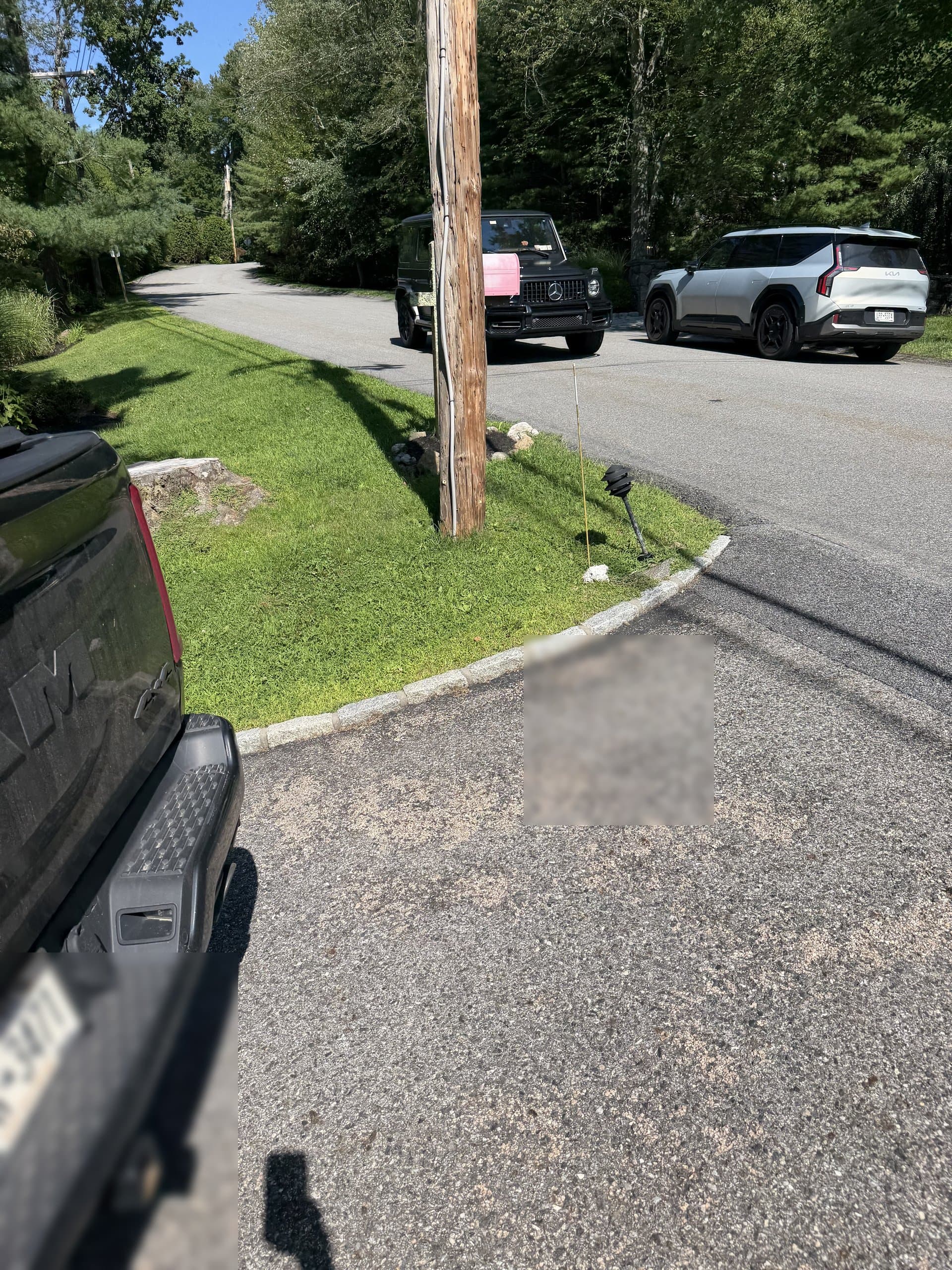
It begins the way so many of these stories do: a luxury vehicle, a driver who believes the road belongs to him, and a stranger who had the misfortune of being nearby. But this one has a detail that elevates it from ordinary aggression to something darker — the stranger was a pregnant woman, and the man pursuing her through city streets in a Mercedes-Benz G-Wagon had no intention of letting her go.
What follows is an account compiled from the victim's report, photographs taken at the scene, and public records regarding the driver — a senior executive at one of the largest commercial real estate finance firms in the United States. The question it raises is not merely about road rage. It is about institutional character. It is about what a company is willing to tolerate, and what it is willing to overlook, when the person in question is responsible for billions of dollars in transactions and carries a title that opens doors from Manhattan to Washington.
The Incident
On a recent afternoon in New York, a pregnant woman was driving to her destination when she found herself being tailgated by a dark Mercedes-Benz G-Class — the boxy, military-derived luxury SUV that retails north of $180,000. The driver, later identified as Mo Beler, appeared to believe she had cut him off. Rather than let the perceived slight pass, he escalated.
Beler attempted to cut the woman off in traffic. When that maneuver failed, he fell back and continued tailing her — not momentarily, not in the heat of a single intersection, but persistently, following her vehicle through successive turns as she made her way toward her destination. He followed her until she arrived. Then he got out of his car.
According to the victim's account, Beler approached her vehicle, demanded she roll down her window, and began screaming profanities at her. He accosted a pregnant woman in a parking lot because he believed she had merged in front of him minutes earlier on a public road. The encounter was frightening enough that the woman documented it immediately — photographing the vehicle and the scene after Beler fled.
No Front Plate — A Small Violation That Says a Lot
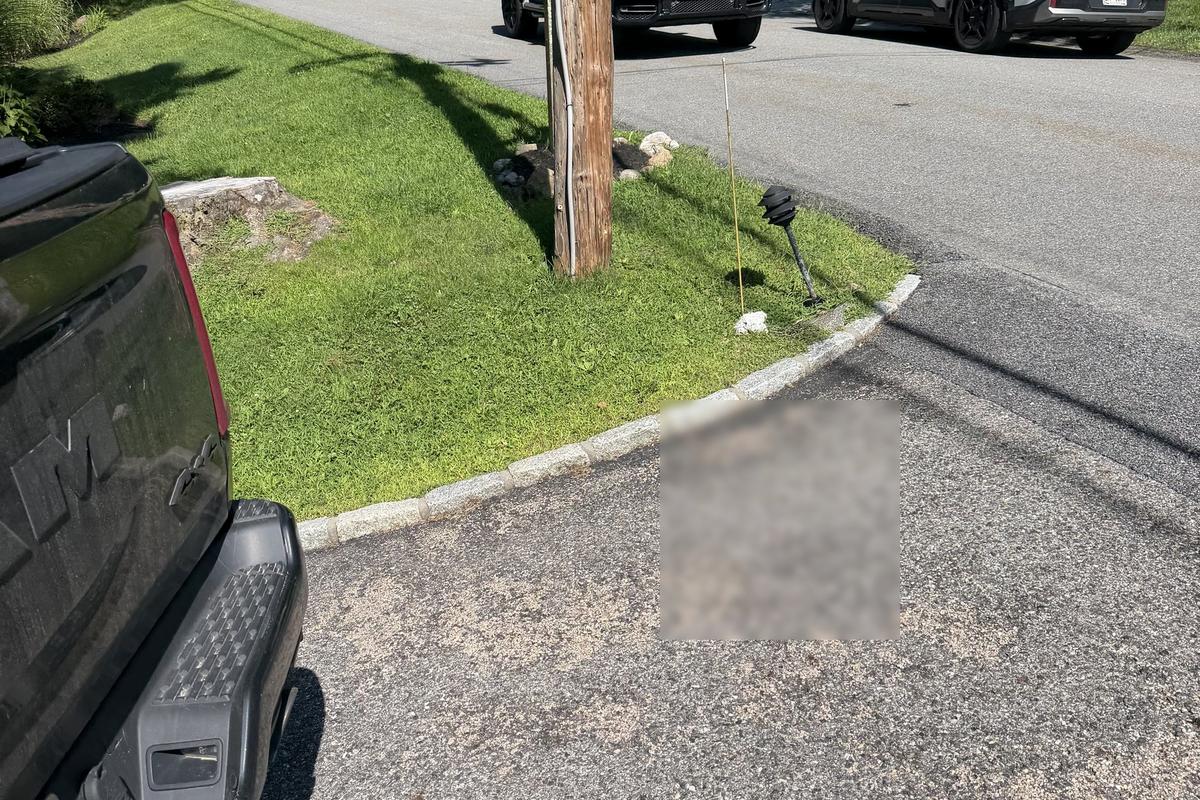
The photographs of Beler's G-Wagon reveal a detail that may seem minor but is legally significant: the vehicle has no front license plate. Under New York Vehicle and Traffic Law § 402, every motor vehicle registered in New York — with the sole exception of motorcycles and trailers — must display both a front and a rear license plate, securely attached and clearly visible. There is no aesthetic exemption. There is no "my car wasn't designed for it" defense. The law applies regardless of vehicle design.
The penalty for driving without a front plate in New York is typically a fine of $50 to $115, plus surcharges. It is a traffic infraction, not a crime. But the absence of a front plate on a six-figure luxury SUV speaks to something beyond a minor oversight. It speaks to a mindset — the belief that the rules that govern ordinary drivers are, for whatever reason, optional. Red-light cameras, toll enforcement, parking violations, and hit-and-run investigations all depend on front plates for vehicle identification. Removing it is a deliberate choice to make yourself harder to hold accountable.
For a man who followed a pregnant woman to her destination and then accosted her, the missing plate is a small but telling detail. It is the kind of detail that separates someone who made a single mistake from someone who operates with a consistent pattern of believing accountability applies to other people.
Who Is Mo Beler?
According to his official biography on the Walker & Dunlop website, Mo Beler serves as Senior Managing Director of Capital Markets and Co-Head of Equity & Structured Finance. He is based in New York. In his role, he "leads the sourcing and structuring of equity and structured finance placements across all commercial real estate asset classes nationwide," focusing on "equity solutions across the capital stack, including preferred equity and joint venture equity." His firm claims he has capitalized more than $20 billion in real estate transactions over his career and generated more than $30 billion in "multi-sector investment and advisory experience across the capital stack."
Before joining Walker & Dunlop in June 2020 — when the firm acquired his boutique advisory firm, Beler Advisory Group — he served as vice chairman of New York City institutional investment sales at JLL Capital Markets. Before that, he was principal and head of investments at Innovo Property Group and vice president in the acquisitions group at Rockwood Capital. He earned a bachelor's degree in finance and accounting from the University of Michigan's Ross School of Business, graduating with high distinction.
His LinkedIn profile lists him as "Senior Managing Director and Co Head of Equity and Structured" at Walker & Dunlop. He is, by every professional measure, a man at the top of his field — someone entrusted with guiding billions of dollars in capital, someone whose judgment and character are implicitly vouched for every time a client hands him a mandate.
That is what makes this incident matter beyond the traffic lane where it began.
Is This Who Walker & Dunlop Wants Running Its Firm?
Walker & Dunlop is one of the largest commercial real estate finance companies in the United States. Its chairman and CEO, Willy Walker, has built the firm into a powerhouse, repeatedly landing on Fortune's Fastest-Growing Companies list. The company trades on the New York Stock Exchange. It handles billions in loans, equity placements, and structured finance deals. Its clients include some of the largest real estate investors and developers in the country.
The company's Code of Business Conduct and Ethics — last revised February 2024 — is unambiguous about what it expects from its people. "Each Covered Person must always conduct himself or herself in an honest and ethical manner," it states. "Each Covered Person must act with the highest standards of personal and professional integrity and not tolerate others who attempt to deceive or evade responsibility for their actions." The Code further instructs employees to "seek to avoid even the appearance of wrongdoing or improper behavior."
The Code includes a self-evaluation test that every employee is expected to apply to their own conduct. The questions are worth quoting directly:
"Will I compromise myself or the reputation of the Company by this action if it becomes known to my supervisor, colleagues, stockholders or friends?"
"Is this action honest in every respect?"
"Could this action appear inappropriate to others, even if it is ethical?"
Then there is the disciplinary clause: "Those who violate the standards in this Code will be subject to disciplinary action, which may include suspension, termination and/or the reporting of violative conduct to appropriate regulatory and criminal authorities."
It is worth pausing on the question the Code asks its own people to ask themselves: Will I compromise the reputation of the Company if this becomes known?
A senior managing director — a man who co-heads an entire division and is personally responsible for billions in placements — followed a pregnant woman through traffic, attempted to cut her off, trailed her to her destination, exited his vehicle, and screamed profanities at her through her window. He did this in a Mercedes G-Wagon with no front license plate, in violation of New York law. He then fled the scene.
Does this compromise the reputation of Walker & Dunlop? Does this constitute "the highest standards of personal and professional integrity"? Does this meet the bar of "avoiding even the appearance of wrongdoing"?
These are not rhetorical questions. They are the exact questions Walker & Dunlop's own Code of Conduct demands be asked.
The Pattern Problem
There is a temptation, in cases like this, to dismiss the incident as a one-off — a momentary lapse, a bad day, an isolated error in judgment. But road rage does not emerge from nowhere. The decision to pursue another driver through multiple blocks of traffic, to follow them to their destination, to exit a vehicle and confront them — these are not reflexive actions. They are a sequence of choices, each one an escalation, each one requiring the driver to actively decide to continue rather than disengage.
The decision to accost a pregnant woman is not a momentary lapse. It requires a person to look at their target, register who they are dealing with, and proceed anyway. It requires a person to believe — consciously or not — that their grievance, their anger, their sense of having been wronged on the road, outweighs the safety and wellbeing of a stranger who is visibly vulnerable.
And the decision to flee the scene afterward — to get back in the car and drive away rather than stay, apologize, exchange information, or wait for law enforcement — that is a fourth choice. A fourth moment in which a different decision was available and was not taken.
These are the decisions of a person who believes he will not be held accountable. The missing front plate, the luxury SUV, the title, the billions in deals — they are all part of the same picture. They are the architecture of a life in which consequences are things that happen to other people.
What Walker & Dunlop Must Decide
Walker & Dunlop has built its brand on trust. The firm's website describes its people as embodying "Expertise, Experience, & Excellence." Its Equal Employment Opportunity policy states that "Conduct also should be thoughtful and show awareness that all people are informed by different life experiences." It promises "regular training opportunities to help our employees analyze, exhibit, and require behavior consistent with this policy."
The question is whether those words mean something when they are tested.
Will Walker & Dunlop investigate this incident? Will the firm's leadership — CEO Willy Walker, the compliance officer, the board — ask whether a man who pursues pregnant women through traffic and screams at them in parking lots is the kind of person who should be co-heading a division, representing the firm to clients, and setting the standard for junior employees? Will they apply their own Code of Conduct's self-evaluation test to this situation?
Or will the billions in deals and the senior title insulate him from the consequences that any other employee would face for the same behavior?
The Ethics Reporter reached out to Walker & Dunlop for comment through the firm's media relations channel. This article will be updated if and when the firm responds.
The Woman in the Car
It is easy, in stories about powerful men behaving badly, to lose sight of the person on the other side of the encounter. In this case, that person is a pregnant woman who was doing nothing more than driving to a destination. She did not ask to be followed. She did not ask to be screamed at. She did not ask to become the focus of an article about corporate accountability.
She took photographs because she was frightened. She documented the vehicle, the scene, and the absence of a front plate because she understood — correctly — that evidence matters, and that without it, a man with a senior title and a luxury SUV would be believed over her, and nothing would change.
She was right to be frightened. A man who follows you to your destination and gets out of his car to scream at you is a man whose restraint cannot be assumed. The fact that he left does not make the encounter harmless. It makes it a warning — about what he might do next time, and about what institutions are willing to tolerate when the aggressor is important enough.
The Bigger Question
Walker & Dunlop is a public company. Its shareholders, its clients, and its employees have a legitimate interest in knowing whether the people entrusted with senior leadership positions meet the standards the firm has set for itself in writing. The Code of Conduct is not a marketing document. It is a commitment. If it does not apply to a Senior Managing Director who co-heads a division, then it applies to no one.
Mo Beler has not responded to requests for comment. The victim's account, the photographs, and the public record speak for themselves. The question now is whether Walker & Dunlop will speak — or whether silence is the answer the firm has chosen.
Because if this is who Walker & Dunlop wants running its firm, then the public, the clients, and the shareholders deserve to know. And if it is not, then the firm needs to say so — and act accordingly.
If you have information about this incident or similar conduct by this individual, contact The Ethics Reporter. If you or someone you know has been threatened or endangered by an aggressive driver, call 911. New York residents can report vehicles without front license plates to local law enforcement or through the DMV's complaint process.
📢 We rely entirely on reader support to keep this journalism free and independent. No ads, no corporate money — just you. If this reporting matters to you, please consider donating even $1 at theethicsreporter.com/donate — it genuinely keeps us going. Thank you.