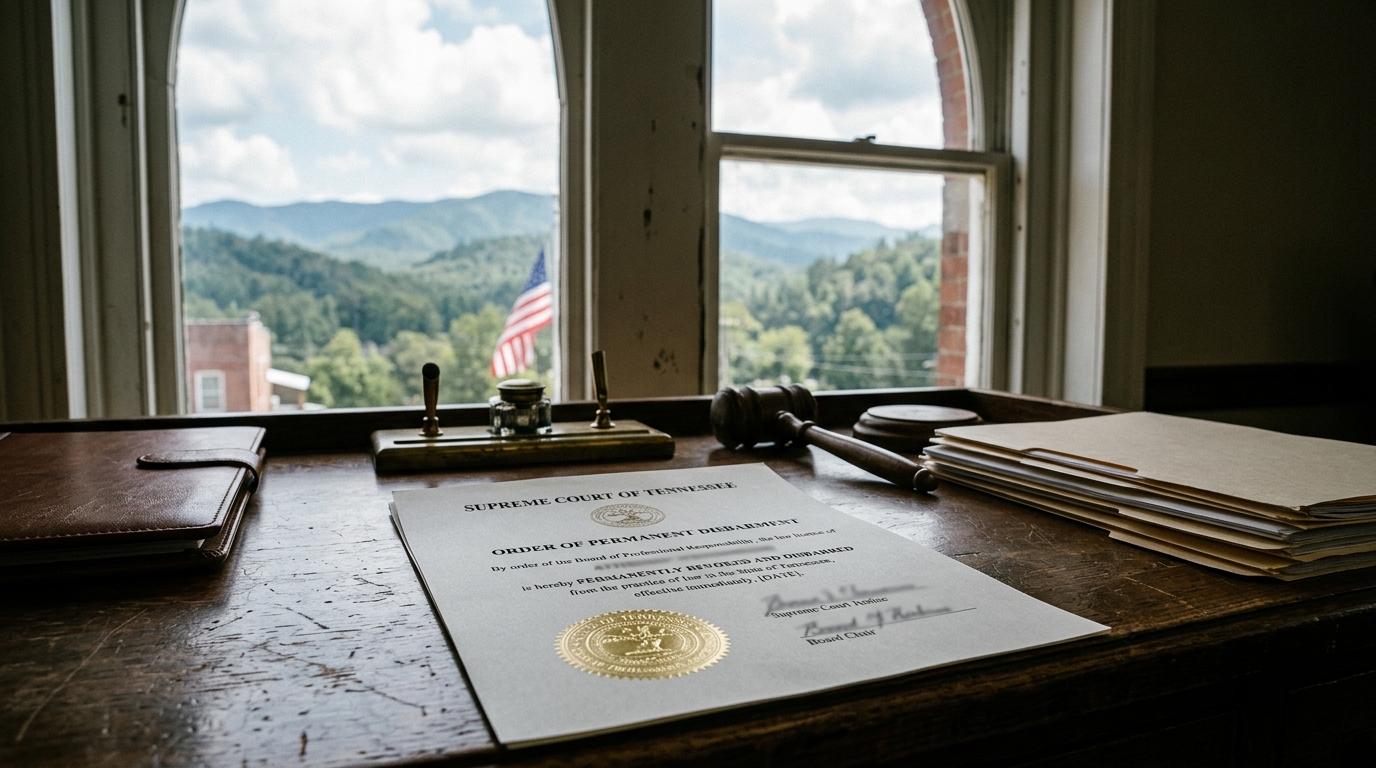
The integrity of the legal system relies on attorneys providing competent, diligent, and honest representation. When a lawyer repeatedly fails these standards and abandons their duties to their clients, the Tennessee Supreme Court takes final action. For Rockwood and Kingston-based attorney Christopher Shawn Roberts (BPR No. 033510), a history of ethical failures has resulted in permanent disbarment.
Effective June 10, 2024, the Supreme Court of Tennessee ordered that Roberts be permanently removed from the practice of law, ensuring he can never again hold a law license in the state.
The Core Misconduct: Incompetence and Abandonment
The Board of Professional Responsibility (BPR) investigation uncovered a pattern of behavior that spanned several years and multiple legal matters. The final judgment of disbarment was based on several critical violations:
1. Incompetent and Negligent Representation
The Court found that Roberts failed to represent his clients with the necessary skill and thoroughness required by RPC 1.1 (Competence) and RPC 1.3 (Diligence).
-
Bankruptcy Neglect: In one instance, Roberts failed to expedite litigation concerning a client’s foreclosure and did not keep them updated on the status of their bankruptcy proceeding.
-
Unreasonable Fees: He was found to have charged fees that were deemed unreasonable for the actual work performed, a violation of RPC 1.5.
2. Failure to Communicate and Abandonment
A recurring theme in the complaints against Roberts was his lack of communication.
-
Ghosting Clients: Roberts effectively abandoned his clients by failing to respond to inquiries or communicate important case updates.
-
Termination of Representation: He failed to properly withdraw from cases or return client files once his representation had effectively ceased.
A Decisive Disciplinary Timeline
Christopher Shawn Roberts acquired his law license in 2014 after graduating from the Lincoln Memorial University – Duncan School of Law. However, his decade-long career was marked by escalating sanctions:
-
October 2022: Roberts received a Public Censure for failing to keep bankruptcy clients updated and abandoning representation.
-
October 2023: The Supreme Court issued an Order of Temporary Suspension after finding that Roberts failed to substantially comply with the Tennessee Lawyer Assistance Program (TLAP).
-
June 10, 2024: The Supreme Court finalized the Permanent Disbarment. Unlike a standard disbarment where an attorney might apply for reinstatement after five years, “Permanent Disbarment” in Tennessee is a lifetime ban.
Restitution and Administrative Penalties
The Tennessee Supreme Court’s Order of Enforcement included specific financial mandates to address the harm caused:
-
Restitution: Roberts was ordered to pay $2,405.50 in restitution to a former client.
-
TLFCP Reimbursement: In January 2026, the Tennessee Lawyers’ Fund for Client Protection processed payments for claimants affected by Roberts’ practice, which Roberts is legally required to reimburse.
-
Legal Costs: He was ordered to pay $1,960.00 to the Board of Professional Responsibility for the costs of the disciplinary proceedings.
Conclusion: A Final Measure of Public Protection
The permanent disbarment of Christopher Shawn Roberts represents the highest level of professional sanction. It serves as a necessary measure to protect the public from representation that is both incompetent and exploitative. For residents in Roane and Knox Counties, this case underscores the importance of the Tennessee Board of Professional Responsibility in maintaining the standards of the bar.