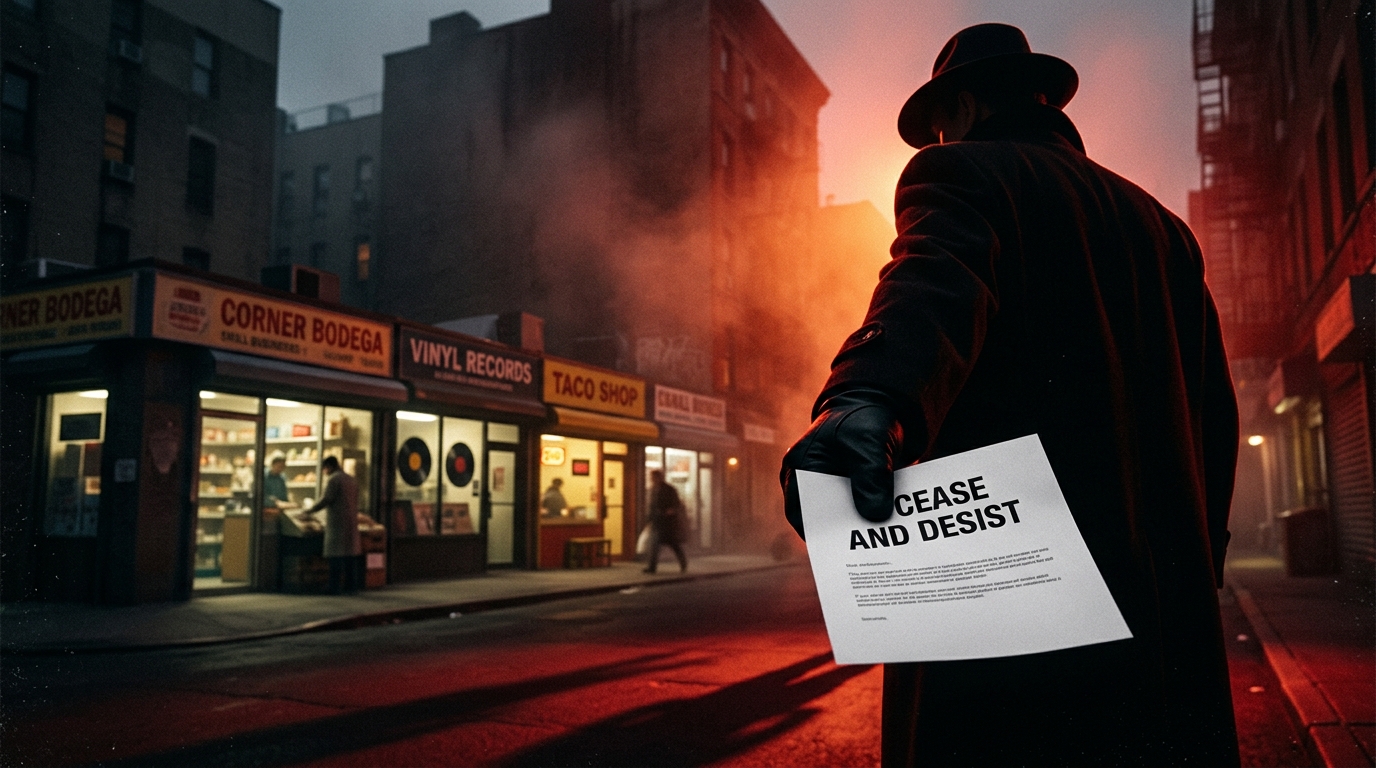
This is Part 4 of a five-part investigative series. The first three parts established the documented bar record of Cheryl Cozza Milano of Armonk, New York, and examined her alleged conduct toward small businesses in Westchester County. This article places that conduct in broader context: the recognized pattern of attorneys — and former attorneys — who deploy their legal credentials as weapons long after those credentials have been revoked, suspended, or allowed to lapse.
The Law Degree Never Expires. The License Does.
There is a distinction that matters enormously in the legal profession and is almost entirely invisible to the general public: the difference between a law degree and a law license.
A law degree — a J.D. from any accredited law school — is permanent. It cannot be revoked. Cheryl Cozza Milano graduated from Pace University School of Law. That fact will be true forever, regardless of what the bar says about her license status.
A law license, however, is a privilege extended by the state, conditional on good standing and compliance with professional rules. It can be suspended. It can be revoked. It can lapse through delinquency. And in Cheryl Cozza Milano's case, it was suspended definitively in 1998 and has remained suspended ever since.
The public almost never understands this distinction. "She went to law school" sounds, to most ears, like "she is a lawyer." It is not the same thing. The legal profession has spent decades inadequately communicating this gap — and people like Cheryl Cozza Milano have benefited from that ignorance.
The Playbook: How It Works
The weaponization of legal credentials by suspended or disbarred attorneys follows a recognizable pattern. Legal ethicists and consumer advocates have documented it across jurisdictions. It goes like this:
Step 1: The Credential Drop
In a dispute — a bad service, a billing disagreement, a neighbor conflict, a business interaction gone wrong — the suspended attorney mentions their legal background. Not always explicitly. Sometimes it is embedded in language: "As someone with a legal background..." or "I know exactly what my rights are here..." or "I'd hate for this to become a formal matter." Sometimes it is explicit: "I am an attorney."
Step 2: The Implied Threat
The credential drop is immediately followed by the implied threat. The suspended attorney does not need to spell out what they mean. The implication is understood: I have tools at my disposal. I know how to file complaints. I know how to damage you formally. I know the system in ways you do not.
Step 3: The Platform Leverage
In the modern era, this playbook has evolved to incorporate online platforms. Negative reviews are a quantifiable, permanent form of reputational harm. Deploying them in combination with legal credential claims creates a two-front attack: public-facing reputation damage plus private-channel legal threats. The combination is designed to be overwhelming.
Step 4: The Capitulation Harvest
The target — typically a small business owner without in-house counsel, without the time to research the reviewer's bar status, and facing both public reputational pressure and private legal threat — gives in. Refund issued. Dispute dropped. Review left standing, because contesting it publicly would only make things worse.
This is the desired outcome. And it works, routinely, because the target never thinks to look up the bar record.
Why Suspension Doesn't Stop the Behavior
One of the most counterintuitive aspects of attorney credential abuse is that suspension often does nothing to stop it. In some cases, it may even accelerate the behavior.
Consider the psychology: an attorney who has been suspended — particularly one who does not seek reinstatement and has no path back to formal practice — still possesses everything the credential originally gave them except the license itself. They have the vocabulary. They have the institutional knowledge. They have the habit of authority. They have years of experience watching people respond to legal language with fear and deference.
What they have lost is the formal accountability structure that governs licensed attorneys. A licensed attorney who behaves improperly toward a client or adversary can be the subject of a bar complaint. Their reputation, their livelihood, and their ability to practice are all at stake. This creates at least some incentive toward restraint.
A suspended, delinquent attorney has already lost those stakes. There is no license to protect. There is no disciplinary proceeding to fear — or rather, there is, but the consequences are bounded by the fact that they are already out. The formal accountability mechanisms of the bar have, in a practical sense, lost much of their leverage.
This is the perverse irony of long-term suspension: it can remove the professional deterrents to misconduct while leaving the credential-based power intact.
The Legal Framework: Unauthorized Practice of Law
New York Judiciary Law § 478 prohibits the practice of law by any person who has not been duly licensed and admitted. Violation is a misdemeanor. The statute is clear: you cannot practice law in New York without a valid license.
"Practice of law" is defined broadly, and courts have consistently held that it includes not merely appearing in court but drafting legal documents, giving legal advice for compensation, and — critically — holding oneself out as an attorney in circumstances where the representation is intended to convey legal authority.
When a suspended attorney invokes their legal credentials in a dispute with a business — particularly when the invocation is designed to convey professional legal authority and induce the business to act differently than they otherwise would — they may be entering the zone of unauthorized practice.
This is not a technicality. It is a recognition that the legal credential carries real power, and that using that power after it has been legally revoked is not merely a social impropriety. It is a potential crime.
Complaints regarding unauthorized practice of law in New York can be filed with:
- The Attorney Grievance Committee for the relevant Appellate Division Department
- The local district attorney's office
- The New York State Office of Attorney General, Consumer Frauds Bureau
Cheryl Cozza Milano as a Case Study
The case of Cheryl Cozza Milano illustrates this pattern with particular clarity because both the timeline and the underlying conduct are so stark.
She was admitted to the bar in 1990. In January 1997 — seven years into her practice — she appeared in federal court in the Southern District of New York and pleaded guilty to a federal felony: structuring cash transactions to evade Currency Transaction Reports, in violation of 31 U.S.C. § 5324(a)(3). She was sentenced to three years of probation, three months of home confinement, and ordered to pay $20,000 in restitution to the New York State Higher Education Services Corporation for defaulting on student loans.
The Appellate Division, 2nd Department — the court with direct disciplinary authority over attorneys in Westchester County and surrounding areas — found her conduct involved dishonesty, fraud, deceit, and misrepresentation, and imposed a two-year suspension effective March 30, 1998. The court order explicitly prohibited her from holding herself out in any way as an attorney.
She has made no attempt to return to the bar. For 28 years, she has existed in a professional limbo: holding a law degree from Pace University, with a registration number still in the New York bar's system, under an active court order prohibiting her from practicing law or presenting herself as a lawyer — and yet, according to the small business owners who brought this matter to The Ethics Reporter, she has continued to leverage her legal background as a tool of intimidation.
The gap between what Cheryl Cozza Milano is and what she presents herself as being is the core of this story. It is the gap that makes the behavior not merely obnoxious, but potentially unlawful. A person under a court order not to hold themselves out as an attorney, who continues to invoke their legal credentials against private citizens and small businesses, is not just being aggressive. They may be violating that court order directly. And they are certainly committing the misrepresentation the bar found them guilty of back in 1998: dishonesty and fraud.
The Small Business Toll
The impact of attorney-credential intimidation on small businesses is real and underreported.
A single threatening review from someone claiming legal authority can cost a small business hundreds of dollars in lost revenue from potential customers who read it. The psychological toll on business owners — who often operate on thin margins, long hours, and intense personal investment — is harder to quantify but no less real.
When that intimidation comes from someone misrepresenting their credentials, the harm is compounded by the injustice: the business owner was not just pressured. They were deceived. They made decisions — to capitulate, to offer refunds, to respond with excessive deference — based on a false premise.
Naming that dynamic, documenting it, and ensuring it is findable by future targets is a concrete form of harm reduction. Every small business owner in Westchester County who reads this series and thinks to check bar records before responding to a legal threat is a business owner who won't be deceived in the same way.
Next: Part 5 — How to Protect Your Business When a "Lawyer" Comes After You
The Ethics Reporter is 100% reader-funded — no ads, no sponsors. If this series adds value, please support us at theethicsreporter.com/donate.
📢 The Ethics Reporter relies entirely on reader support to keep this journalism free and independent. No ads, no corporate money — just you. If this reporting matters to you, please consider donating even $1 at theethicsreporter.com/donate — it genuinely keeps us going. Thank you.