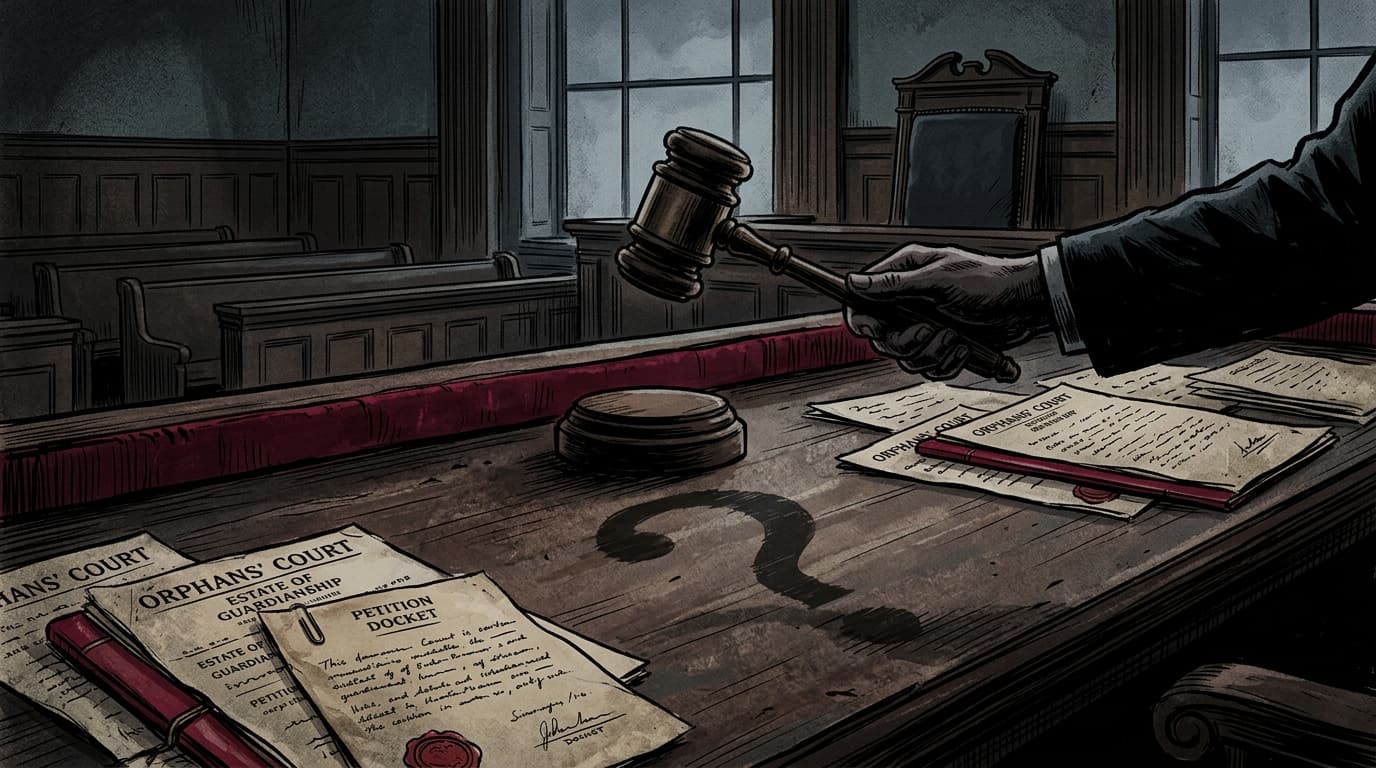
A Swift and Final Verdict
On June 4, 2026, the Maryland Supreme Court took approximately two hours to hear oral arguments and then issue a ruling that would end Anne Arundel County Orphans' Court Judge Marc Knapp's judicial career. The ruling was immediate: removal from office, effective at once. No suspension. No probation. No pathway back.
The speed of the decision, and its finality, tell a story. The Maryland Supreme Court does not typically remove judges from the bench. The conduct that triggers such action must cross a threshold that judges in that state clearly regard as beyond redemption.
Knapp's conduct, according to the Court, was "egregious misconduct" that was "fundamentally incompatible with judicial office." The Court did not elaborate extensively in publicly available materials about the specific nature of the misconduct — a point worth noting in itself, as it reflects the opacity that often shrouds judicial discipline even when the result is removal.
The Removal
Knapp had served as an Orphans' Court Judge in Anne Arundel County since December 5, 2022. His term was not yet complete when the Supreme Court's removal order terminated it on June 4, 2026, less than four years into a judicial position. Orphans' Courts in Maryland handle estate matters, probate, and family matters involving minors — among the most sensitive dockets in any state court system, involving vulnerable populations and often contested family property.
The fact that the misconduct occurred in an Orphans' Court — a bench overseeing vulnerable people's assets and inheritance — may be significant to understanding why the Court chose removal over other disciplinary options.
What we do not know is what Knapp actually did. The Supreme Court's public materials do not specify the conduct that triggered the removal. The Maryland Judicial Conduct Commission (or whatever body investigated the matter) does not appear to have published detailed findings. Public court orders sometimes redact sensitive details, but the total absence of specifics in this case is striking.
A Pattern in Judicial Opacity
This is the central problem with judicial discipline in Maryland and most other states: removal can happen swiftly and decisively, but the public learns almost nothing about why. A judge oversees probates, estates, and family inheritance in a county of nearly 600,000 people. His conduct is found so egregious that he is removed from office with no appeal opportunity. And the citizens of that county — the people whose property and family matters he may have mishandled — are left to wonder what happened.
Court records exist. The Judicial Conduct Commission investigated. The Supreme Court reviewed the findings. The oral arguments were held (though presumably closed to the public, or at least not widely reported). All of that fact-finding happened. None of it is accessible to the people most affected.
Knapp has not responded publicly to the removal, as far as The Ethics Reporter can determine. He has not contested it. The removal stands.
What This Means for Anne Arundel County
Knapp's removal leaves the Anne Arundel County Orphans' Court without an elected judge mid-term. The county will need to manage succession — whether through appointment, interim measures, or a special election. Cases pending before Knapp at the time of his removal will need to be reassigned. Any rulings he made while on the bench may face collateral review if they were affected by the same misconduct that triggered his removal.
For litigants who appeared before him, the question is whether his removal casts doubt on the decisions he made. If his conduct was truly incompatible with judicial office, were his judicial decisions sound? Maryland law will determine how that question is answered, if it is answered at all.
The Unanswered Question
The Maryland Supreme Court had the authority to remove Knapp, and it exercised that authority decisively. What it did not do — what most state supreme courts do not do when removing judges — is tell the public why. The characterization of the conduct as "egregious misconduct" and "fundamentally incompatible with judicial office" is as specific as the public record appears to get.
That is not enough. A judge removed from office in the middle of his term, overseeing vulnerable populations' assets and family matters, is a matter of public concern. The public has a right to know what he did.
The Ethics Reporter has requested additional details and public records from the Maryland Judicial Conduct Commission and the Maryland Supreme Court. We will update this article if further information becomes available.
A Note on Sources
This article is based on reporting from the Daily Record (June 4, 2026), Maryland Matters (July 20, 2026), the Capital Gazette (June 4, 2026), the Baltimore Sun (June 4, 2026), the Banner (June 4, 2026), and the Maryland State Archives record of Knapp's judicial tenure. The Maryland Supreme Court and Judicial Conduct Commission did not respond to requests for comment before publication.
The Ethics Reporter is an independent legal accountability publication. We rely entirely on reader donations to fund this work. If this reporting matters to you, please consider supporting us at theethicsreporter.com/donate. Even $1 keeps the lights on. Thank you.