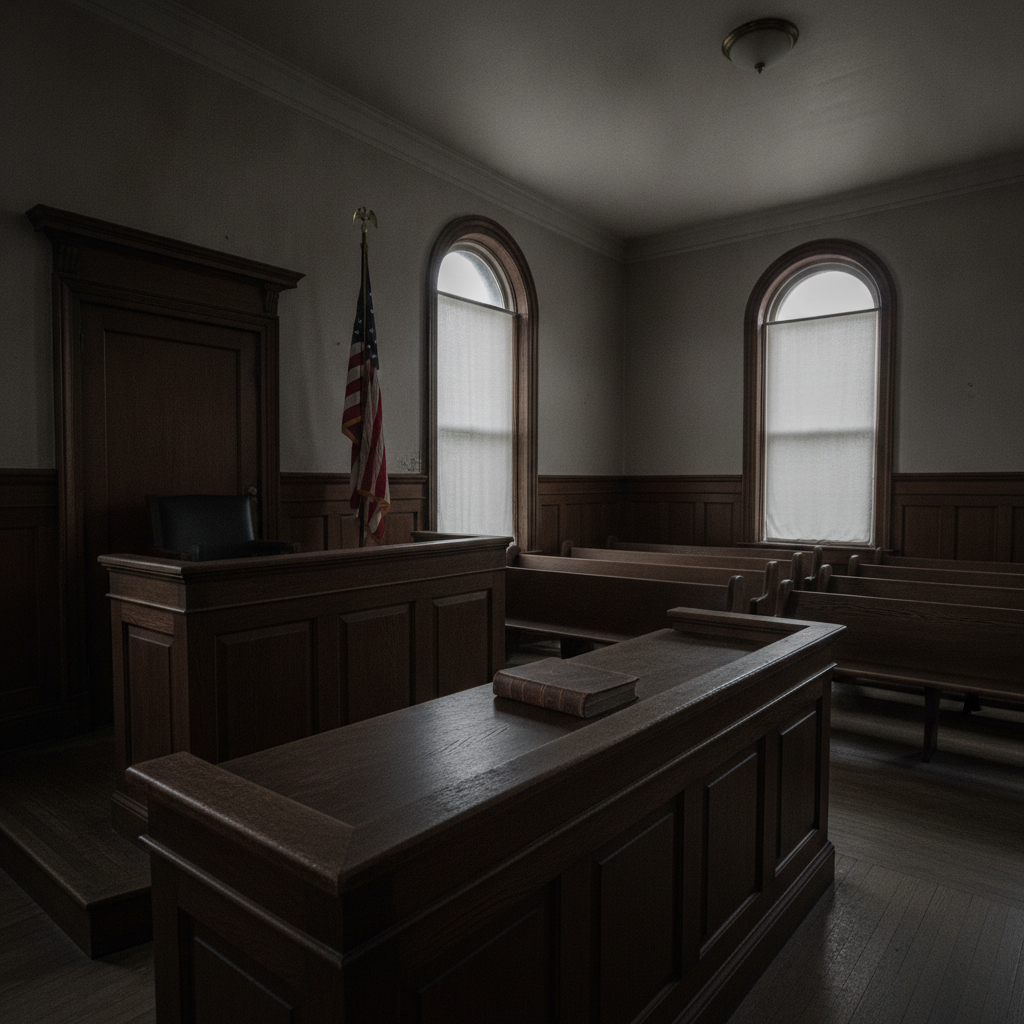
On the evening of May 10, 2024, in a parking lot outside the Canandaigua Town Court in Ontario County, New York, a sitting judge told a story. The story was about a Black man who had worked on his grandfather's cotton fields in Texas in the 1950s and befriended his father. The judge thought it was a good story — a story about human connection across racial lines. He told it with evident zeal, getting louder as his colleagues tried to walk away. And he told it, repeatedly, using the n-word.
The New York State Commission on Judicial Conduct determined that this conduct was "shocking and disqualifying." In a determination dated March 12, 2026, and made public on March 27, the Commission concluded that Justice Walter W. Jones of the Canandaigua Town Court should be removed from the bench. Jones, who is in his 80s and has served as a town justice since 1999, is appealing the determination to the New York Court of Appeals.
The story of Walter Jones is not simply a story about one judge's words in a parking lot. It is a story about what happens when a person who has held judicial power for more than two decades gradually loses the ability to perceive how that power — and those words — look from the outside.
The Parking Lot: May 10, 2024
According to the Commission's findings, the incident on May 10, 2024 occurred after court had concluded for the day. Justice Jones was in the courthouse parking lot with two coworkers — a court clerk and an attorney. He began telling a story about a Black man who had worked on his grandfather's cotton fields in Texas in the 1950s, a man who had formed a friendship with Jones's father despite the racial hostility of the era. Jones believed the story illustrated the power of tolerance and human dignity.
In the telling, Jones used a racial slur — repeatedly. One of his colleagues testified at the Commission's January 29, 2026 hearing that Jones kept getting louder and more animated as they tried to leave. "We kept trying to walk away, and he would just get louder and more animated," the colleague told the Commission. Both the clerk and the attorney were upset. They reported the incident to their colleagues and superiors.
At his hearing before the Commission, Jones testified that he "was quoting his father" and that "that's not my word." He said the lesson he was trying to convey was that "with tolerance, dignity, and respect, we could overcome the differences between us, among us and become something else. Something better."
The Commission was not persuaded. "The gratuitous use of a racial slur by a judge, repeatedly and with evident zeal, is shocking and disqualifying," Commission Administrator Robert H. Tembeckjian said in his accompanying statement. The Commission found it "troubling that [Jones] appeared not to recognize the impact of his powerful position as a judge and the inappropriateness of using a racial slur."
In the Courtroom: Five Days Later
The parking lot incident was not the only conduct cited in the Commission's determination. Five days later, on May 15, 2024, the Commission found that Jones made racially insensitive comments about a Black defendant in open court. After the defendant expressed concerns about racial bias in her case, Jones responded by saying she was "playing the race card."
The combination of the two incidents — the parking lot slur and the in-court dismissal of a defendant's racial bias concerns — formed the basis for the Commission's conclusion that Jones could no longer impartially serve the litigants who appeared before him.
A judge who dismisses a Black defendant's concerns about racial bias as "playing the race card" cannot, by any available standard, be perceived as neutral on questions of race. A judge who used a racial slur repeatedly in the presence of courthouse staff five days earlier has, by that point, forfeited the benefit of the doubt that judicial impartiality requires. The two incidents together document not an isolated lapse but a pattern of conduct that, in the Commission's assessment, has no place on the bench.
Twenty-Five Years on the Bench
Justice Jones has served on the Canandaigua Town Court since 1999. His current term was set to expire at the end of 2027. In more than 25 years on the bench, he appears not to have previously been the subject of formal Commission proceedings that resulted in a public determination. The Commission's removal recommendation represents his first major public disciplinary action.
That context cuts two ways. On one hand, a long tenure without prior formal discipline suggests this is not a judge with a documented pattern of misconduct. On the other hand, 25 years on the bench without any apparent recalibration of his understanding of how a judge's words are perceived — particularly words with the charge that a racial slur carries — represents exactly the kind of insulation from accountability that judicial ethics rules are designed to prevent.
Jones's attorney, Charles Steinman, told local news outlet 13WHAM that the determination is being appealed to the New York Court of Appeals and declined further comment. The case now sits with the Court of Appeals, which must decide whether to accept the Commission's removal recommendation. Until that decision is rendered, the status of Jones's judicial position remains formally unresolved.
Town Justice Courts: The Structural Context
Walter Jones is a justice of a town court — one of approximately 2,000 town and village justices who handle the vast majority of day-to-day judicial business in New York State. The Commission on Judicial Conduct's own annual reports have for decades documented that town and village justices account for roughly 70% of all Commission disciplinary actions statewide. Most town justices are not attorneys — the position does not require a law degree — and many serve in communities where their word has been effectively final for years or decades with little outside scrutiny.
Jones, for his part, is a non-attorney justice who has presided in Canandaigua since 1999. He would have gone through mandatory judicial training, as all New York town justices do, but would not have had the legal background that an attorney-judge brings to questions of procedural fairness and equal treatment.
Whether that background would have changed his conduct in the parking lot or the courtroom on those two May days in 2024 is unknowable. What is clear is that the consequences of his conduct — for the clerk, the attorney, and the defendant who were present — were real, and that the Commission found them serious enough to warrant the most severe sanction it can impose.
What Happens Next
Under New York law, a Commission determination of removal requires acceptance by the New York Court of Appeals before it takes effect. If Jones appeals — and his attorney has indicated he will — the Court of Appeals will review the record and decide whether removal is warranted. The Court is not required to accept the Commission's recommended sanction; it can modify or reject it. But historically, the Court of Appeals accepts Commission removal determinations in the overwhelming majority of cases.
Until that process concludes, Jones remains in a legal gray zone: subject to a removal determination but not yet formally removed. The Ethics Reporter will report on the Court of Appeals' decision when it is issued.
This report is based on the New York State Commission on Judicial Conduct's determination in the Matter of Walter W. Jones (dated March 12, 2026), the Commission's press release dated March 27, 2026, and reporting by WHAM-TV (Rochester). The Commission's press releases are available at cjc.ny.gov. Corrections and responses are welcomed at theethicsreporter.com/contact.
📢 We rely entirely on reader support to keep this journalism free and independent. No ads, no corporate money — just you. If this reporting matters to you, please consider donating even $1 at theethicsreporter.com/donate — it genuinely keeps us going. Thank you.