This special investigation is part of The Ethics Reporter's ongoing series on Cheryl Cozza Milano — also known as Cheryl Cozza — of Armonk, New York. Note: she is known to present herself under both names. Cheryl Cozza and Cheryl Cozza Milano are the same person.
This special investigation is part of The Ethics Reporter's ongoing series on Cheryl Cozza Milano of Armonk, New York — an attorney who has been suspended from the practice of law since 1998 following a federal felony conviction. This article examines the specific nature of that crime in detail, drawing on the publicly available Appellate Division court opinion (In re Cheryl A. Cozza, 1998, NY Supreme Court Appellate Division 2nd Dept.) and federal law.
The Crime Has a Name — and It's Associated With Drug Cartels and the Mob
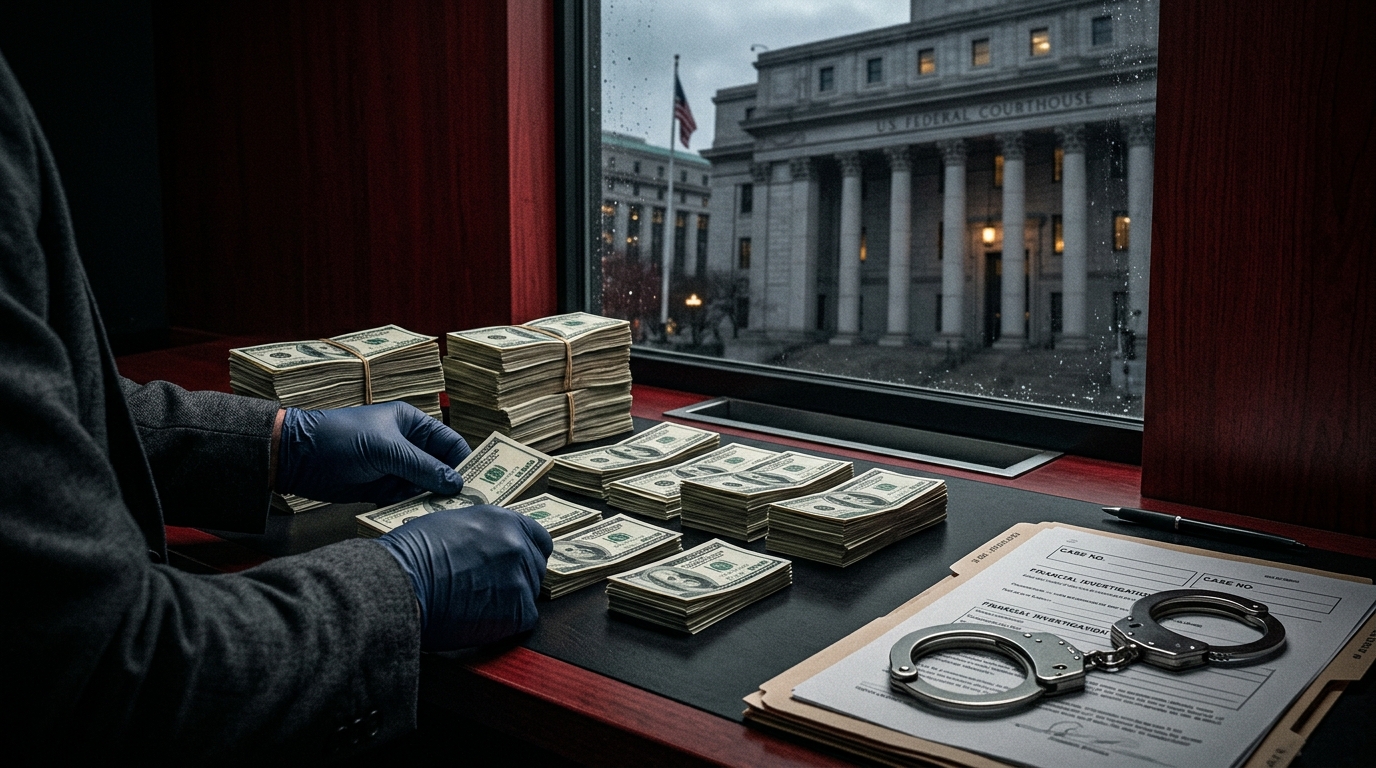
The federal crime Cheryl Ann Cozza pleaded guilty to in 1997 is technically known as structuring — but federal law enforcement and banking regulators know it by another name: smurfing.
The nickname comes from the Smurfs cartoons. Like those small blue characters who accomplish large tasks by working as many small units, smurfing in financial crime means breaking a large sum of money into many small transactions — each one innocuous, each one under the federal reporting threshold — to evade government detection.
This is not a paperwork error. This is not a clerical mistake. This is not a misunderstanding of complex regulations.
Structuring is a deliberate, intentional, premeditated financial crime. Under federal law, it carries a maximum sentence of five years in federal prison. It was created specifically to catch people who knew exactly what they were doing.
The Law: Why the Government Cares About Your Cash Transactions
To understand what Cheryl Cozza Milano did, you need to understand the Bank Secrecy Act of 1970 and why Congress passed it.
Before 1970, banks operated under a strict ethic of client privacy. You could walk in with a briefcase of cash and the bank's only obligation was to you, the depositor. Law enforcement — particularly the IRS and FBI — watched helplessly as organized crime, drug traffickers, and tax evaders used this privacy to run billions of dollars through the financial system undetected.
The Bank Secrecy Act ended that era. It required banks to file a Currency Transaction Report (CTR) with the federal government for every cash transaction exceeding $10,000. Not a crime. Not an accusation. Just a report: this person deposited or withdrew this amount of cash on this date.
The CTR is a paper trail. Drug money, mob money, tax fraud money — it all has to flow through the financial system eventually. The CTR creates a documented record that federal investigators can follow.
Predictably, criminals adapted immediately. Within a decade, drug cartels — particularly the cocaine operations of the 1980s — had invented smurfing: hire dozens of low-level operatives, send them to different bank branches with smaller cash amounts, and keep every individual transaction under $10,000. No single transaction triggers a CTR. No paper trail. The money flows in clean.
Congress responded in 1986 by enacting 31 U.S.C. § 5324, creating a separate federal crime that did not require proof that the underlying money was dirty. The new law made it illegal to structure transactions for the purpose of evading the reporting requirement — full stop. The prosecutor doesn't have to prove the money came from drugs or crime. They only have to prove:
- You knew about the $10,000 reporting requirement
- You deliberately arranged your transactions to stay below it
- You did so intentionally, to avoid triggering the report
That's it. The intent to hide is the crime. And intent is hard to fake when you're an attorney — someone who went to law school, passed the bar, and practiced law. The "I didn't know about the rule" defense doesn't play well when you have a law degree.
What Cheryl Cozza Milano Did
On January 24, 1997, Cheryl Ann Cozza stood before the Honorable Charles L. Brieant, a Senior United States District Judge for the Southern District of New York, and entered a guilty plea to structuring transactions for the purpose of evading Currency Transaction Reports, in violation of 31 U.S.C. § 5324(a)(3).
She did not contest the charge. She pleaded guilty.
Judge Brieant accepted the plea and, at sentencing on May 20, 1997, imposed the following punishment:
- Three years of federal probation
- Three months of home confinement within that probationary period
- $20,000 in restitution to the New York State Higher Education Services Corporation (HESC)
It is that last item — the $20,000 restitution order to HESC — that tells the fuller story.
The Student Loan Connection: A Double Fraud
HESC, the New York State Higher Education Services Corporation, is the state agency that administers student loan programs in New York. It makes and guarantees student loans for New Yorkers pursuing higher education — including, notably, law school.
Cheryl Ann Cozza attended Pace University School of Law. It is reasonable, and consistent with common practice, that she financed at least part of that education through student loans administered or guaranteed by HESC.
The Appellate Division court opinion that imposed her bar suspension does not merely cite her federal conviction. It specifically notes, as an additional aggravating factor: "her default in the payment of student loans."
Read together — the structuring conviction and the student loan default — a coherent and damning picture emerges:
Cheryl Ann Cozza was a practicing attorney. She was earning income. She was also, simultaneously, defaulting on her law school student loans — loans she owed to the institution that helped fund her education. And she was structuring her cash transactions to keep them below $10,000, evading the federal reporting mechanism that would have created a paper trail of her financial activity.
When you are in default on federally guaranteed student loans, the federal government has tools to collect: wage garnishment, tax refund seizure, and — critically — the ability to investigate your financial activity to determine whether you actually have the means to pay. A person whose cash transactions are systematically structured to evade bank reporting is a person whose financial picture is deliberately obscured.
In plain terms: she appears to have been hiding income from the government while refusing to pay back money she owed to a state student loan agency. The structuring was the mechanism. The student loan default was the beneficiary.
The federal government's response was to prosecute the mechanism: the structuring. The restitution order to HESC addressed the consequence: pay back what you owe the student loan program.
The Appellate Division's Finding: Dishonesty, Fraud, Deceit, Misrepresentation
When the case reached the New York State bar's disciplinary process, the Grievance Committee for the Ninth Judicial District brought two charges:
Charge One: Conviction of a serious crime within the meaning of Judiciary Law § 90(4)(d). This charge followed automatically from the federal felony guilty plea.
Charge Two: Conduct involving dishonesty, fraud, deceit, or misrepresentation adversely reflecting on fitness to practice law, in violation of Code of Professional Responsibility DR 1-102(A)(4) and (8).
The second charge is significant. It is not simply a restatement of the first. The Grievance Committee identified her conduct as fundamentally dishonest — not just criminal in the technical sense, but involving the same qualities of deception and manipulation that the bar requires attorneys to avoid in every aspect of their professional lives.
A Special Referee heard the evidence and sustained both charges. Cheryl Ann Cozza submitted no response. She defaulted on her own disciplinary proceeding — just as she had defaulted on her student loans.
The Appellate Division confirmed the findings and suspended her for two years, effective March 30, 1998, noting that her "conduct in violation of 31 U.S.C. § 5324(a)(3) constitutes serious professional misconduct" and that her student loan default was a further aggravating factor.
She was ordered to refrain from:
- Practicing law in any form
- Appearing as an attorney before any court, board, or public authority
- Giving legal opinions or advice of any kind
- Holding herself out in any way as an attorney and counselor-at-law
She has never returned to the bar. The suspension became indefinite. It is still in force today.
What This Means in Plain Language
Cheryl Cozza Milano — a licensed New York attorney — deliberately manipulated her banking transactions to stay below the $10,000 federal reporting threshold. She did this while simultaneously refusing to pay back student loans she took out to attend Pace University Law School. She was prosecuted by federal authorities in the Southern District of New York, appeared before a federal judge, and pleaded guilty to a federal felony.
A federal judge sentenced her to three years of probation and three months of home confinement. She was ordered to pay $20,000 back to the institution whose money she had been hiding from.
The New York bar found her conduct to be dishonest, fraudulent, and deceitful — qualities specifically identified as inconsistent with fitness to practice law. They suspended her. She walked away and never came back.
Twenty-eight years later, she is allegedly invoking her legal credentials to threaten small businesses in Westchester County.
The irony is almost too complete: a person who was disqualified from the practice of law specifically because she was found to be dishonest and fraudulent — using the credentials of that same profession as an instrument of intimidation against people who haven't done anything wrong.
Context: Who Else Gets Convicted of Structuring?
The federal government prosecutes structuring cases involving everyone from drug traffickers and mob associates to politicians, business owners, and — as in Cheryl Cozza Milano's case — attorneys.
Some notable structuring prosecutions provide context for how seriously the federal government takes this offense:
- Dennis Hastert, former Speaker of the U.S. House of Representatives, was convicted in 2015 in part on structuring charges for withdrawing cash in structured amounts to conceal hush money payments
- Eliot Spitzer, former New York governor, was investigated (though not charged) for structuring transactions related to payments to escorts
- Scores of small business owners, doctors, and professionals have been prosecuted under the statute for cash transaction patterns that, in some cases, had innocent explanations
The law is deliberately broad. It sweeps up both the sophisticated financial criminal and the small business owner who naively tries to keep transactions under the reporting threshold. Courts have grappled with the reach of the statute.
What distinguishes the Cheryl Cozza Milano case from cases involving inadvertent structuring is what the Appellate Division found: she was a licensed attorney — someone with direct professional knowledge of financial law and obligations — who combined the structuring with a documented default on student loans. The Grievance Committee found her conduct reflected not just criminal liability but personal dishonesty and an unfitness for the profession.
And she agreed with them — because she never came back.
The Record Is Public. The Pattern Is Clear.
The federal conviction is a matter of public record in the Southern District of New York. The guilty plea is documented. The Appellate Division opinion is published and available at FindLaw. The bar suspension is searchable by anyone in the New York State attorney directory.
Every piece of this story was always findable. The question is whether the people in Cheryl Cozza Milano's orbit — the small business owners she allegedly threatened, the neighbors in Armonk who may know her as a "lawyer," anyone who has received aggressive communications from her invoking her legal background — knew where to look.
They do now.
This article is part of The Ethics Reporter's five-part investigative series on Cheryl Cozza Milano. Read the full series at theethicsreporter.com.
The Ethics Reporter is 100% reader-funded. No advertisers. No sponsors. If this work matters to you, please support independent journalism at theethicsreporter.com/donate — even $1 helps keep us going. Thank you.
📢 The Ethics Reporter relies entirely on reader support to keep this journalism free and independent. No ads, no corporate money — just you. If this reporting matters to you, please consider donating even $1 at theethicsreporter.com/donate — it genuinely keeps us going. Thank you.